.png)

Thermally Broken Aluminium Windows: The Architectural Guide to Efficiency and Comfort

What if the material you've traditionally avoided for being "too cold" was actually the key to a warmer, more energy-efficient home? Many homeowners across the South West still associate metal frames with damp sills and draughty living rooms. It's a natural concern because aluminium is a highly effective conductor of heat. However, modern thermally broken aluminium windows have entirely rewritten that narrative. By integrating a high-performance polyamide barrier between the internal and external profiles, this technology prevents thermal bridging and keeps the warmth exactly where it belongs.
You don't have to choose between minimalist aesthetics and a comfortable living space. With the 2026 Building Regulations now requiring replacement windows to meet a U-value of 1.4 W/m²K, selecting the right system is more critical than ever. This guide explores how advanced engineering combines slim sightlines with exceptional insulation to meet these rigorous standards. You'll learn how to eliminate condensation, reduce your heating bills, and achieve a sophisticated architectural finish that stays cosy throughout the British winter.
Key Takeaways
Understand how a polyamide thermal break acts as an internal barrier to stop heat escaping through the metal frame.
Learn how modern thermally broken aluminium windows eliminate the "cold bridge" effect to prevent internal condensation and damp.
Discover how to achieve compliance with the latest 2026 Building Regulations whilst maintaining slim, minimalist architectural sightlines.
Explore how advanced thermal technology supports larger, heavier expanses of glass without compromising the energy efficiency of your home.
Gain insights into specifying high-performance systems like Cortizo to ensure a perfect balance of durability and aesthetic elegance.
Table of Contents
What Are Thermally Broken Aluminium Windows?
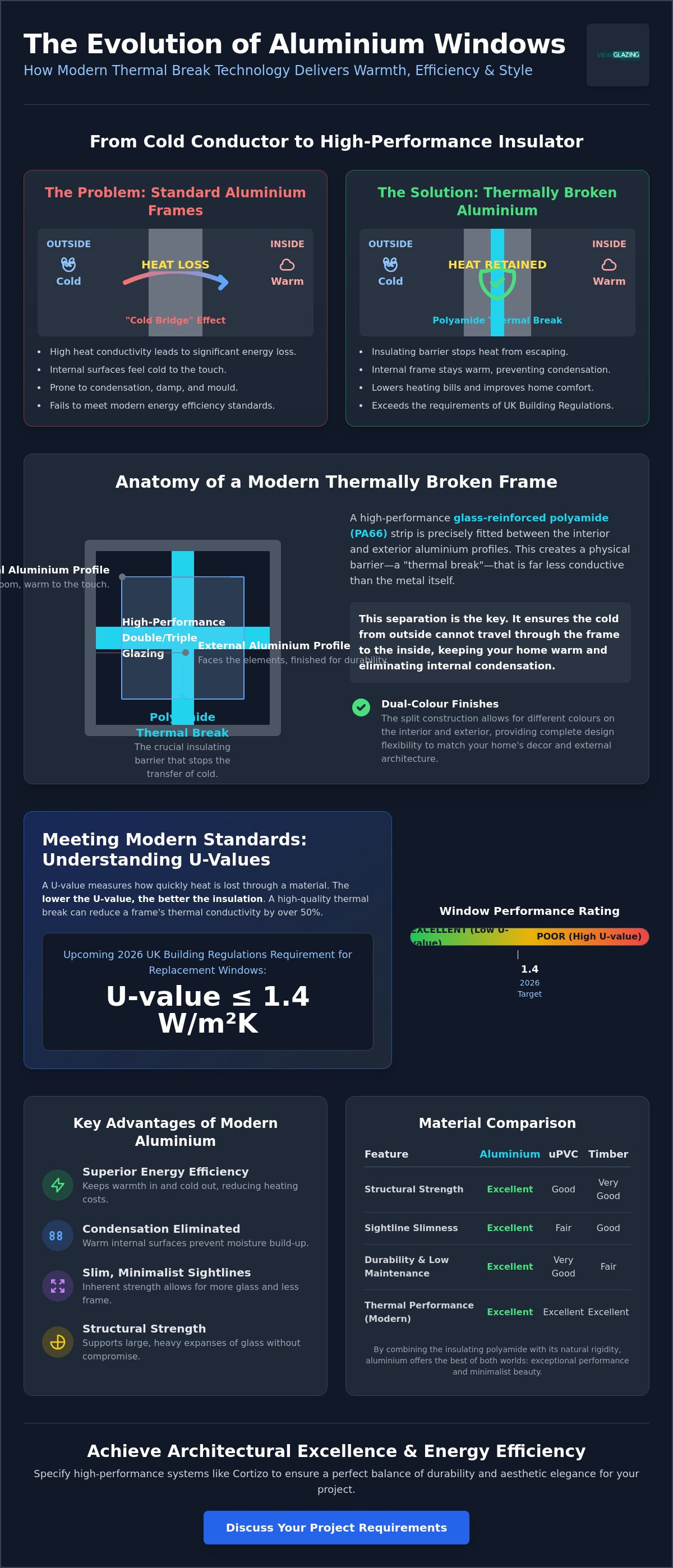
In the past, choosing aluminium windows meant accepting a trade-off. You gained slim profiles and modern aesthetics, but you lost significant heat. Because aluminium is a natural conductor, those early industrial frames felt cold to the touch and often suffered from persistent condensation. Today, thermally broken aluminium windows have solved this problem through precision engineering. A thermal break is a high-performance insulating barrier, typically made from glass-reinforced polyamide, that is factory-fitted between the interior and exterior aluminium profiles.
This transition from industrial utility to residential comfort was driven by both design trends and strict legislation. Under current UK Building Regulations (Part L), windows must achieve specific thermal performance levels that standard metal frames simply cannot reach. For replacement projects in 2026, the maximum permitted U-value is 1.4 W/m²K. Without a sophisticated thermal break, aluminium would be unsuitable for domestic use, as it would bleed heat out of the home and fail to meet these essential energy standards.
The Anatomy of a Modern Aluminium Frame
To understand how these systems work, imagine the window frame as two separate components: an inner profile that faces your living room and an outer profile exposed to the elements. During manufacturing, these two pieces are mechanically joined by a polyamide strip. This strip physically interrupts the "thermal bridge," ensuring that the external cold cannot travel through the metal to the interior. The Science of the Thermal Break demonstrates that this separation is what allows metal to perform as effectively as timber. An added benefit of this split construction is the ability to specify dual-colour finishes. This means you can have a bold charcoal grey on the exterior whilst maintaining a softer white or neutral tone inside to match your decor.
Aluminium vs. Other Materials
Whilst materials like timber and uPVC are natural insulators, they lack the inherent structural strength of aluminium. This strength is why aluminium is the preferred choice for expansive glass walls and minimalist designs. However, because aluminium is a conductor, it requires this engineered "break" to match the thermal efficiency of wood. By combining the natural rigidity of the metal with the insulating properties of polyamide, you get the best of both worlds. You'll enjoy exceptionally slim sightlines that can support heavy triple-glazed units, all whilst maintaining a warm and draught-free home environment. It's a permanent architectural investment that doesn't sacrifice performance for beauty.
The Science of the Thermal Break: Polyamide and U-Values
The efficiency of thermally broken aluminium windows relies on the material science of the break itself. In high-end architectural glazing, the industry standard is glass-reinforced polyamide (specifically PA66). This material is chosen for its remarkable ability to resist heat flow whilst maintaining the structural rigidity required for large-scale glazing. Whilst raw aluminium has a high thermal conductivity, polyamide acts as a stubborn resistor. By placing this material between the profiles, manufacturers create a barrier that is significantly less conductive than the metal it separates.
The energy rating of a window is directly influenced by the width of this thermal break. A wider polyamide strip provides a longer path for heat to travel, which effectively slows down the energy transfer. This is why high-performance systems designed for the 2026 Building Regulations often feature deeper frames to accommodate larger breaks. When paired with advanced double or triple-glazing units, the frame and glass work in tandem to create a sealed, high-performance envelope that keeps your home at a consistent temperature regardless of the weather outside.
Understanding U-Values in Architectural Glazing
A U-value measures the rate of heat transfer through a building element; the lower the number, the better the insulation. For homeowners in Bristol and the surrounding areas, achieving a low U-value is the most effective way to reduce reliance on central heating. A precision-engineered thermal break can lower the thermal conductivity of a frame profile by over 50%, transforming the window from a heat sink into a protective barrier. If you are planning a renovation that requires these high-performance standards, you can discuss your project requirements with our technical team to ensure compliance with the latest regulations.
Structural Integrity and Thermal Performance
It is a common misconception that adding a plastic break weakens the window. In reality, polyamide strips are incredibly strong and are rolled into the aluminium profiles under immense pressure to create a "composite" section. This ensures the frame remains rigid even under the high wind loads often experienced in exposed locations like the Cotswolds. Crucially, polyamide and aluminium have very similar coefficients of thermal expansion. This means they expand and contract at nearly identical rates when the sun hits the frame, preventing the internal stresses that could otherwise lead to seal failure or warping over time. This precision engineering ensures that your investment remains both beautiful and airtight for decades.
Beyond Energy Efficiency: Solving the Condensation Crisis
While thermal performance often dominates the conversation around window specification, the practical impact on a home's internal environment is equally significant. Many homeowners are frustrated by "sweating" windows, assuming the issue lies solely with the glass. However, the frame is often the primary culprit. In non-insulated systems, the metal acts as a "cold bridge," allowing external temperatures to cool the internal surface of the frame. When warm, humid air inside the house meets this cold surface, it reaches its dew point and forms condensation. By installing thermally broken aluminium windows, you ensure the internal profile remains close to room temperature, effectively breaking the cycle of moisture accumulation.
This protection extends far beyond simple aesthetics. Persistent moisture on window frames can lead to the slow degradation of internal finishes. Plasterwork around the reveals can soften and crack, whilst timber liners may warp or rot over time. Even soft furnishings like curtains are at risk of dampening and staining. By maintaining a warm internal frame, these systems safeguard the architectural integrity of your interiors, ensuring that your investment in high-quality finishes remains protected for the long term. To complement these structural benefits, you might also consider professional window film applications; specialists like Coral Tint offer solutions that further protect your furniture and flooring from UV damage whilst enhancing the overall thermal comfort of your living space.
The Health and Longevity Benefits
In the notoriously damp climate of the South West, managing internal humidity is a matter of health as well as comfort. Eliminating cold spots on the frames significantly reduces the risk of mould growth, which often thrives in the stagnant, damp air found in window corners. This creates a much healthier living environment for occupants. This thermal consistency also enhances general comfort. You'll no longer feel a sharp chill when sitting near large glazed areas, as the frames no longer radiate cold into the room. Because the internal metal is protected from constant moisture, these frames also resist the surface corrosion that can plague poorly specified metal windows.
Acoustic Insulation and Peace of Mind
There is a secondary, often overlooked benefit to the multi-chambered polyamide breaks used in these windows: acoustic dampening. Whilst aluminium is a rigid material that can transmit vibrations, the glass-reinforced plastic break acts as a structural isolator. It interrupts the path of sound waves, helping to dampen external noise pollution from traffic or busy streets. This makes thermally broken aluminium windows an ideal choice for homes in urban centres like Bristol or Bath, where creating a quiet sanctuary is a priority. When these frames are paired with high-performance triple glazing, the synergy between the materials creates a formidable barrier against both the cold and the clamour of city life.
Specifying Aluminium Glazing: Sightlines and Aesthetics
The primary appeal of aluminium in modern architecture is its ability to disappear. Unlike bulkier timber or uPVC alternatives, the inherent strength of aluminium allows for exceptionally slim frames that maximise the glass-to-frame ratio. This minimalist aesthetic is not merely a visual preference; it is a functional choice that floods living spaces with natural light. High-performance thermally broken aluminium windows are the foundation of this look. The structural integrity provided by the composite frame ensures that even the slimmest profiles can safely support the weight of expansive, heavy triple-glazed units without compromising on safety or thermal efficiency.
Beyond the dimensions of the frame, the finishing options offer unparalleled design freedom. Most systems are finished with a durable polyester powder coating, available in hundreds of RAL colours to suit any architectural style. For those seeking a more metallic, industrial texture, anodising provides a hard-wearing finish that celebrates the natural qualities of the metal. A significant advantage of the thermal break manufacturing process is the ability to specify dual-colour frames. This allows you to choose a bold, dark exterior to define the building’s facade whilst opting for a softer, neutral tone on the interior to complement your home’s decor.
Design Flexibility for Modern and Traditional Homes
Whilst aluminium is often associated with contemporary "glass box" extensions, its versatility makes it equally suitable for heritage properties. In the South West, slim aluminium frames provide a sophisticated contrast against the rugged texture of Cotswold stone, offering a clean, sharp line that highlights the masonry. For those looking to replicate a classic industrial aesthetic, thermally broken aluminium windows can be specified with ultra-slim heritage bars. This achieves the iconic "Crittall" look with the added benefits of 21st-century insulation and weatherproofing, ensuring your home remains draught-free whilst looking timeless.
In urban settings where traditional aesthetics are paramount, homeowners often balance these modern aluminium solutions with other high-quality architectural glazing, such as bespoke timber windows London, to maintain period charm while benefiting from advanced manufacturing standards.
Security and Weather Rating
Architectural aluminium is widely considered the gold standard for home security. The material is naturally rigid and difficult to bypass, providing a solid foundation for high-security hardware. Most modern systems feature concealed hinges and multi-point locking mechanisms as standard, ensuring a clean look without sacrificing safety. In the West Country, where driving rain and high winds are common, weather testing is a critical part of the specification process. These windows are engineered with sophisticated drainage paths and high-quality seals to withstand the most challenging coastal or rural conditions. If your project includes larger openings, you may wish to explore how these principles apply to aluminium sliding patio doors to create a cohesive architectural look. To see how these systems can transform your specific property, request a technical consultation with our design team today.
Choosing the Right System: Cortizo and View Glazing Excellence
Selecting the perfect glazing system requires a balance of advanced engineering and refined design. Whilst the science of the thermal break is universal, the execution varies significantly between manufacturers. Cortizo has established itself as a leader in this field, offering thermally broken aluminium windows and doors that push the boundaries of what's possible with slim-frame architecture. Their systems, such as the COR 70, utilise a 32mm polyamide thermal break to achieve U-values from 1.0 W/m²K, comfortably exceeding the current 1.4 W/m²K requirement for replacement projects in existing dwellings.
This level of precision ensures that even the most ambitious architectural designs remain compliant with the 2026 Building Regulations. By choosing a system engineered for performance, you're making a permanent investment in the longevity and comfort of your property. Professional project management is essential here; it's the bridge between a high-quality component and a high-performance home environment.
The Cortizo Advantage
For homeowners seeking expansive views, the Cortizo 4600 Plus Lift & Slide system represents the pinnacle of thermal efficiency. It can achieve a U-value as low as 0.65 W/m²K, making it one of the most efficient sliding systems available for 2026 standards. This performance is achieved without sacrificing the ultra-slim interlock profiles that define modern architectural glazing. If your design vision requires the organic warmth of wood on the interior, we also specify VELFAC composite windows. These combine a durable, low-maintenance aluminium exterior with a high-quality timber internal frame, offering a different approach to thermal separation whilst maintaining a sophisticated, minimalist look.
Your Local Glazing Partner
The success of any architectural project depends on more than just the product; it requires a methodical and professional approach to installation. At View Glazing, we act as a dedicated partner from the initial design consultation through to the final technical survey and installation. We understand the specific challenges of the South West climate, from the exposed hillsides of the Cotswolds to the urban heritage of Bristol and Bath. A comprehensive site survey is the foundation of our process, ensuring that every custom-built frame is perfectly integrated into your building's envelope.
Our commitment to sustainable, energy-efficient solutions ensures that your home remains comfortable and environmentally responsible for decades. We manage the complexities of Building Regulations and structural requirements, allowing you to focus on the transformative impact of light and design. Whether you're planning a modern new build or a sensitive renovation, we provide the technical expertise and local service needed to realise your vision. You can enquire about your architectural glazing project with our specialist team to begin your journey toward a more efficient, beautiful home.
Elevating Your Home with Performance Glazing
Modern architecture no longer requires a compromise between minimalist beauty and thermal warmth. By integrating advanced polyamide technology, thermally broken aluminium windows have transformed from industrial components into high-performance solutions for the modern home. These systems don't just lower your energy bills; they protect your internal finishes from moisture and create a quiet sanctuary from the world outside. Selecting the right frame is the first step toward a more comfortable, light-filled living space.
We're specialists in precision-engineered systems from VELFAC, Rationel, and Cortizo, providing the technical expertise needed for complex architectural projects. From the initial survey to the final installation, our team delivers full-service project management to ensure every detail is perfect. As expert local installers serving Bristol, Bath, and the Cotswolds, we're here to guide you through the specification process with confidence. You can Book an Architectural Glazing Consultation to begin transforming your property today. We look forward to helping you realise your design vision.
Frequently Asked Questions
Are thermally broken aluminium windows more expensive than uPVC?
Aluminium is a premium architectural material and represents a higher initial investment than uPVC. Whilst the upfront cost is greater, the value lies in its superior structural strength and significantly longer lifespan. Aluminium frames don't degrade or warp over time, providing a permanent solution that adds more long-term value to your property. It's the preferred choice for projects where slim sightlines and aesthetic longevity are the primary goals.
How long do thermally broken aluminium windows typically last?
A high-quality aluminium window system typically has a functional lifespan of 30 to 45 years. Because the frames are powder-coated and the metal is naturally resistant to corrosion, they're exceptionally durable against the British weather. This longevity makes them a sustainable investment, as they won't need replacing nearly as often as timber or uPVC alternatives. It's a robust choice for homeowners seeking a low-maintenance, long-term glazing solution.
Can I get thermally broken aluminium windows in different colours?
You can specify your frames in almost any RAL colour to match your design vision. Most modern systems also offer a dual-colour option, which allows you to have a bold, dark finish on the exterior whilst maintaining a softer, neutral tone inside. This flexibility ensures your windows complement the external facade of your building whilst harmonising with your interior decor. Powder-coated finishes are also highly resistant to fading and scratching.
Do thermally broken windows really stop condensation?
Modern thermally broken aluminium windows are specifically engineered to eliminate the "cold bridge" that causes internal condensation. By placing a polyamide insulating strip between the internal and external profiles, the inner frame remains close to room temperature. This prevents warm, humid air inside your home from hitting a cold surface and turning into water droplets. It's a highly effective way to protect your internal plasterwork and soft furnishings from damp.
What is the best U-value for an aluminium window in 2026?
Under the 2026 Building Regulations, replacement windows must achieve a maximum U-value of 1.4 W/m²K. However, for new build properties, the Future Homes Standard has tightened this requirement to 0.8 W/m²K. For high-performance projects, you should look for systems that can achieve values between 0.65 and 1.0 W/m²K. Choosing a system that exceeds current standards is the most effective way to future-proof your home against rising energy costs.
Is it worth upgrading to triple glazing with thermally broken frames?
Upgrading to triple glazing is a wise investment if you're looking for the ultimate in thermal and acoustic performance. When paired with thermally broken aluminium windows, triple-glazed units can significantly lower your home's overall U-value. This combination is particularly beneficial for properties in noisy urban areas or exposed rural locations, as it creates a much quieter and more thermally stable environment. It's an excellent way to maximise energy efficiency.
How do I maintain my aluminium window frames?
Maintaining your aluminium frames is very simple and only requires routine cleaning to preserve the finish. You should wipe down the frames every few months with warm, soapy water and a soft, non-abrasive cloth to remove dust and environmental grit. It's important to avoid harsh chemical cleaners or scouring pads, as these can damage the powder-coated surface. This basic care ensures the hardware operates smoothly and the frames look like new for decades.
Can thermally broken aluminium be recycled?
Aluminium is one of the most sustainable materials in the construction industry because it is infinitely recyclable. At the end of its long lifespan, the metal can be melted down and reused to create new products without any loss in its structural properties. Approximately 75% of all aluminium ever produced is still in use today. This makes it an environmentally responsible choice for homeowners who are conscious of their building's ecological footprint.


Comments