.png)

Composite vs Aluminium Windows: 2026 South West Guide

You might believe that choosing the most slender frame is the only way to achieve a contemporary architectural finish, but for many homeowners in the South West, that aesthetic often comes with a quiet concern about internal warmth. It's a common dilemma; you want the striking, minimalist lines of a modern build, yet you worry that metal frames will feel cold against the damp, Atlantic winds that characterise our region.
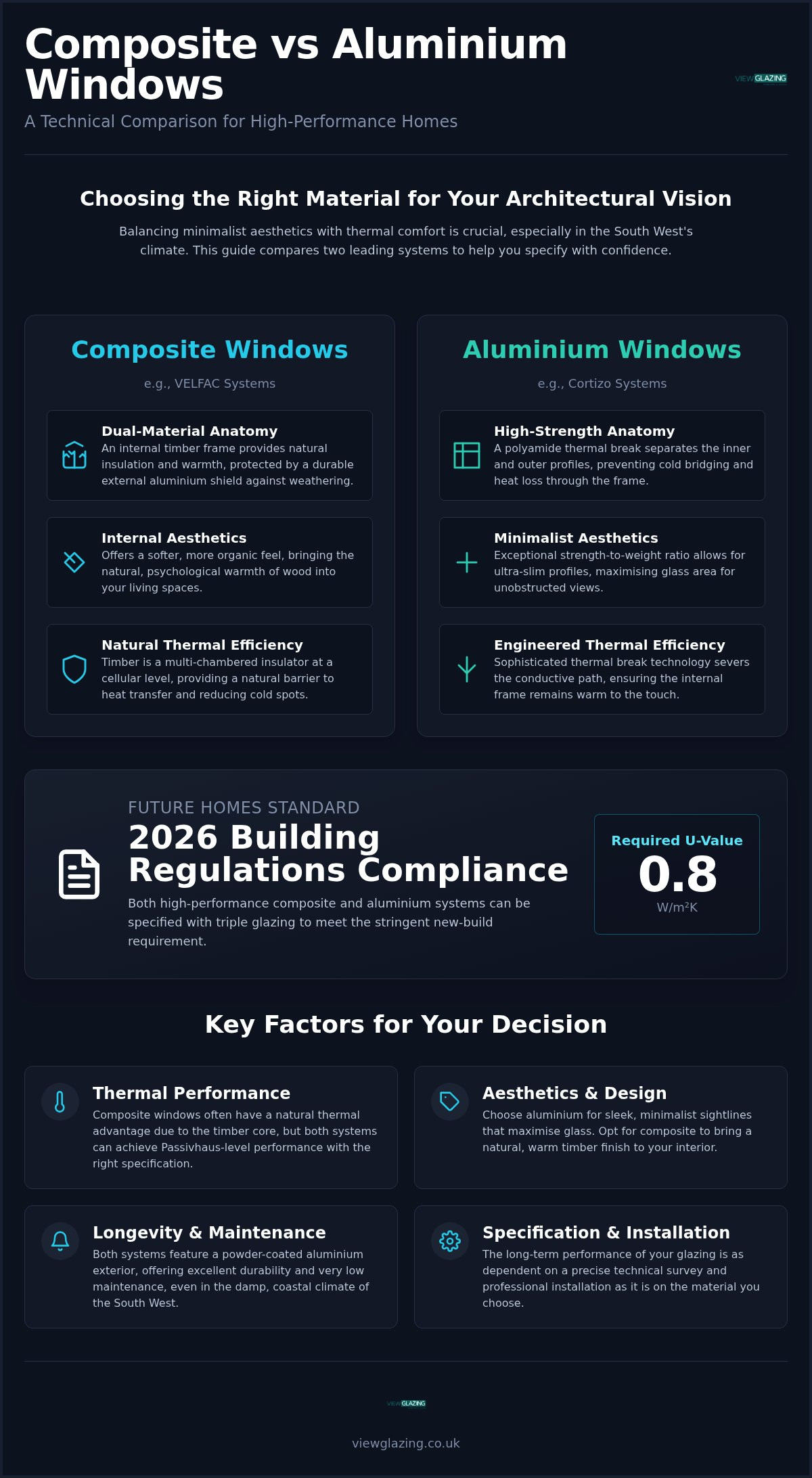
We understand that the conflicting information surrounding U-values and thermal breaks can be overwhelming, especially with the 2026 Building Regulations now requiring new build windows to achieve a stringent 0.8 W/m²K. This guide settles the composite vs aluminium windows debate by providing a clear, technical comparison of thermal performance, longevity, and maintenance requirements. You'll discover how to balance the industrial strength of Cortizo aluminium with the internal timber comfort of VELFAC composite systems. We will preview the essential factors that ensure your glazing remains a high-performance asset for 40 years or more, providing the confidence you need to finalise your architectural vision.
Table of Contents
Choosing Between Composite and Aluminium Windows: The Architectural Material Debate
Selecting the right window system is perhaps the most defining decision you'll make for your property. It dictates how light enters your home, how well you retain heat, and how much time you'll spend on maintenance over the next four decades. In the South West, where architectural styles range from Cotswold stone cottages to Bristol’s modern harbour developments, the composite vs aluminium windows debate is central to achieving a balance between aesthetic vision and technical performance.
The choice often boils down to a lifestyle preference. Aluminium offers an industrial, minimalist edge that prioritises glass over frame. Composite windows, particularly the VELFAC systems we install, provide a softer, more organic feel that brings the warmth of natural wood into your living spaces without the upkeep of traditional timber. Understanding these structural differences is the first step in specifying a glazing package that suits your site's unique conditions.
The Anatomy of a Modern Aluminium Window
Modern aluminium frames have evolved far beyond the cold, condensation-prone units of the past. Today, high-performance systems like Cortizo utilise a polyamide thermal break. This is a non-conductive material placed between the inner and outer sections of the aluminium profile to prevent cold bridging. By reducing Thermal transmittance (U-value), these windows keep your interiors comfortable regardless of the external temperature. Aluminium's exceptional strength-to-weight ratio is its greatest asset. It supports vast expanses of glass with remarkably slim profiles, making it the preferred choice for those seeking unobstructed views and a sleek, contemporary silhouette.
The Engineering Behind Composite Glazing
Composite glazing represents a sophisticated dual-material approach to window design. At its core, a VELFAC composite window features a high-quality timber frame on the inside. This provides natural insulation and a tactile finish that enhances the architectural elegance of a room. On the exterior, a durable aluminium shield protects the timber from the harsh South West elements, preventing rot and weathering. Composite windows are a dual-material system specifically designed to provide the beauty of wood with a zero-maintenance exterior. This engineering creates a frame that won't warp or stick when the humidity rises, ensuring the internal timber remains protected and pristine for the long term.
Thermal Performance and Energy Efficiency: Comparing U-Values
The 2026 Building Regulations have fundamentally changed how we specify glazing. For new build properties, the Future Homes Standard mandates a maximum whole-window U-value of 0.8 W/m²K; a significant reduction that pushes many standard systems to their limits. When weighing up composite vs aluminium windows, understanding these metrics is vital for both compliance and long-term comfort. A U-value measures the rate of heat loss through a material, so a lower figure represents better insulation. Understanding Energy Efficient Performance is essential when selecting frames that must withstand the damp, windy winters of the South West.
There's a persistent myth that aluminium frames feel "cold" inside the home. Whilst metal is a natural conductor, modern high-spec systems have solved this through sophisticated engineering. By inserting a polyamide thermal break between the external and internal profiles, the conductive path is severed. This ensures the internal frame remains at room temperature, even during a frost in the Cotswolds. When paired with triple glazing, both materials can reach the 0.8 W/m²K threshold required for Passivhaus-standard performance.
Why Composite Windows Often Lead on Efficiency
Composite systems like VELFAC have a natural advantage because timber is a multi-chambered insulator at a cellular level. It doesn't rely solely on added thermal breaks; the wood itself provides a barrier to heat transfer. VELFAC designs further enhance this by minimising heat loss at the frame-to-glass junction, which is often the weakest point in a window's thermal envelope. This superior insulation also reduces the risk of internal condensation, keeping your timber frames dry and pristine throughout the year. If you're planning a project that prioritises energy independence, you can request a technical performance summary for your specific site.
Aluminium Advancements: Closing the Gap
Aluminium technology has advanced rapidly to meet the new 2026 standards. High-end thermally broken aluminium windows now incorporate aerogel or foam-filled chambers within the profiles to trap heat more effectively. These systems are particularly adept at maintaining airtightness in exposed locations like Bristol or Bath, where wind-driven rain is a constant factor. While composite windows offer a slight edge in raw thermal resistance, the latest aluminium designs are now more than capable of delivering the efficiency required for a high-performance home.
Aesthetics and Design: Slimline Minimalist vs Internal Warmth
While technical specifications define a window's efficiency, its aesthetic impact defines the character of your home. The composite vs aluminium windows choice often represents a fundamental architectural crossroads. One path leads toward the industrial, sharp-edged minimalism of metal; the other toward the organic, tactile elegance of natural timber. For many homeowners in the South West, this decision isn't just about the external facade. It's about how the frame frames the view from your bedside or kitchen table.
Modern design often demands a "flush" look, where the window frame sits level with the building's exterior skin. This creates a seamless, monolithic appearance that is highly sought after in contemporary Bristol renovations. Both materials offer dual-colour flexibility, allowing you to specify a bold, dark RAL shade for the exterior to match your guttering, while maintaining a softer, lighter tone inside to complement your interior decor. This versatility ensures that your glazing doesn't just function as a barrier, but as a curated piece of architectural furniture. To complete this interior vision, you might consider how custom treatments like those found at axentshutters.com can harmonise with your chosen frame style.
Aluminium is the architect's favourite for a reason. Its inherent structural rigidity permits frames so slender they almost disappear into the structure. Using Cortizo systems, we can achieve ultra-slim sightlines that maximise the glass area, making it the premier choice for "glass box" extensions and modern open-plan living. If your design goal is to dissolve the boundary between your garden and your home, aluminium provides the necessary strength to support massive panes without bulky supports. The finish is typically a high-grade RAL powder coating, providing a crisp, uniform texture that feels precision-engineered to the touch.
The Architectural Versatility of Composite
Composite systems offer a different kind of sophistication. By choosing VELFAC windows Bristol, you're opting for a uniform external appearance that hides the internal timber frame. This means every opening light and fixed pane looks identical from the street, creating a clean, balanced facade. Internally, the psychological impact of timber shouldn't be underestimated. In bedrooms and living areas, the presence of pine or oak creates a sense of "hygge" and warmth that metal cannot replicate. It softens the acoustics of a room and provides a natural connection to the outdoors, making your home feel more grounded and serene. You can even specify different wood species to match your existing internal joinery, ensuring a cohesive design throughout the property.
Longevity and Maintenance in the South West Climate
The South West climate presents a unique set of challenges for architectural glazing. From the persistent Atlantic winds hitting the Severn Estuary to the heavy rainfall common in the Cotswolds, your choice of composite vs aluminium windows must be predicated on long-term resilience. While traditional timber often struggles with the moisture levels in Bristol and Bath, modern engineered systems are designed to withstand these conditions for decades without degrading. Choosing a material that can handle these specific regional stresses is the difference between a lifetime investment and a costly replacement in fifteen years.
Aluminium is often described as a "fit and forget" material. The high-grade powder coating applied to systems like Cortizo is chemically bonded to the metal, creating a finish that doesn't peel, flake, or fade significantly over time. For those living in exposed or coastal areas, this resistance to atmospheric corrosion is a decisive factor. It ensures the structural integrity of the frame remains intact even when subjected to high-velocity winds and driving rain, making it a reliable choice for the region's more demanding sites.
Composite windows offer a superior alternative to standard timber by removing the wood from the "wet zone" entirely. Because the external face is high-grade aluminium, the internal timber core is never exposed to the elements. This engineering prevents the rot, warping, and sticking that typically plague wooden windows in damp climates. From a whole-life cost perspective, both materials represent a sound 40-year investment. While the initial capital requirement for composite is often higher, the total absence of sanding and repainting makes it a highly economical choice over a four-decade horizon.
Weather Resistance in Exposed Locations
For projects near the Severn Estuary, salt-spray resistance is non-negotiable. Aluminium is naturally resistant to salt-air corrosion, though we recommend a marine-grade finish for homes within five miles of the coast to ensure maximum longevity. Composite frames, such as those from VELFAC, utilise internal drainage channels that allow any moisture that bypasses the primary seals to escape harmlessly. This protects the timber core from damp and humidity. Over twenty years, UV rays can cause lesser materials to become brittle, but both aluminium and composite shields maintain their colour fastness and structural density under intense sunlight.
Maintenance Schedules: What is Required?
Modern glazing is designed for low maintenance, but it isn't maintenance-free. To keep aluminium windows performing at their peak, a simple six-monthly wipe down with soapy water is usually sufficient to remove salt and grit. You should also lightly lubricate the hinges and locking mechanisms annually to ensure smooth operation. Composite windows are even more forgiving; they require no periodic repainting or staining of the internal timber. Because systems like VELFAC are modular, replacing a single piece of hardware or a pane of glass is a straightforward process that doesn't require disturbing the internal plasterwork. If you're unsure which material fits your site's exposure level, you can book a technical site survey to get expert advice.
The Professional Choice: Specifying and Installing High-Performance Glazing
Choosing between composite vs aluminium windows is a significant milestone in any architectural journey, but the technical success of your project depends on the quality of the execution. High-performance glazing is a precision-engineered product; its ability to meet the 2026 Building Regulations relies entirely on how it sits within the building's aperture. Even the most advanced VELFAC or Cortizo system will fail to deliver its promised thermal efficiency if the installation allows for air leakage or thermal bridging. At View Glazing, we treat the installation as a vital extension of the engineering process itself.
The transition from design to reality involves managing complex interfaces between different building materials. Whether you're working on a new build in the Cotswolds or a heritage renovation in Bath, the way the window frame interacts with the lintel, the damp-proof course, and the internal finish is critical. Our role as a specialist contractor is to ensure these technical details are handled with the same level of care as the initial material selection, providing you with a result that is both beautiful and structurally sound.
Integrating Different Systems
Many of our clients in the South West choose to mix materials to achieve specific architectural goals. You might specify Cortizo sliding doors for your main living area to maximise sightlines, whilst opting for VELFAC composite windows in the bedrooms for added internal warmth. Managing these interfaces requires a deep understanding of different manufacturer profiles. We ensure a cohesive look by precisely matching RAL colours across different systems, creating a unified facade. Our approach to glazing project management ensures that every component, from the rooflights to the entrance doors, works in technical harmony. This coordination eliminates the risk of mismatched sightlines or conflicting installation depths.
Expert Installation and Surveying
A millimetre-perfect technical survey is the foundation of a successful installation. This is especially true for modern "flush-threshold" designs where the internal floor level must meet the external terrace perfectly. We understand the nuances of South West building styles, from the thick walls of Cotswold stone cottages to the precise tolerances of steel-framed extensions. A local specialist doesn't just measure the hole; they assess the structural lintels, the drainage requirements, and the wind-load calculations specific to your site. This level of detail is what allows us to guarantee the 40-year longevity we discussed earlier in this composite vs aluminium windows guide. We invite you to visit our showroom or book a site visit to experience the tactile difference between these materials firsthand, ensuring your investment is backed by professional expertise.
Realising Your Architectural Vision in 2026
Deciding between the sleek minimalism of metal and the tactile comfort of a timber-clad interior is the first step toward a transformative home renovation. Whether you're aiming for the ultra-slim sightlines of a Cortizo system or the superior thermal performance of VELFAC, your choice must align with the 2026 Building Regulations and the unique demands of the South West climate. We've seen that whilst both materials offer exceptional longevity, the final success of your project rests on a precise technical survey and a managed installation process.
Navigating the technicalities of composite vs aluminium windows doesn't have to be a solitary journey. As approved VELFAC and Cortizo installers, we provide a comprehensive service that includes full technical surveys and dedicated project management. Our team specialises in South West architectural glazing, ensuring your investment is protected by expert craftsmanship from the initial consultation to the final sign-off. Request a Professional Glazing Consultation for Your Project and begin the journey toward a more efficient, beautiful home today.
Frequently Asked Questions
Which is more expensive: composite or aluminium windows?
Composite windows typically represent a higher initial investment compared to aluminium alternatives. This reflects the complex dual-material engineering required to bond a durable aluminium exterior to a high-quality timber core. Whilst the upfront cost is greater, many homeowners find the long-term value justified by the superior thermal performance and the complete removal of external timber maintenance. It's an investment in the building's fabric that pays dividends in comfort and energy savings over many years.
Do composite windows require painting or staining over time?
No, they don't require the periodic repainting or staining associated with traditional wooden frames. The external aluminium face acts as a permanent shield against the South West's damp climate, protecting the timber from rot and UV degradation. Internally, the wood is factory-finished to a high standard, remaining pristine because it isn't exposed to the elements. This "fit and forget" nature is a primary reason why many specify composite vs aluminium windows for high-end residential projects.
Can I have aluminium windows on the outside and timber on the inside?
This is exactly what a composite window provides. By combining an architectural aluminium exterior with a natural timber interior, you achieve a modern, low-maintenance facade whilst enjoying the psychological warmth of wood inside your home. Systems like VELFAC are designed specifically for this purpose, offering the best of both worlds. You can even choose different wood species or internal paint finishes to ensure the windows complement your interior design perfectly without compromising on external durability.
Are aluminium windows efficient enough for a new build home in 2026?
High-performance aluminium windows are certainly efficient enough for 2026 new builds, provided they utilise advanced thermal breaks. To meet the 0.8 W/m²K U-value required by the Future Homes Standard, these systems almost always require triple glazing and insulating foam inserts. Whilst aluminium was once considered "cold," modern engineering has closed the gap significantly. Selecting a specialist installer is crucial to ensure the airtightness of the final installation matches the technical performance of the frames.
What is the typical lifespan of a VELFAC composite window?
A VELFAC composite window is engineered for a lifespan of 40 years or more. This longevity is achieved by keeping the structural timber frame entirely separate from the external weather conditions. The aluminium sash is designed to shed water effectively, ensuring the wood stays dry and stable. This durability makes them a sustainable choice for permanent architectural projects, as they don't require the frequent replacement cycles seen with lesser materials, providing peace of mind for decades.
Is triple glazing necessary for both aluminium and composite frames?
Triple glazing is usually necessary for both materials if you're aiming to meet the 2026 Building Regulations for new dwellings. Whilst modern double glazing can achieve U-values suitable for replacement projects in existing homes, the 0.8 W/m²K target for new builds typically demands the extra pane. Triple glazing also offers superior acoustic insulation, which is a significant benefit if your project is located near a busy road or in a central urban area like Bristol.
How do the sightlines of composite windows compare to aluminium?
Aluminium typically offers the slimmest sightlines on the market because the metal's inherent strength allows for very narrow profiles. This makes it ideal for minimalist extensions where you want to maximise the glass area. Whilst composite vs aluminium windows both offer contemporary aesthetics, composite frames are generally slightly deeper to accommodate the timber core. However, VELFAC systems are renowned for their sleek, uniform appearance that closely mimics the slim profiles of aluminium from the exterior.
Which material is more sustainable and environmentally friendly?
Both materials offer strong environmental credentials but in different ways. Aluminium is a highly sustainable choice because it is infinitely recyclable without losing its structural properties. Conversely, the timber used in composite frames acts as a natural carbon sink and is sourced from responsibly managed forests. Choosing between them often depends on your project's specific sustainability goals, such as prioritising the low embodied energy of wood or the circular economy benefits of aluminium.
Comments