.png)

Glazing Installation in Bristol: 5 Common Myths Debunked for 2026

Updated: Jul 18
Why does a high-performance window that appears identical to a standard unit often command such a different price point? It's a question many homeowners face when planning a glazing installation Bristol project, especially as the gap between basic products and architectural systems continues to widen. You might feel a sense of confusion regarding U-values or worry that a subpar installation could ruin expensive frames. It is natural to feel cautious; after all, your choice of materials, such as Cortizo aluminium or VELFAC composite, is a long-term investment in your home's comfort and aesthetic.
We understand that navigating the technicalities of thermal performance and Bristol's specific conservation requirements can feel daunting. This article will clarify why high-performance glazing requires specialised technical precision rather than just a standard fitter, ensuring your project delivers lasting value. We will debunk five common myths for 2026, providing you with the clarity needed to achieve a home filled with natural light, exceptional thermal efficiency, and full compliance with the latest UK building regulations, including the 0.8 W/m²K standards for new builds.
Table of Contents
The Reality of Glazing Installation in Bristol: Beyond the "Quick Fix" Myth
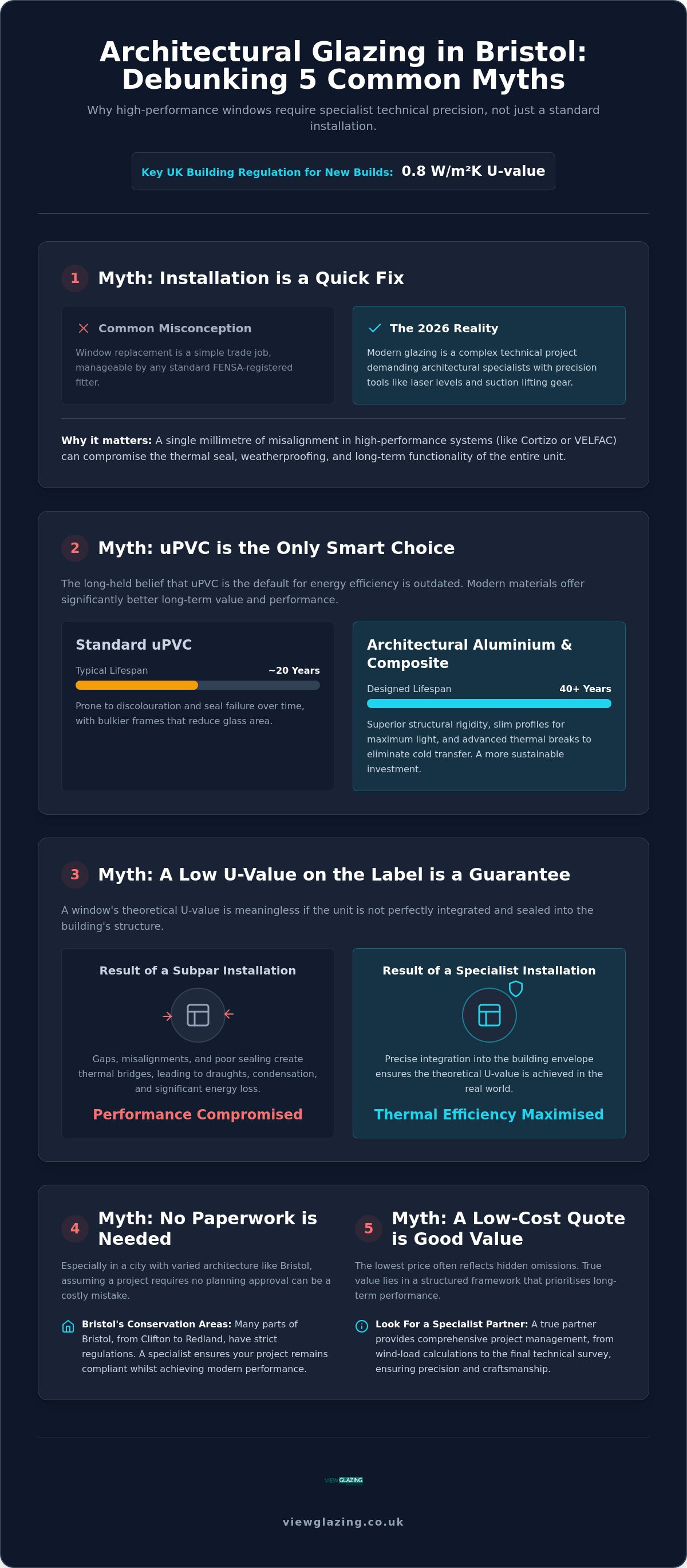
Many homeowners view window replacement as a simple weekend task or a quick trade fix. This "quick fix" mentality is perhaps the most persistent myth surrounding glazing installation Bristol. In reality, modern architectural glazing is a comprehensive technical project that demands far more than a standard replacement approach. Whilst a basic FENSA-registered fitter might be perfectly capable of installing standard uPVC units, high-performance systems such as VELFAC composite windows or Cortizo aluminium sliding doors require a level of precision that goes beyond basic trade skills. These systems are engineered to exacting tolerances. A millimetre of misalignment doesn't just look poor; it actively compromises the thermal seal and long-term functionality of the frame.
The Glazier vs. The Architectural Glazing Specialist
The difference between a traditional glazier and an architectural specialist lies in the equipment, training, and mindset. High-spec aluminium and composite systems require specialised suction lifting gear and laser-level precision to ensure the weight is distributed correctly. A standard survey often misses the complexities of structural loads or the specific requirements of flush floor finishes for sliding doors. Architectural glazing is the intersection of structural engineering and aesthetic design. By treating the process as a technical installation rather than a commodity purchase, you ensure that the complex UK building regulations regarding safety glass and ventilation are met without compromising the clean lines of your home.
Why Bristol Projects Demand a Bespoke Approach
Bristol's architectural landscape is famously varied, ranging from the honey-coloured stone of Clifton terraces to the exposed, modern builds along the harbour side. Each environment presents unique challenges. Properties in Redland might require specific frame profiles to match historic brickwork, whilst homes closer to the Severn Estuary must account for higher wind loads and the corrosive effects of salt air. A "one size fits all" product simply can't perform across these diverse settings. This is why we advocate for glazing project management as the gold standard for 2026. This approach ensures that every aspect of the glazing installation Bristol, from the initial wind-load calculations to the final technical survey, is handled with professional oversight. It transforms a potentially stressful renovation into a structured, predictable journey toward a high-performance home.
Busting the Frame Material Myth: Why uPVC Isn’t the Only (or Best) Answer
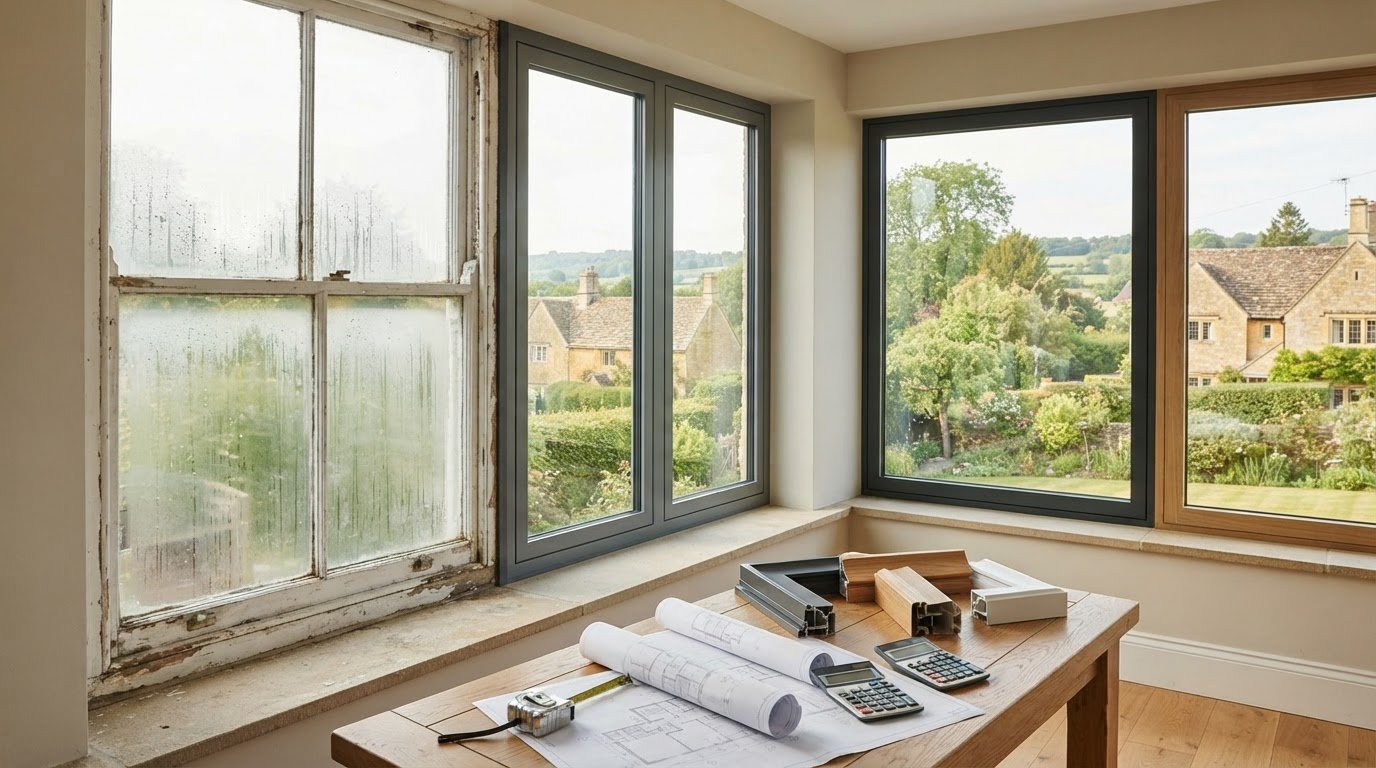
For decades, uPVC has been the default recommendation for homeowners seeking energy efficiency. However, as we move into 2026, the idea that plastic is the only cost-effective route to low U-values is a significant misconception. Whilst uPVC windows might meet basic requirements, they often lack the structural rigidity and aesthetic longevity required for high-end Bristol refurbishments. A standard uPVC frame typically has a lifespan of approximately 20 years before the seals fail or the frames discolour. In contrast, premium architectural systems are designed to last 40 years or more, making them a far more sustainable investment for your home.
Modern aluminium has also undergone a revolution. The old myth that aluminium frames are "cold" or prone to condensation is entirely outdated. Today’s systems utilise advanced thermal breaks, which are insulating barriers between the inner and outer frames that prevent heat transfer. This technology allows for incredibly slim profiles that still exceed the performance of bulkier plastic alternatives. When working with FENSA approved installers, you can ensure that these high-performance materials are fitted to the exacting standards required to maintain their thermal integrity.
The VELFAC Advantage: Wood Inside, Aluminium Outside
Composite windows represent the pinnacle of modern window design. The VELFAC windows Bristol homeowners increasingly choose offer a unique "best of both worlds" construction. You enjoy the warmth and natural beauty of timber internally, whilst a durable aluminium sash protects the exterior from the elements. This design is particularly favoured by architects for modern extensions because of its uniform sightlines. The opening and fixed sashes look identical from the outside, creating a clean, symmetrical aesthetic that uPVC simply cannot replicate.
Slimline Aluminium: Cortizo and the Pursuit of Light
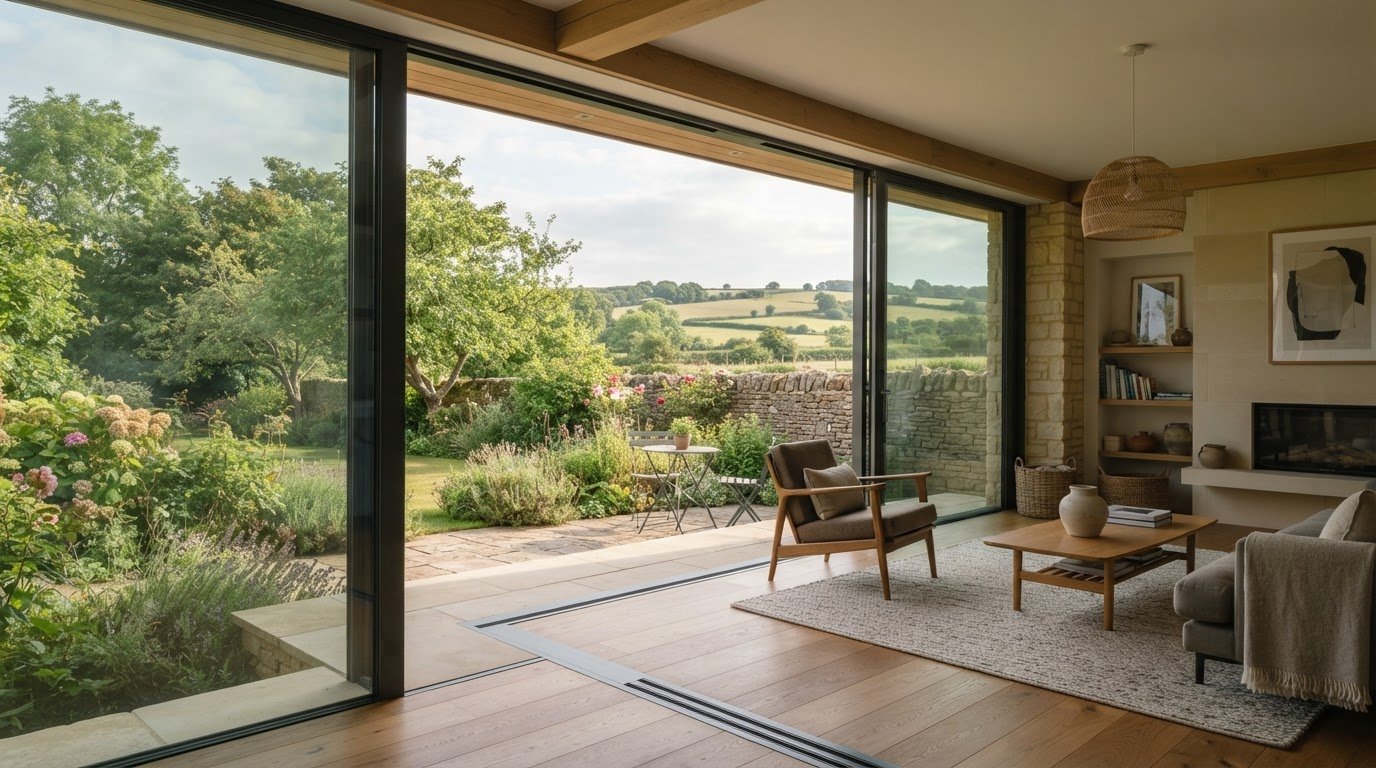
If your goal is to maximise natural light, slimline aluminium is the undisputed leader. Many worry that large glass panels lead to cold rooms, but Cortizo sliding doors prove otherwise. These systems achieve ultra-slim interlocks, yet they maintain exceptional thermal performance through sophisticated engineering. Because these units are significantly heavier than standard doors, a professional glazing installation Bristol specialist is essential to manage the structural requirements of the opening. If you are weighing up material choices for your renovation, you might find it helpful to speak with a specialist about which system best suits your property's specific orientation and style.
The Thermal Performance Trap: Why U-Values Depend on Installation
A common mistake when planning a glazing installation Bristol project is focusing solely on the numbers on a manufacturer's data sheet. While a low U-value is a marker of a high-quality product, that figure remains purely theoretical until the window is correctly integrated into your building's envelope. If the interface between the frame and the masonry isn't perfectly airtight, you are essentially buying a high-performance engine and fitting it into a car with no tyres. The seal is where the real work happens.
Thermal bridging is the primary enemy of a comfortable, energy-efficient home. This occurs when heat finds a path of least resistance through non-insulating materials, usually at the perimeter where the frame meets the wall. To combat this, we utilise specialised expanding foam tapes, airtight membranes, and EPDM seals. These components ensure the thermal envelope is continuous, preventing the cold spots that often lead to condensation and internal mould growth. It is also a myth that triple glazing is always the superior choice. While it's often necessary to meet the 0.8 W/m²K requirements for new builds under official government guidance, high-spec double glazing with argon gas fills can often provide the perfect balance of thermal retention and light transmission for many Bristol refurbishments.
Understanding U-Values vs. Psi-Values
To achieve true efficiency, you must look beyond the U-value, which measures the heat loss through the glass and frame. The Psi-value is equally critical; it measures the linear thermal heat loss at the junction where the window meets the wall. A window with a 0.8 U-value can still feel draughty if the installation fails to address the thermal bridge at the perimeter. At View Glazing, we focus on the "as-installed" performance, ensuring that the technical survey accounts for the specific wall construction of your property to minimise these junction losses.
Solar Gain and Overheating: The 2026 Challenge
Modern home design often pursues maximum natural light, but more glass doesn't always equal a better living environment. Without careful specification, large glazed areas can lead to summer overheating, turning a beautiful extension into an unusable greenhouse. We address this by sourcing glass with advanced solar control coatings that reflect heat whilst allowing light to pass through. These sophisticated commercial glazing Bristol techniques are now becoming standard in residential projects. They allow us to create expansive glass walls that remain comfortable throughout the year, regardless of which way your home faces.
Planning and Heritage: Debunking the "No-Paperwork" Myth
A common assumption amongst homeowners is that replacing windows on a "like-for-like" basis automatically exempts them from the planning process. This is a dangerous myth, particularly in a city with such a rich architectural heritage. If your property sits within a Conservation Area or is a Listed Building, the rules for glazing installation Bristol projects are significantly more stringent. Even subtle changes in frame thickness, the colour of the spacer bars, or the choice of material can lead to enforcement notices if the proper permissions aren't secured beforehand. It's much easier to involve specialists early than to face the cost of replacing non-compliant windows later.
In locations such as Bath, Frome, and the Cotswolds, the scrutiny from heritage officers is even more intense. These authorities often demand that new glazing preserves the unique character of the original building, which typically means avoiding modern materials like uPVC. However, this doesn't mean you must sacrifice thermal performance. The technical specification phase is the most critical part of your project. It's during this stage that we provide the detailed CAD drawings and material samples required to prove that a modern system can respectfully coexist with historic masonry. By providing clear evidence of aesthetic harmony, we help you secure the necessary approvals whilst delivering a warmer, more efficient home.
Glazing in Bristol Conservation Areas
Key neighbourhoods like Clifton, Cotham, and Montpelier are often subject to Article 4 Directions. These legal restrictions mean that many works that would normally be permitted development now require full planning permission. For these sensitive projects, Rationel windows are frequently the ideal choice. These high-performance timber systems can be crafted with slim profiles that mimic traditional sightlines, satisfying local planners whilst significantly improving your home’s energy efficiency. They offer the authentic look of timber with the longevity and precision of modern engineering.
Listed Buildings and the "Slim Double Glazing" Debate
Grade II listed properties present a unique challenge for any glazing installation Bristol. Standard double glazing is often rejected because the thick sightlines of the spacer bars appear historically inaccurate. This is where the expertise of a specialist contractor becomes invaluable. We provide samples of specialised "slim" double glazing that are often more acceptable to council officers. Our experience with window installation Bath has shown that a collaborative approach with planners, backed by technical data, is the most effective way to secure approval. If you're unsure about the planning status of your heritage project, we recommend you contact our technical team for a consultation before you commit to a specific product.
Selecting Your Bristol Glazing Partner: A Framework for Value
Choosing a partner for your glazing installation Bristol project is a decision that impacts your property for decades. Whilst it is tempting to compare quotes based on the bottom line alone, a "cheap" estimate often masks significant technical omissions. These might include the use of standard glass where safety glass is legally required, or the absence of a comprehensive technical survey that accounts for structural loads. A professional partner acts as a steady guide through this complexity, ensuring that the architectural vision remains intact from the first drawing to the final seal.
The "survey, source, install" model is the only way to guarantee that the high-performance frames you've chosen actually deliver their promised thermal benefits. When the technical survey and the installation are handled by the same specialist team, the risk of miscommunication is eliminated. This methodical approach ensures that every millimetre is accounted for, which is particularly vital when integrating slimline systems or large-format sliding doors into existing masonry. Much like the comprehensive approach taken by Aqua Remodeling LLC in the home renovation sector, this level of oversight transforms a high-stakes project into a structured, predictable journey toward a more beautiful home.
The 5 Questions Every Homeowner Must Ask
To ensure you are receiving a service that prioritises precision and longevity, we recommend a structured approach to vetting your contractor. Use this checklist during your initial consultations:
Is the person visiting your home a technical specialist or a salesperson? A specialist understands structural loads and floor finishes; a salesperson focuses on the transaction.
Do they provide a bespoke U-value calculation for your specific project? Standardised data sheets don't account for the "as-installed" performance we have discussed.
What is their track record with architectural brands such as Brett Martin or Rationel? High-spec systems require specific training and specialised lifting equipment.
How do they handle the interface between the frame and the wall? Ensure they use specialist membranes and tapes rather than relying solely on standard silicone.
Does their regional expertise extend across the South West? For instance, our work in window installation Chippenham demonstrates our ability to adapt to varied building styles and local planning requirements.
Why View Glazing is the Trusted Choice for 2026
We operate on a project-managed fee model that prioritises quality over volume. By maintaining professional oversight throughout the journey, we guarantee that the technical specifications agreed upon at the start are exactly what is delivered on-site. Our partnerships with industry leaders like VELFAC and Cortizo allow us to provide high-performance solutions that are both modern and timeless. We value order and clear communication, leading our clients toward a decisive but unpressured conclusion. If you are ready to ensure your glazing installation Bristol delivers lasting value, we invite you to take the next step.
Realising Your Architectural Vision for 2026
As you plan your next home improvement, remember that the success of your project rests on the technical precision of the installation rather than the glass alone. We've explored how high-performance systems like VELFAC, Rationel, and Cortizo require more than a standard trade approach to deliver their full thermal and aesthetic potential. By prioritising a technical survey and navigating the specific planning nuances of the South West, you ensure your home remains both beautiful and compliant.
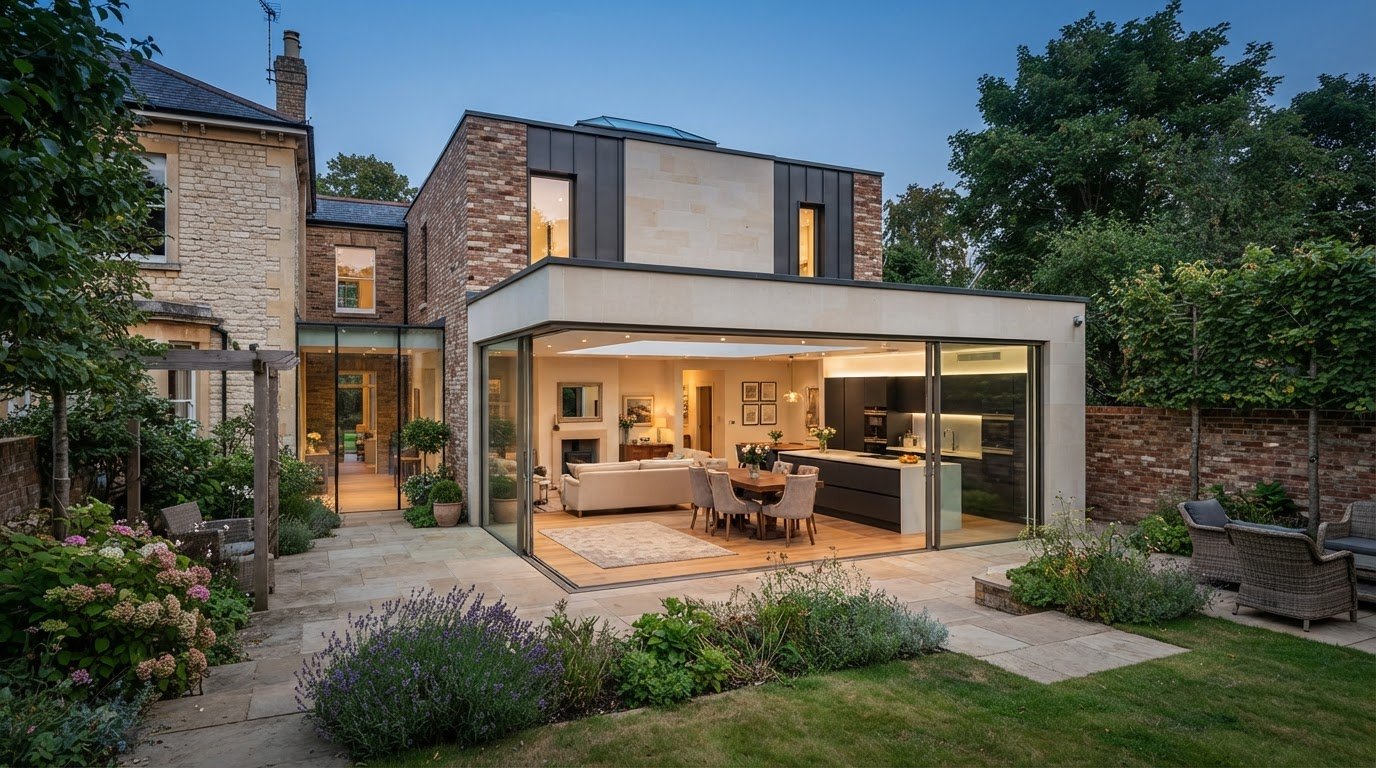
Whether you're working within a strict conservation area or building a contemporary harbour-side extension, your choice of partner is the defining factor in project longevity. As official partners for leading architectural brands, we provide the specialist technical surveying required for complex builds across Bristol, Bath, and the Cotswolds. It's time to move beyond the myths and invest in a solution that truly transforms your living space through light and performance.
Enquire about your architectural glazing project today and let us guide you through every stage of your glazing installation Bristol. We look forward to helping you realise your vision with clarity and craftsmanship.
Frequently Asked Questions
Do I need planning permission for new windows in Bristol?
Planning permission is generally required if your property is a listed building or situated within one of Bristol's many conservation areas, such as Clifton, Cotham, or Redland. For most standard residential properties, replacing windows on a "like-for-like" basis falls under permitted development. However, we always recommend checking the Bristol City Council "Know Your Place" interactive map to confirm your property's specific status before starting any glazing installation Bristol project.
What is the difference between a standard glazier and an architectural glazing specialist?
A standard glazier typically focuses on simple glass replacements or basic uPVC installs, whereas an architectural specialist manages the entire technical integration of high-performance systems. Specialists handle complex structural load calculations, precise laser surveying, and the interface with internal floor finishes. This level of expertise is essential for slimline aluminium or composite frames where tolerances are measured in millimetres to ensure long-term thermal performance and structural integrity.
How much does glazing installation cost in the South West?
The total investment for your project depends on the choice of materials, the scale of the apertures, and the technical complexity of the site. High-performance systems like VELFAC composite or Cortizo aluminium represent a permanent investment in your property's value and energy efficiency. Whilst the initial outlay is higher than basic plastic alternatives, the extended lifespan of 40 plus years and reduced heating costs provide superior long-term value for your home.
Is triple glazing worth the extra investment for a Bristol home?
Triple glazing is an excellent choice for homeowners prioritising maximum thermal comfort and acoustic insulation, especially as we move toward the 0.8 W/m²K standards for new builds. For many Bristol refurbishments, high-specification double glazing with argon gas fills and solar control coatings provides an ideal balance of performance and light transmission. The decision often rests on the specific orientation of your home and your targets for energy reduction.
Can I install VELFAC or Cortizo products myself?
We strongly advise against attempting a DIY installation of VELFAC or Cortizo products. These architectural systems are engineered to exacting standards and require installation by trained professionals to validate the manufacturer's warranty. Incorrect fitting can lead to structural misalignment, water ingress, and the failure of the thermal seals. Professional installation ensures that the significant investment you have made in premium frames is protected and performs as intended.
How long does a typical architectural glazing installation take?
A typical installation for a standard residential property usually takes between three to five days, depending on the number of units and the complexity of the openings. Larger projects involving structural glazed links or heavy Cortizo sliding doors may require additional time for technical alignment and the use of specialist lifting equipment. We provide a detailed project schedule following the technical survey to ensure your renovation remains organised and predictable.
What warranties are provided for high-performance windows and doors?
High-performance windows and doors come with robust manufacturer warranties that cover the frames, glazing units, and hardware. These often extend to 10 or 12 years for the integrity of the composite or aluminium structures. By choosing a professional partner for your glazing installation Bristol, you also benefit from an installation warranty. This protects the workmanship and ensures the weather-tightness of the building interface remains secure for years to come.
How do I maintain aluminium or composite window frames?
Aluminium and composite frames are designed for longevity and require minimal maintenance compared to traditional timber. Simply wipe the frames down with warm soapy water twice a year to remove environmental salt and grit, which is particularly important for properties exposed to the South West's coastal air. You should also ensure that the drainage paths are clear and apply a light lubricant to the hinges and locking mechanisms annually to maintain smooth operation.
Comments