

Sustainable Windows Bristol: Eco-Friendly Glazing Guide

The most sustainable window for a Bristol home isn’t automatically the one made from the material with the greenest reputation. Choosing sustainable windows in Bristol means weighing the whole project: how the frame and glazing perform, how well they suit the building, and how carefully they’re specified and installed. Timber, composite and aluminium each bring different practical and design considerations, so the right choice depends on the property and your priorities.
This guide explains how to compare those materials and assess the sustainability factors that matter when choosing new windows. You’ll look at energy performance, durability, maintenance and the character of your property, as well as how a professional survey and project-specific specification can help shape a suitable installation. Whether you’re updating a period home or planning a contemporary project, the aim is to help you shortlist glazing options with confidence.
Table of Contents
What makes windows sustainable for a Bristol home?
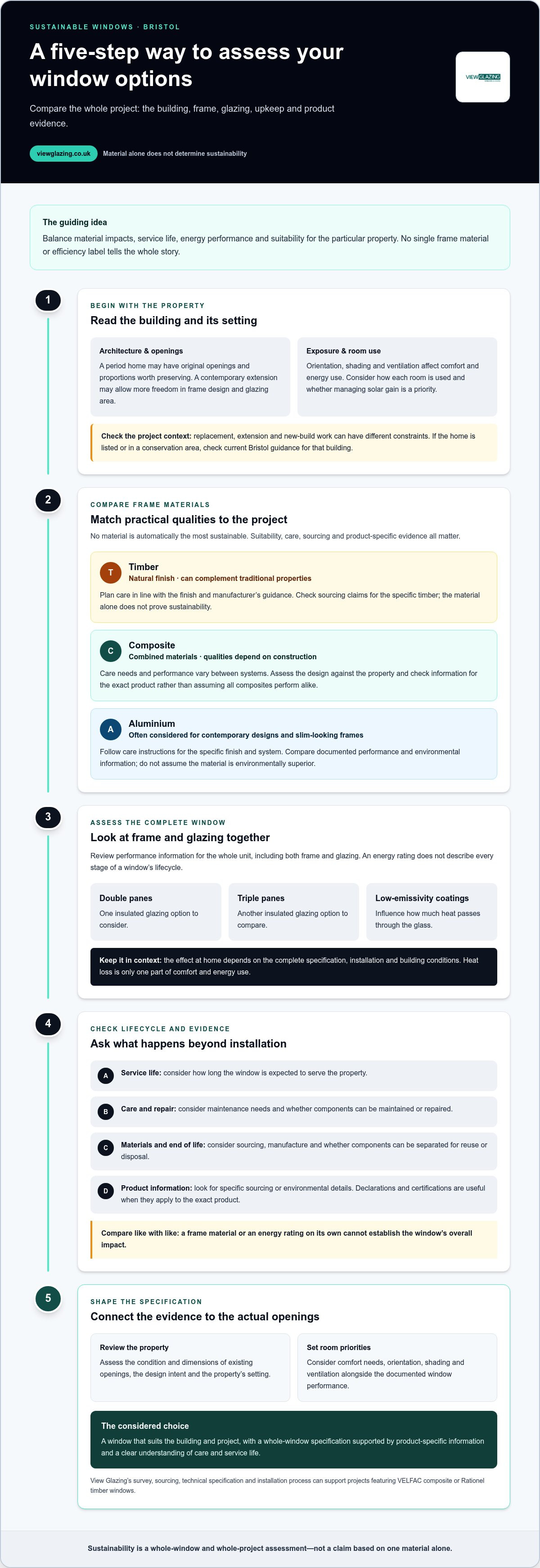
Sustainable windows balance material impacts, service life, energy performance and suitability for a particular building. No single frame material or efficiency label tells the whole story. A window can help limit heat loss in use, but its manufacture, upkeep, lifespan and eventual reuse or disposal also matter. For a Bristol home, the considered choice is the one that works as part of the property, not one judged by a single claim.
It helps to distinguish energy used during a window’s service from the impacts of its materials and manufacture. Insulated glazing may use double or triple panes and low-emissivity coatings, which influence how much heat passes through the glass. This overview of insulated glazing explains how insulated glass units are constructed. The effect in a home depends on the complete window specification, installation and building conditions. Heat loss is only one part of comfort and energy use: orientation, shading and ventilation matter too.
Which sustainability factors matter beyond energy efficiency?
Consider how long a window is expected to serve the property, what care its material needs, and whether components can be maintained, repaired or separated at end of life. Material sourcing matters as well. Look for specific product information about sourcing or environmental impacts instead of relying on broad phrases such as “eco-friendly”. Environmental declarations or certifications can be useful when they apply to the exact product being considered.
Compare evidence on a like-for-like basis. A frame material alone doesn’t establish a window’s overall impact, and an energy rating doesn’t describe every stage of its lifecycle. Review performance information for the complete unit, including the frame and glazing, and consider how its specification will meet the comfort needs of the room.
Why does Bristol property context affect window choice?
Age, architecture and exposure all shape what is suitable. A period property may have original openings and proportions worth preserving, while a contemporary extension may allow more freedom in frame design and glazing area. Orientation and room use also affect priorities, from managing solar gain to creating a comfortable space throughout the day.
Replacement, extension and new-build projects can have different constraints. Before specifying windows, assess the condition and dimensions of the existing openings, the design intent and the property’s setting. If the home is listed or in a conservation area, planning or consent requirements may affect the options. Check current Bristol guidance for the individual building before settling on a specification.
Timber, composite or aluminium: how do window materials compare?
Each frame material brings different practical and design considerations. Timber can suit traditional architecture and offers a natural finish; composite frames combine materials; aluminium can work well with a clean, contemporary look. None is automatically the most sustainable choice. Service life, maintenance, sourcing information and the complete window specification all affect the comparison. Start with the building and the evidence for the specific product.
When might timber windows suit a sustainable project?
Timber may suit a project where the frame complements the architecture and you’re prepared to plan ongoing care. Its environmental case depends on details such as sourcing, product life and end-of-life options, so the material itself isn’t proof of sustainability. View Glazing works with Rationel timber windows. Read more in this guide to FSC-certified timber windows.
What should you weigh up with composite and aluminium windows?
Composite describes a frame made from combined materials, but construction and performance vary between products. View Glazing’s VELFAC composite windows are an option to assess alongside timber. Compare aluminium systems by their documented specification, design fit and material information rather than assuming environmental superiority. The Energy Saving Trust guidance offers useful context on window and glazing features that can influence energy performance.
Apply the same questions to each option: how does it suit the building, what care will it need, and what evidence supports its performance and material claims? A survey connects those considerations to the actual openings and project aims. Discuss your window project with View Glazing as you develop the specification.
Do sustainable windows mean compromising on comfort or design?
No. Sustainability doesn’t dictate one frame material, glazing arrangement or architectural style. A considered specification can support comfort and complement the home, whether the project involves a period property or a contemporary design. Balance appearance and performance with the building’s condition, how each room is used and the quality of the installation.
Comfort depends on the complete window and its fit, not a label in isolation. Glazing, frame, seals, opening design and installation all play a part, alongside ventilation, orientation and shading. A high-performing unit can’t resolve every issue if it’s poorly fitted or unsuitable for the building. When choosing sustainable windows in Bristol, assess the proposed specification in context rather than assuming an environmental choice means less light, fewer design options or reduced comfort.
Can sustainable glazing suit period and contemporary homes?
Yes, if the design responds to the property. A period home may call for careful attention to frame proportions and sightlines, while a contemporary extension may use a different balance of glazing and frame. Neither approach rules out sustainability. For listed buildings or properties in conservation areas, requirements can depend on the building and proposed work. Check current local planning and consent guidance before finalising a design, and don’t assume approval.
How should you interpret environmental and performance claims?
Ask what evidence supports a claim and whether it applies to the exact product being specified. Broad terms such as “green” or “eco-friendly” are less useful than comparable product information. A U-value describes heat transfer through a window; it doesn’t measure the full environmental impact of manufacturing, materials or disposal. Approved Document L building regulations provides official guidance on conserving fuel and power in England, but applicable requirements depend on the project.
Operational performance concerns energy used during a window’s service, whilst embodied impacts relate to materials and manufacture. Consider both, alongside design and installation, to keep the decision grounded in the needs of the home.
How to choose sustainable windows for a Bristol renovation or new build
A clear process turns environmental priorities into a practical window specification. Start with the building and how you use it, then compare suitable options against product information and project requirements. The aim is not to choose a frame in isolation, but to bring together design, performance and installation in a way that suits the property.
What should a project brief include?
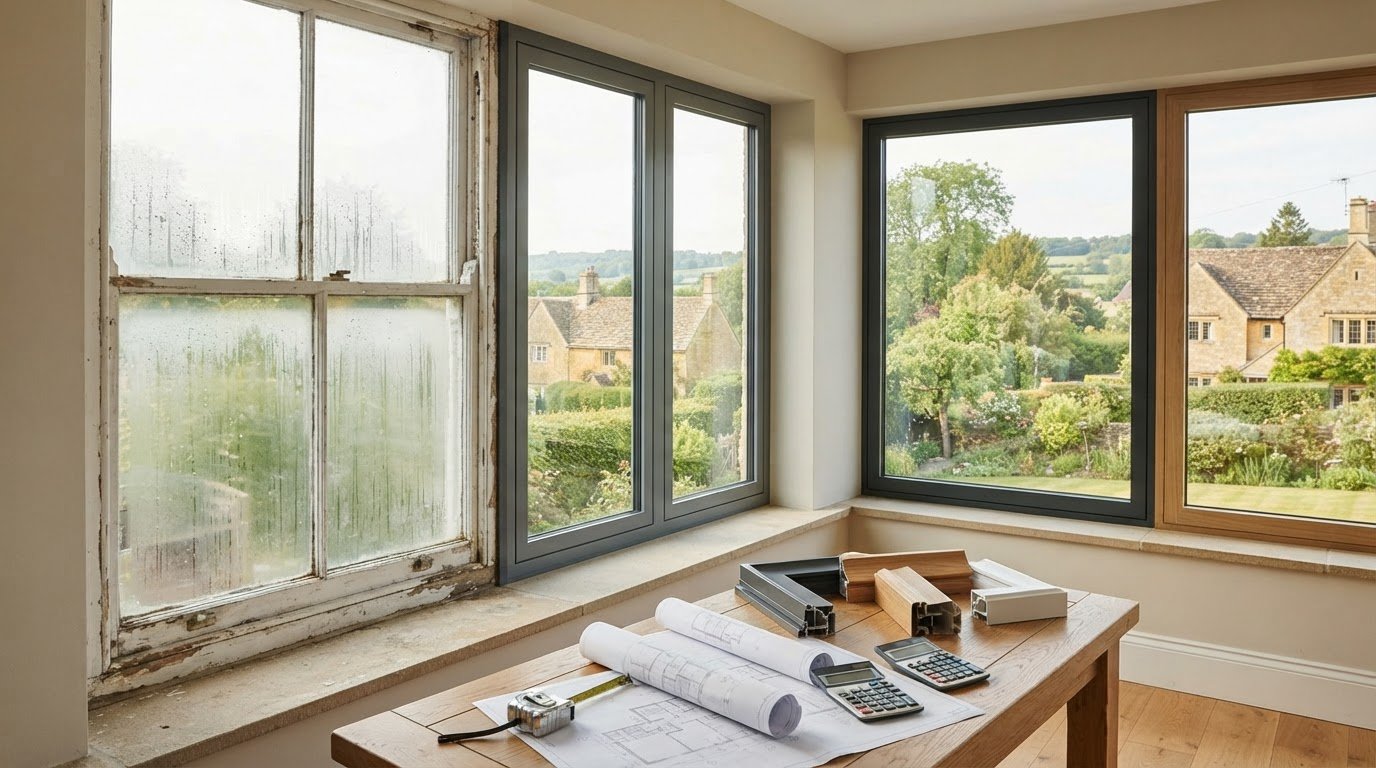
Record whether the work is a replacement, refurbishment, extension or new build. Note the property’s condition, the state and dimensions of existing openings, and how each room is used. This gives the survey and specification a clear starting point, whether your priority is retaining architectural character, improving comfort or designing a new space.
1. Set your priorities. Decide how appearance, daylight, comfort, maintenance and environmental evidence should inform the choice. Be specific about what matters most in each room.
2. Assess the property. Consider its age and architectural character, existing openings, orientation and exposure. Record visible defects or constraints that may affect the proposed work.
3. Describe the design intent. Note preferred proportions and sightlines, and how the new windows should relate to the façade and interior. For an extension or new build, coordinate the window design with the wider layout.
4. Compare relevant product evidence. Review information for the complete window, including the frame and glazing. Look for details that relate to the specific product, and distinguish measurable performance information from broad environmental language.
5. Identify project requirements. Planning and conservation considerations vary by property and proposed changes. Where relevant, check current Bristol guidance before agreeing the design, and include applicable constraints in the specification.
6. Agree the specification and installation plan. Confirm the selected window, dimensions, interfaces with the surrounding building and installation approach before work proceeds.
Why do surveying and installation matter to the final result?
A survey establishes the dimensions and condition of each opening, along with how a new frame will meet the surrounding structure. These details inform product selection and technical specification. Professional installation then puts the agreed design into practice, helping the window sit as intended and supporting its specified performance. View Glazing brings surveying, sourcing, specification and installation together for residential and commercial projects around Bristol.
With the property details and priorities recorded, you can move from a broad environmental aim to a specification shaped around your home. Discuss your Bristol glazing project with View Glazing.
Plan sustainable window installation in Bristol with View Glazing
A considered glazing project brings the property, design brief and product specification together before installation. View Glazing supports residential and commercial projects around Bristol through surveying, sourcing, technical specification and professional installation. This coordinated process helps shape a window choice around the building and its priorities, rather than treating the frame as a standalone decision.
What happens from initial survey to installation?
The project starts with understanding the property and intended work. A survey establishes the dimensions and condition of the openings, how new frames will meet the surrounding structure, and relevant architectural considerations. Those details inform sourcing and technical specification, including how the selected glazing aligns with the project’s design and performance priorities.
View Glazing works with VELFAC composite windows and Rationel timber windows. These options can be considered in relation to the building’s character, use and specification needs. Product information should be reviewed for the particular system and project, since material and performance claims aren’t interchangeable across different products.
Once the specification is agreed, professional installation puts the design into practice. Attention to dimensions and interfaces helps deliver the agreed design. The work is planned around the individual project.
How can you take the next step?
Homeowners, architects and commercial customers can start by sharing the project context: whether it’s a renovation, new build or extension; what the property is like; and which design or performance priorities matter most. These details provide a practical starting point for shaping suitable options for a Bristol-area project.
View Glazing guides projects through survey, sourcing and specification towards installation. You can start with the building and the result you want to achieve, without needing every technical detail settled in advance.
Contact View Glazing to discuss your project and explore a considered glazing approach for your Bristol-area property.
Choose glazing that works for your property
Sustainable windows in Bristol are best chosen by considering the whole project: materials, documented performance, design fit, surveying and installation. Timber and composite are options to assess, but the right specification depends on your property, architectural brief and priorities. Weigh environmental claims against product-specific evidence, not a single label.
View Glazing brings surveying, sourcing, technical specification and professional installation together, with VELFAC composite and Rationel timber windows among the options available for a project. Its local coverage includes Bristol, Bath, Frome, Chippenham, Salisbury and the Cotswolds.
Whether you’re planning a renovation, extension or new build, start with the building and what you want your glazing to achieve. Discuss your sustainable window project with View Glazing.
Frequently Asked Questions
What makes a window sustainable?
A sustainable window balances material impacts, service life, energy performance and suitability for the building. Consider how the frame and glazing perform in use, what maintenance they need, how materials are sourced and what may happen at the end of their useful life. No single material or efficiency label gives the full picture. The most appropriate choice depends on the property, project requirements and evidence for the specific window.
Are timber windows more sustainable than composite windows?
Not automatically. Compare timber and composite windows using product-specific information on sourcing, construction, performance, upkeep and expected service life. Timber may suit a building’s architecture, but responsible sourcing needs evidence and maintenance should be considered. Composite frames combine materials, so their construction and environmental information matter. View Glazing works with Rationel timber and VELFAC composite windows, which can be assessed against the project’s design and performance priorities.
Can sustainable windows improve comfort in a Bristol home?
They can support a more comfortable home when the complete window specification suits the building and is professionally installed. Glazing and frame performance can affect heat transfer, but comfort also depends on orientation, shading, ventilation and the property’s condition. A Bristol project should consider how each room is used rather than relying on a product label or assuming the same solution will suit every home.
Do sustainable windows have to look modern?
No. Sustainability doesn’t prescribe a particular appearance or frame material. Window proportions, sightlines, finish and glazing design can be considered in relation to a period property or a contemporary home. The right design response depends on the architecture and project brief. For listed buildings or properties in conservation areas, local requirements may affect the options, so check the relevant guidance for the specific property before settling on a design.
How do I compare the environmental impact of different windows?
Compare product-specific evidence rather than broad claims such as “green” or “eco-friendly”. Look for relevant information on material sourcing, manufacturing impacts, durability, maintenance and end-of-life considerations, alongside performance details for the complete window. A U-value describes heat transfer, not a window’s full environmental impact. Check that any environmental declaration or certification applies to the exact product being considered, and compare like with like.
Do I need planning permission to replace windows in Bristol?
It depends on the property and proposed work. Replacing windows in a conservation area, particularly those visible from the street, may require planning permission. Window replacement in a listed building requires listed building consent. Requirements can vary with the building and its setting, so check current Bristol planning guidance for your property before proceeding. A survey can establish the existing openings and inform a project-specific specification.
What does a sustainable window installation project involve?
A project typically includes surveying the property and openings, sourcing suitable windows, agreeing the technical specification and carrying out professional installation. View Glazing works with homeowners, architects and commercial customers across Bristol, Bath, Frome, Chippenham, Salisbury and the Cotswolds. VELFAC composite and Rationel timber windows are among the options considered. The process is shaped around the building, design brief and performance priorities, not a one-size-fits-all approach.
Comments