.png)

Timber Windows: Bristol Conservation Areas 2026 Guide

Updated: Sep 25
Replacing your original sash windows doesn't have to be a choice between historical integrity and a warm home. If you live in one of Bristol's 33 conservation areas, you likely know the frustration of drafty, rattling frames and the eye-watering heating bills that come with uninsulated period glazing. Finding high-specification timber windows for conservation areas Bristol is often a source of anxiety, as the fear of receiving a planning enforcement notice can easily outweigh the desire for a more comfortable, energy-efficient living space.
We understand that maintaining the architectural soul of your property is non-negotiable. This guide provides a clear roadmap for navigating local regulations whilst achieving the highest levels of thermal performance. By opting for precision-engineered solutions such as Rationel timber windows, you can enjoy a secure, quiet home that remains aesthetically identical to the 19th-century originals. You don't have to sacrifice the character of your home to enjoy the benefits of modern glazing.
We will outline the current 2026 planning landscape in Bristol, explain how to satisfy strict material requirements, and show you why high-performance timber is the key to satisfying both the Council and your own comfort.
Table of Contents
Navigating Bristol’s Conservation Areas and Article 4 Directions
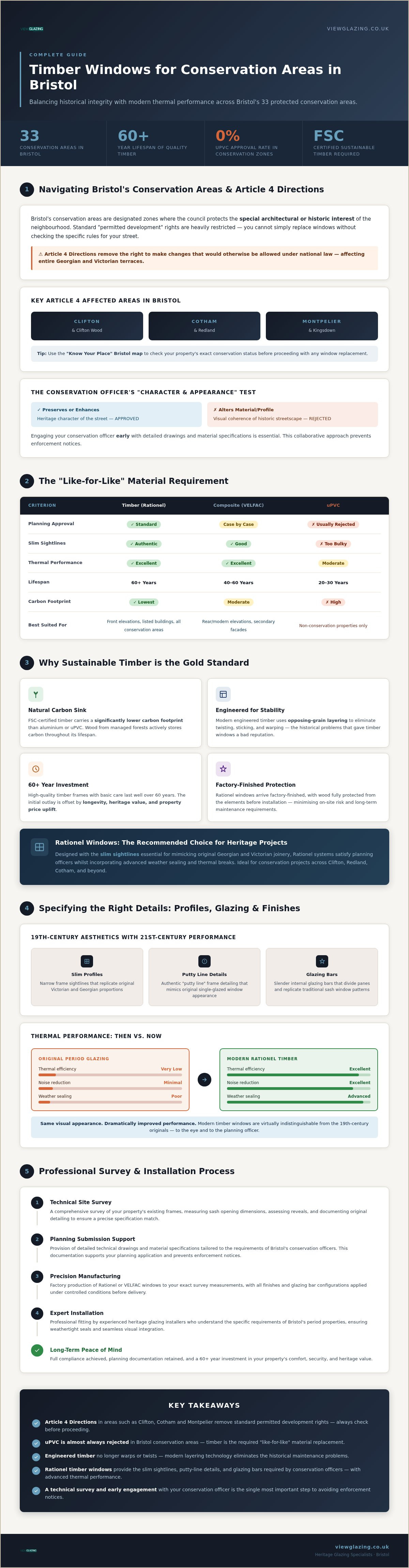
Bristol is home to approximately 33 conservation areas. These are designated zones where the council protects the special architectural or historic interest of the neighbourhood. For property owners, this designation means that standard "permitted development" rights are often restricted. Selecting the right timber windows for conservation areas Bristol is as much about legal compliance as it is about home improvement. You can't simply replace windows without checking the specific rules for your street first.
In specific neighbourhoods, the Council has implemented Article 4 Directions. These legal mechanisms remove the right to make changes that would otherwise be allowed under national law. It's a layer of protection that ensures the city's Georgian and Victorian terraces don't lose their visual cohesion. Key areas affected include:
Clifton and Clifton Wood
Cotham and Redland
Montpelier and Kingsdown
To see exactly where your property sits, the "Know Your Place" Bristol map is an essential first step. It provides historical context that helps justify your choice of high-quality glazing by showing how your home looked in previous centuries.
The Role of the Bristol Conservation Officer
Engaging with the local conservation officer early in your project is a wise move. They apply a "character and appearance" test to any proposed changes. This isn't just about whether the windows look "nice"; it's about whether they preserve or enhance the heritage of the street. View Glazing supports the technical side of your planning submission by providing the detailed drawings and specifications officers need. This collaborative approach helps prevent the stress of enforcement notices and ensures your timber windows for conservation areas Bristol meet every regulatory hurdle.
The "Like-for-Like" Material Requirement
Regarding traditional Bristol homes, timber is usually the default requirement. The planning department prioritises material integrity. This means that uPVC is almost always rejected, even if it's marketed as "heritage style." These modern plastics lack the depth, texture, and slim profiles of genuine wood. We recommend Rationel timber windows because they offer the precise aesthetics required for a like-for-like replacement while delivering modern thermal performance. In some specific cases, particularly on more modern or rear-facing elevations, composite systems like VELFAC might be considered acceptable. These combine an external aluminium sash with an internal timber frame, providing a sleek look that respects the building's fabric while offering enhanced durability.
Why Sustainable Timber is the Gold Standard for Heritage Glazing
Historically, timber windows had a reputation for requiring constant attention. That's no longer the case. Modern engineered timber is created by layering wood sections with opposing grains. This process eliminates the internal tensions that caused traditional frames to twist, stick, or warp. For those seeking timber windows for conservation areas Bristol, this technological leap means you can preserve the authentic look of your home without the maintenance headaches of the past.
Choosing FSC-certified timber is an environmentally responsible investment. Wood is a natural carbon sink, and when sourced from managed forests, it carries a significantly lower carbon footprint than aluminium or uPVC. Beyond ethics, there's a clear financial argument. High-quality timber frames can last 60 years or more with basic care. While the initial outlay is higher than plastic alternatives, the longevity and the value added to a heritage property make it the superior long-term choice.
Rationel Windows: Authentic Design Meets Modern Performance
We often recommend Rationel windows for heritage projects across Clifton and Redland. These systems are designed with the slim sightlines essential for mimicking original Georgian and Victorian joinery. They provide the delicate aesthetic required by planning officers while incorporating advanced weather sealing and thermal breaks. Because they arrive factory-finished, the wood is protected from the elements from day one. This precision engineering ensures that your new glazing performs as beautifully as it looks.
Maintenance Realities for Bristol Homeowners
It's a common misconception that wood requires a fresh coat of paint every year. Modern microporous paints have transformed the ownership experience. These coatings allow the timber to breathe, letting moisture escape whilst preventing water from soaking into the grain. When specifying timber windows for conservation areas Bristol, homeowners often worry about the upkeep, but the reality is far more manageable. In the temperate Bristol climate, a high-quality factory finish can last a decade before it needs a simple top-up.
Maintaining your warranty is straightforward. A simple routine of cleaning the frames with warm, soapy water twice a year is usually all that's required to keep the finish in top condition. If you're unsure which timber species or finish best suits your property's orientation, you can speak with our technical team for tailored advice.
Balancing Thermal Performance with Planning Compliance
Many homeowners believe that living in a heritage property means accepting a cold, drafty environment. This is an outdated assumption. Whilst original 19th-century windows were designed with single glazing, modern technology allows us to integrate high-performance glass into traditional frames without compromising the building's soul. The secret lies in slim-profile double glazing. These units are thin enough to sit within a classic timber rebate, yet they offer thermal insulation that was previously thought impossible for period homes.
Upgrading to high-specification timber windows for conservation areas Bristol can fundamentally change how you use your home. Moving from single glazing to modern units can drop your window's U-value from approximately 5.0 W/m²K to as low as 1.2 W/m²K. This doesn't just lower your heating bills; it removes the "cold zone" near windows, making every corner of a Clifton or Cotham terrace usable throughout the winter. These improvements also reflect positively on your property's EPC rating, a factor that's becoming increasingly vital for both resale value and future rental regulations.
Double vs Triple Glazing in Conservation Zones
Bristol Council is often more flexible with glazing specifications on rear elevations or new-build extensions. In these scenarios, triple glazing becomes a viable option. It offers superior heat retention and even better acoustic dampening. However, triple glazing is significantly heavier and thicker than double glazing. This can make it challenging to fit into the delicate, slim frames required for a front-facing Victorian facade. For most heritage projects, a high-performance double-glazed unit provides the perfect middle ground between energy efficiency and architectural accuracy.
Acoustic Glazing for Bristol’s Busy Streets
Urban life is loud. If your home is situated on a busy thoroughfare like Gloucester Road or Whiteladies Road, thermal comfort is only half the battle. Acoustic glazing uses laminated glass layers with a special interlayer that absorbs sound energy. By integrating this into timber windows for conservation areas Bristol, we can significantly reduce the decibel levels entering your living space. This creates a "silent home" environment, shielding you from the rumble of morning buses and the late-night footfall of the city centre. Our project management team ensures these technical glass specifications are handled correctly during the survey, matching the right glass type to your specific noise environment.
Specifying the Details: Profiles, Glazing Bars, and Finishes
Success in a planning application often rests on the smallest architectural details. For timber windows for conservation areas Bristol, the "putty line" aesthetic is a critical requirement. This refers to the angled profile of the timber that holds the glass in place, mimicking the traditional putty used in 19th-century joinery. Modern engineered frames can replicate this look perfectly, satisfying the "character and appearance" test mentioned earlier without the maintenance issues of crumbling linseed oil putty.
Glazing bars require careful consideration. Whilst "solid" bars were once the only option, they often struggle with the weight and thickness of modern double-glazed units. We typically specify Astragal bars for heritage projects. These are high-quality timber bars fixed to the exterior and interior of the glass, with a spacer bar hidden inside the unit. This creates the convincing illusion of individual panes while maintaining the structural integrity and thermal performance of a single large glass unit. It's a detail that planning officers increasingly look for to ensure a property doesn't lose its period charm.
Colour choice is equally significant. In Bristol neighbourhoods like Montpelier and Kingsdown, a specific palette often dominates. Off-White and Cream are timeless staples that respect the local stone, whilst Sage Green has become a favourite for those seeking a softer, heritage-inspired look. Achieving such high-end results often mirrors the work of restoration experts like Crandall Painting & Stucco, who specialise in the precision application of finishes for luxury homes. Your choice of hardware provides the final touch of authenticity. Brass handles and stays suit Georgian properties, whilst Chrome or Black Ironmongery often better reflect the Victorian or Edwardian eras.
Identifying your property's era is essential for choosing the correct window operation. Georgian and Victorian homes in the city almost exclusively used vertical sliding sashes. If you're looking for improved weather sealing, modern "mock-sash" casements can be designed to look like a sliding sash but open on a side or top hinge. However, for full planning compliance in strict zones, the window's behaviour and opening mechanism should usually match the original. We ensure the operation of your new timber windows for conservation areas Bristol respects the building's history whilst providing modern security.
Custom Finishes and Dual-Colour Options
Factory-applied coatings offer a level of durability that site-painted timber simply cannot match. These finishes are applied in controlled environments, ensuring the wood is fully sealed against the South West's damp weather. If your property is part of a private square or managed by a specific company, you may face strict rules regarding exterior colours. Dual-colour options are a practical solution; they allow you to meet street-level requirements with a dark or specific exterior colour whilst keeping the interior neutral and bright. This flexibility is vital for ensuring the finish complies with specific management company rules whilst suiting your personal interior design.
If you're ready to discuss the specific profiles and hardware for your property, you can request a technical consultation with our team.
Our Professional Survey and Installation Process in Bristol
The foundation of a successful heritage project isn't the window itself, but the accuracy of the initial survey. Period properties in Bristol rarely feature perfectly square openings. Settling over centuries means every aperture is unique. Our survey process identifies these idiosyncrasies early, ensuring that your new timber windows for conservation areas Bristol fit perfectly without the need for unsightly packers or excessive sealant. This precision is what separates a standard replacement from a true architectural upgrade.
The Importance of Technical Glazing Specification
Planning officers require more than just a vague intention to replace windows; they need detailed evidence. They require technical drawings that prove the new frames match the original proportions. Our team provides the specific data and architectural drawings necessary for a robust planning application. We account for every millimetre, from the depth of the rebate to the exact width of the glazing bars. This level of detail is a core part of our glazing project management service, which guides you through the complexities of technical specification and site coordination. We act as the steady guide through a technical process that can otherwise feel overwhelming.
Post-Installation Support and Guarantees
Investing in premium timber glazing should come with long-term peace of mind. Because we partner with industry leaders like Rationel, your windows are backed by substantial manufacturer warranties covering both the timber frames and the high-performance glass units. A managed installation ensures these warranties remain valid, as the windows are fitted exactly to the manufacturer's technical requirements. This professional oversight protects your investment and ensures the longevity of the installation.
Our commitment to your home doesn't end when the last screw is tightened. We provide comprehensive post-installation support to ensure you're confident in operating and maintaining your new windows. If you're ready to transform your home's performance whilst preserving its historic character, book a consultation for your Bristol heritage project today. Our specialists are ready to guide you from the first survey to the final, polished result.
Realising Your Vision for a Sustainable Period Property
Upgrading your property within a heritage zone requires a delicate balance of architectural sensitivity and technical precision. By choosing high-specification timber windows for conservation areas Bristol, you ensure that your home remains legally compliant whilst gaining the thermal efficiency of a modern build. We've explored how engineered timber and slim-profile glazing can eliminate drafts and noise without altering the historic character of your street. These advancements mean you no longer have to sacrifice comfort for the sake of conservation.
As specialists in Rationel and VELFAC systems, View Glazing provides a comprehensive survey and installation service tailored to the unique building fabric of the South West. Our sustainable, high-performance timber solutions offer a permanent investment in your home's longevity and aesthetic harmony. We take pride in acting as your dedicated collaborator, guiding you through every technical specification to ensure a flawless result. If you're ready to navigate the planning process with confidence and transform your living environment, we invite you to Book an Architectural Glazing Consultation. Let's work together to protect the soul of your property for decades to come.
Frequently Asked Questions
Do I need planning permission to replace timber windows in a Bristol conservation area?
You usually need planning permission if your property is subject to an Article 4 Direction or if you're changing the material or appearance of your glazing. In Bristol's 33 conservation areas, the Council aims to preserve the visual character of the streetscape. Even when installing high-quality timber windows for conservation areas Bristol, it's essential to verify your specific street's status via the "Know Your Place" map before starting any work.
Can I use double glazing in a listed building in Bristol?
Installing double glazing in a listed building is more complex than in a standard conservation area property. You must obtain Listed Building Consent before any changes are made. Whilst the Council is becoming more open to slim-profile double glazing to improve energy efficiency, they often require "vacuum" glass or very thin units that fit original rebates. We recommend a technical survey to determine if your specific building can accommodate these modern upgrades.
What is an Article 4 Direction and does it affect my windows?
An Article 4 Direction is a legal order that removes "permitted development" rights for specific properties. This means you cannot change windows, doors, or even external paintwork without formal planning approval. These directions are common in areas like Clifton and Cotham to prevent the loss of original architectural features. If your home is affected, any new glazing must be carefully specified to match the original design in every detail to secure approval.
Why does the council prefer timber over uPVC for heritage properties?
Bristol City Council prioritises material integrity because uPVC cannot replicate the depth, texture, or slim profiles of traditional joinery. Plastic frames often look bulky and age poorly compared to engineered wood. Timber is the historically correct material for the city's Georgian and Victorian terraces. By choosing Rationel timber windows, you provide a sustainable solution that satisfies the Council's "like-for-like" requirement whilst offering the thermal performance and longevity that plastic simply cannot match.
How much do timber windows for conservation areas typically cost?
The cost of high-specification timber windows for conservation areas Bristol depends on several variables, including the frame size, glass type, and the complexity of the opening mechanism. Investing in premium timber should be viewed as a long-term asset that adds significant value to your property. Factors such as factory finishes, acoustic laminates, and ironmongery choices will influence the final figure. We provide detailed technical specifications to help you understand the value of these precision-engineered systems.
Can I change the colour of my windows if I live in a conservation area?
You can often change the colour, but it must remain sympathetic to the building's character and the surrounding streetscape. Planning officers generally prefer traditional palettes such as off-white, cream, or muted greens and greys. If you live in a managed square, there may be even stricter rules to maintain a uniform appearance. We offer dual-colour options, allowing you to meet external regulations whilst choosing a different finish for your interior living space.
How long does the planning process take for window replacement in Bristol?
A standard planning application in Bristol typically takes approximately eight weeks for a decision once it's been validated. This period allows for public consultation and review by a conservation officer. To avoid delays, it's vital to submit accurate technical drawings and material specifications from the outset. Our project management service focuses on preparing this documentation correctly, reducing the likelihood of the Council requesting further information or amendments during the process.
Is secondary glazing a better option than replacement timber windows?
Secondary glazing is often a fallback for buildings where replacement isn't permitted, but it rarely matches the performance of new timber windows. Whilst it helps with acoustics, it creates a double-frame look that can be cumbersome to clean and operate. Full replacement with high-performance timber frames provides a permanent solution for thermal efficiency and security. It also enhances the property's external aesthetic and market value in a way that internal secondary units cannot achieve.
Comments