.png)

Aluminium Windows Bristol: The Complete Architectural Guide 2026
- View Glazing

- 4 days ago
- 11 min read
Updated: 20 hours ago
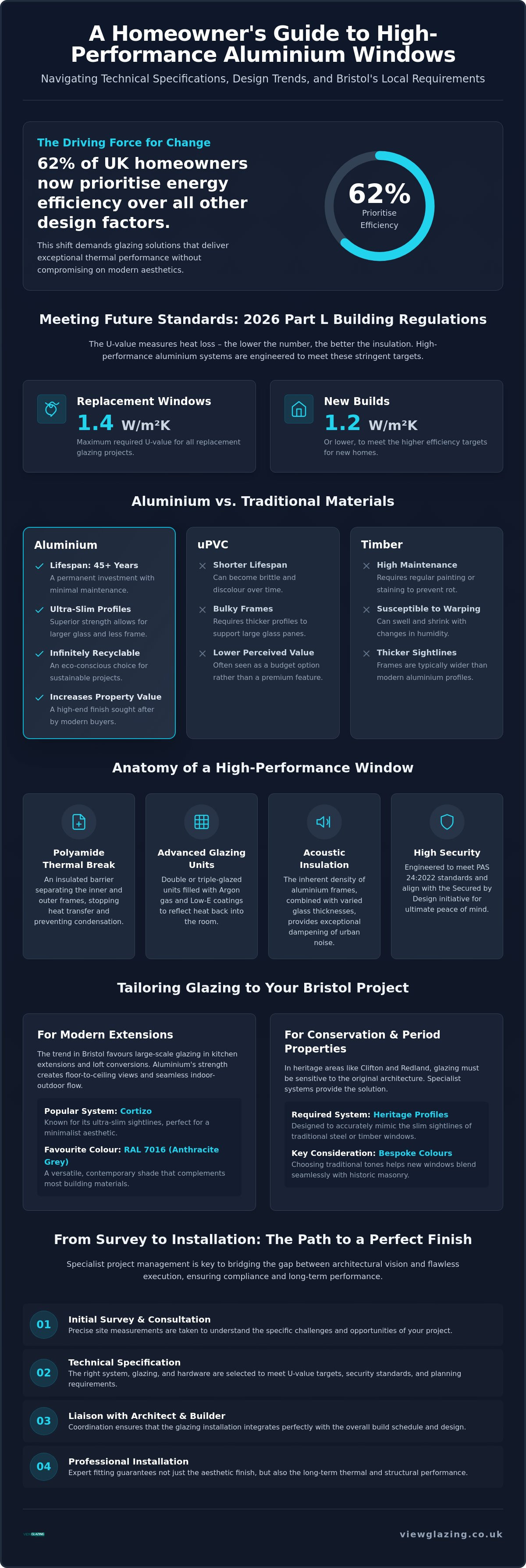
With 62% of UK homeowners now prioritising energy efficiency over every other design factor, the pressure to meet the 2026 Part L U-value requirement of 1.4 W/m²K has never been higher. It's understandable if you feel overwhelmed by conflicting technical data. You might also worry whether a complex installation will actually deliver the seamless, light-filled finish you've envisioned. You want a home that feels both modern and thermally efficient, yet the choice between the high-performance aluminium windows Bristol specialists recommend and composite alternatives often feels like a compromise.
This guide simplifies the decision-making process by providing a clear architectural roadmap for your project. You'll master the essential technical specifications and explore the ultra-slim design possibilities of systems like Cortizo. We'll also explain why professional project management is the only way to ensure compliance. The journey moves through everything from the initial survey to the final installation, ensuring your investment results in a home that's as high-performing as it is beautiful.
Table of Contents
The Rise of Aluminium Glazing in Bristol Architecture
Modern aluminium windows have redefined the Bristol skyline. Once reserved for commercial architectural curtain wall systems, this material is now the primary choice for residential extensions and new builds across the city. The shift is driven by a unique combination of high structural strength and incredibly slim profiles. Unlike older iterations, today's systems utilise advanced polyamide thermal breaks. These are insulating strips that sit between the inner and outer frames, effectively ending the "cold metal" myth and ensuring your home remains warm whilst looking sharp.
Bristol's current architectural trend favours large-scale glazing, particularly in rear kitchen extensions and loft conversions. Aluminium's inherent strength allows for larger panes of glass with fewer vertical supports. This means you can have floor-to-ceiling views that timber or plastic simply cannot support without bulky, unsightly frames. It's this ability to disappear into the architecture that makes it the default choice for modern Bristol living. Whether you're aiming for an industrial-chic look with internal bars or a minimalist contemporary aesthetic with hidden-sash designs, the material adapts to your vision without compromising on structural integrity.
Why Bristol Homeowners are Switching from uPVC
The transition toward aluminium windows Bristol is largely a move toward longevity. Whilst uPVC remains a budget-friendly option, aluminium offers a lifespan often exceeding 45 years with very little maintenance. This durability makes it a permanent investment rather than a temporary fix. Sustainability is another key factor for eco-conscious residents in the South West. Aluminium is infinitely recyclable. From a financial perspective, the architectural appeal of slimline glazing significantly boosts property value, as buyers increasingly look for high-end finishes and maximum natural light, often specifying products through specialist representatives like Hawaii Architectural Sales to ensure premium quality.
Aluminium in Conservation Areas and Period Properties
Bristol's architectural heritage, from the Georgian terraces of Clifton to the Victorian villas of Redland, requires a sensitive touch. Heritage aluminium profiles are designed specifically to mimic the slim sightlines of traditional steel or timber windows, satisfying strict planning requirements whilst providing modern thermal performance. Colour choice is vital here. Whilst RAL 7016 (Anthracite Grey) remains a firm favourite for contemporary extensions, bespoke traditional tones can help new glazing blend seamlessly into historic masonry. It's about achieving a balance that respects the past whilst future-proofing the building's efficiency. Successfully integrating these systems often requires expert glazing project management to ensure the technical specification aligns with local planning expectations.
Technical Specifications: U-Values, Sightlines, and Safety
Selecting aluminium windows Bristol homeowners can rely on for decades requires moving beyond aesthetics into the realm of technical performance. As of 2026, the thermal requirements for glazing have become significantly more stringent. Under the updated Approved Document L building regulations, replacement windows must achieve a maximum U-value of 1.4 W/m²K, whilst new build targets are often as low as 1.2 W/m²K. These figures measure the rate of heat transfer; the lower the number, the better the insulation. High-spec aluminium systems achieve these targets through precision engineering rather than bulk, allowing for the slim sightlines that define modern Bristol homes.
Living near the vibrant Bristol city centre brings specific challenges, particularly regarding acoustic insulation. Aluminium frames are inherently dense, and when paired with varied glass thicknesses, they provide exceptional sound dampening against urban noise. Security is equally paramount. Modern systems meet PAS 24:2022 standards and often align with the Secured by Design (SBD) initiative. This provides peace of mind that your glazing isn't just a window to the world, but a robust barrier for your family.
Achieving Thermal Excellence in the South West
Modern glazing units utilise argon-filled cavities and low-emissivity (low-E) coatings to reflect heat back into the room. Whilst double glazing often meets current standards, triple glazing is increasingly favoured for north-facing elevations or exposed sites to reach the highest efficiency tiers. A thermal break is the critical barrier of low-conductivity material placed between the interior and exterior aluminium profiles to prevent heat loss and eliminate condensation. Balancing these elements ensures your home remains comfortable throughout the damp South West winters.
Structural Integrity and Wind Loading
Bristol's topography, from the heights of Kingsdown to the breezy Clifton Downs, necessitates careful consideration of wind loading. Large-scale glazing projects, particularly those involving Cortizo Aluminium Sliding Doors, require detailed structural surveys to ensure the frames can withstand prevailing South West gusts. Aluminium’s superior strength-to-weight ratio allows for these oversized panes without the risk of warping. Ensuring weather-tightness is a matter of precision installation, as even the highest-rated window will fail if the perimeter seals aren't perfect. If you're planning a project with complex technical requirements, speaking with a specialist consultant can help clarify the best specification for your specific location.
Choosing the Right System: Cortizo, VELFAC, and Beyond
Not all glazing systems are engineered to the same standard. The Bristol market offers a broad spectrum of products, ranging from standard residential profiles to high-end architectural systems. Organisations like the Council for Aluminium in Building (CAB) set the benchmark for these products, ensuring they meet the technical rigour required for modern construction. Selecting the right "tier" depends on your specific aesthetic goals; you might be seeking the raw industrial look of heritage steel-replacement frames or the invisible borders of a minimalist glass pavilion.
Cortizo: The Gold Standard for Slimline Sliding Doors
When the design brief calls for a "glass wall" effect, Cortizo sliding doors are frequently the preferred choice. These systems are celebrated for their ultra-slim interlocks, which can be as narrow as 20mm. This allows for massive glass spans that maximise natural light without bulky vertical obstructions. The technical advantage lies in their effortless opening mechanisms, which can carry sash weights of several hundred kilograms with a simple glide. For modern extensions in Bristol, this system provides the ultimate minimalist aesthetic.
VELFAC: The Hybrid Advantage for Composite Windows
For those who appreciate the durability of metal but desire the warmth of natural wood, VELFAC windows Bristol homeowners choose offer a unique hybrid solution. These composite windows feature a resilient aluminium exterior and a high-quality timber interior. This combination is particularly well-suited to the South West's coastal-adjacent climate, where the exterior frame must withstand salt-laden air and driving rain whilst the interior provides a soft, organic feel. One of their standout features is the uniform facade; the sightlines remain identical whether the window is fixed or opening, creating a clean, balanced look across the building.
Planning and Installation: The Local Bristol Context
Navigating the Bristol City Council planning portal is a necessary step for many glazing replacements, particularly when dealing with the city's vast conservation areas. If your property is listed or situated in a protected zone, the requirements for frame depth and colour are incredibly specific. For standard residential replacements, you must still ensure full compliance with building regulations. As of April 2026, Bristol City Council's schedule of fees for building regulation submissions for works with an estimated cost of up to £2,000 is £385.00 including VAT. Securing the aluminium windows Bristol homeowners need requires a partner who understands these local administrative nuances as well as the technical ones.
The South West climate also dictates your installation strategy. Driving rain and the prevailing winds from the Bristol Channel mean that weather-tightness is non-negotiable. Installation scheduling must be flexible enough to account for these conditions. Logistics represent another local hurdle. Historic neighbourhoods like Clifton, Montpelier, and Totterdown are defined by narrow lanes and restricted access. Delivering large-scale glass panes to these sites requires meticulous coordination and often specialised lifting equipment. Without a managed approach, a simple installation can quickly become a logistical bottleneck.
Sustainable Glazing and Local Building Regs
High-performance aluminium is a fundamental component in meeting the Future Homes Standard. By prioritising systems with low U-values, you're directly reducing your property's carbon footprint and ensuring long-term energy security. It's vital to choose an installer with FENSA or CERTASS certification. This accreditation ensures your project is registered correctly with the local authority and confirms that the thermal performance of your new glazing meets the strict national requirements for 2026.
Site Survey: The Foundation of Architectural Excellence
A professional site survey is the most critical phase of your glazing journey. Opting for "supply only" kits is a significant risk for complex aluminium specifications where tolerances are measured in millimetres. A specialist surveyor will check floor levels with absolute precision, which is essential for the successful installation of flush-threshold sliding doors. They also identify the specific structural requirements for creating new apertures in traditional Bath stone or Bristol brick, ensuring the building's integrity is never compromised. This level of foresight prevents costly onsite adjustments and ensures a flawless architectural finish.
To ensure your project is managed with this level of technical and local expertise, book a professional site consultation with our Bristol team.
Why Project Management is Key to Your Glazing Success
High-performance glazing is far more than a simple product purchase; it's a technical architectural specification that requires expert oversight. Adopting a rigorous glazing project management approach ensures that the aesthetic vision of your architect translates perfectly into the structural reality of your build. A specialist contractor acts as the vital link between the design team and the builder. This coordination prevents the common pitfalls where structural openings don't align with frame tolerances or threshold heights conflict with interior floor finishes. By maintaining a single point of contact from the initial sourcing to the final snagging, you eliminate the risk of miscommunication that often plagues complex renovations.
The long-term performance of your aluminium windows Bristol investment depends entirely on the quality of the installation. Even the most expensive European systems will fail to meet their thermal or acoustic ratings if the fitting isn't manufacturer-approved. Professional management ensures that every seal, bracket, and drainage path is executed to the highest standard. This level of precision doesn't just protect the building's envelope; it guarantees the effortless operation of heavy sliding sashes and the integrity of the weather-stripping against the South West's damp climate.
The View Glazing Process: Survey to Sign-Off
Our process begins with an initial consultation to create a technical specification tailored to your specific Bristol project. We don't just supply frames; we manage the complex lead times of systems like Cortizo or VELFAC to ensure they arrive on-site exactly when your builder is ready. This trade coordination is essential for preventing costly delays. The journey concludes with the final installation, where our team focuses on precision fitting to achieve optimal thermal and acoustic seals, followed by a thorough sign-off to ensure every detail meets your expectations.
Aftercare and Guarantees in the South West
A robust glazing guarantee should cover more than just the frames. You need to ensure that the glass units and moving parts, such as handles and hinges, are also protected. In urban Bristol environments, airborne pollutants can affect the finish of your frames over time. Regular cleaning with mild soapy water is usually enough to maintain the powder-coated surface. Working with a local specialist provides the added value of responsive aftercare. If a component needs adjustment years after the project is complete, having a partner based in the South West ensures your home continues to perform at its architectural peak.
Realising Your Architectural Vision in Bristol
Choosing the right glazing is a transformative decision that defines both the aesthetic character and the thermal performance of your home. By mastering the technical requirements of the 2026 building regulations and selecting high-performance systems like Cortizo or VELFAC, you ensure your property remains efficient and visually striking for decades. The success of your aluminium windows Bristol project ultimately rests on precision; from the initial site survey to the final manufacturer-approved installation, every millimetre matters.
We provide a comprehensive project management service that bridges the gap between architectural design and practical execution. As specialists in Rationel, VELFAC, and Cortizo systems, we focus on sustainable, high-performance solutions that elevate your living space whilst ensuring full regulatory compliance. Our survey-to-installation model removes the typical anxieties of complex construction, allowing you to focus on the design impact of your new glazing. To take the next step in your renovation or new build, book a technical survey for your Bristol glazing project. We look forward to helping you create a home filled with light and architectural elegance.
Frequently Asked Questions
Do I need planning permission for aluminium windows in a Bristol conservation area?
You often need planning permission if your property is in a Bristol conservation area and you're changing the window material or style. For listed buildings, Listed Building Consent is mandatory. Many heritage-style aluminium profiles are now accepted by local authorities, but it's essential to check the specific Article 4 directions for your neighbourhood before starting any work on your home.
What is the average lead time for Cortizo aluminium doors in the South West?
Lead times for premium systems like Cortizo aluminium doors typically range between 8 and 12 weeks in the South West. This duration accounts for the precision manufacturing of bespoke profiles and the logistics of European supply chains. We recommend coordinating your glazing order early in the construction programme to ensure the frames arrive exactly when your builder is ready for the installation phase.
Are aluminium windows more energy-efficient than timber or uPVC?
High-performance aluminium systems are just as energy-efficient as timber or uPVC when specified correctly. Whilst older metal frames were prone to heat loss, modern designs utilise advanced thermal breaks to achieve excellent insulation. The inherent strength of aluminium also allows for larger panes of high-performance glass, which can often result in better overall thermal performance and solar gain for your property.
How do I clean and maintain my aluminium window frames?
Maintaining your frames is a simple process that involves wiping them with warm, soapy water every three to four months. You should avoid abrasive chemicals or scouring pads, as these can scratch the durable powder-coated finish. Regular cleaning is particularly important for aluminium windows Bristol residents install in urban or roadside locations to prevent the build-up of environmental soot, salt, and grit.
Can I have different colours on the inside and outside of my aluminium windows?
You can certainly specify different colours for the interior and exterior of your frames, a feature known as dual-colouring. This allows you to choose a striking RAL tone, such as Anthracite Grey, for the outside of your property whilst keeping a softer, neutral shade like Signal White for the interior rooms. It’s an ideal way to balance external architectural impact with your internal interior design scheme.
What are the current U-value requirements for windows in new builds for 2026?
Under the 2026 Part L building regulations, windows for new build properties have a notional target U-value of 1.2 W/m²K. If you're replacing windows in an existing home, the requirement is a maximum of 1.4 W/m²K. Meeting these strict standards usually involves using high-specification double glazing or moving to triple-glazed units for even greater thermal efficiency and year-round internal comfort.
Why is a technical survey so important for aluminium glazing projects?
A technical survey is the only way to guarantee a perfect fit, as aluminium frames are manufactured to millimetre-exact dimensions and can't be trimmed on-site. The surveyor identifies structural requirements, checks floor levels for flush thresholds, and ensures the building can support the weight of large glass spans. This level of precision prevents costly delays and ensures the long-term weather-tightness of your glazing.
Do aluminium windows suffer from condensation or "cold bridging"?
Modern aluminium windows don't suffer from these issues because they incorporate polyamide thermal breaks. These insulating strips sit between the inner and outer sections of the frame, stopping heat from escaping and preventing the "cold bridging" that leads to condensation. When paired with high-performance glass, these systems remain warm to the touch even during the coldest and dampest Bristol winters.


Comments