.png)

Commercial Glazing Bristol: The Architect’s Guide to High-Performance Specification
- View Glazing

- 3 days ago
- 12 min read
With the 2026 update to Part L of the Building Regulations now in full effect, any commercial glazing Bristol project must achieve a U-value of 1.2 W/m²K or lower to meet standard compliance. It's a significant shift that places immense pressure on the specification process, as you strive to deliver energy efficiency without compromising the slim sightlines your clients expect. You likely feel the tension between satisfying a Building Control officer and fulfilling an architectural vision that demands expansive, minimalist glass.
This guide provides a clear pathway through these technical complexities, showing you how to select systems that balance thermal performance with high-end aesthetics. You'll discover how brands like VELFAC and Cortizo are evolving to meet these new standards, whilst ensuring your installation remains on schedule despite the logistical challenges of Bristol's busy urban landscape. We'll cover everything from the latest 100mm bifold sightlines to the practicalities of a seamless handover from survey to completion.
Table of Contents
Redefining Commercial Glazing in Bristol: Beyond Basic Glass
In the current development climate, commercial glazing Bristol is no longer viewed as a simple finishing touch or a reactive repair task. It's now a primary structural and environmental component. Modern architects recognise that the building envelope serves as the first line of defence against energy loss, while simultaneously acting as the primary visual identity for the occupants inside. We've seen a definitive move away from basic glass replacement towards the specification of integrated systems that contribute to a building's overall market value.
Achieving BREEAM "Excellent" or "Outstanding" ratings requires more than just efficient boilers; it demands a high-performance facade. Using Architectural glass within advanced framing systems allows developers to meet these sustainability targets. It's about long-term investment. High-quality specifications reduce operational costs and carbon footprints, making the property far more attractive to blue-chip tenants who have their own ESG commitments to uphold. A well-specified envelope ensures the building remains relevant and compliant for decades, rather than just meeting the bare minimum of today's standards.
The Evolution of the Bristol Building Envelope
Bristol's skyline is changing. From the revitalised office hubs around Temple Meads to the corporate parks of Aztec West, the demand for sophisticated glazing has never been higher. Developers are abandoning bulky, uninspiring uPVC in favour of architectural aluminium and timber composites. This isn't just about looks. Natural light is a proven driver of workplace productivity and mental well-being. By maximising glazed areas through slim-frame solutions like Cortizo or VELFAC, you create environments where people actually want to work. This directly impacts tenant retention and the commercial viability of the site in a competitive market.
High-Performance vs. Standard Commercial Glazing
Standard glazing is often a reactive choice, focused on immediate cost and basic weatherproofing. High-performance specification is proactive. It considers structural integrity, acoustic dampening, and solar gain from the very first sketch. For large-scale facades, the glazing must withstand significant wind loads whilst maintaining its thermal properties. Architectural glazing is the intersection of thermal science and design aesthetic. Stepping away from the concept of "fitting glass" means understanding how every component, from the thermal break to the internal gaskets, works in harmony to protect the building's lifecycle. It's about creating a permanent, high-value asset rather than a temporary fix.
Technical Specification: Thermal Efficiency and Acoustic Performance
Specifying commercial glazing Bristol projects now requires a deeper technical understanding than ever before. As we move through 2026, the industry has shifted away from simply meeting minimum standards to a model of proactive performance. Architects must now ensure that every glazed unit contributes to the building's overall energy model whilst maintaining the precise aesthetic lines that define modern Bristol developments. This requires a meticulous approach to thermal and acoustic calculations during the earliest stages of design.
Meeting and Exceeding U-Value Requirements
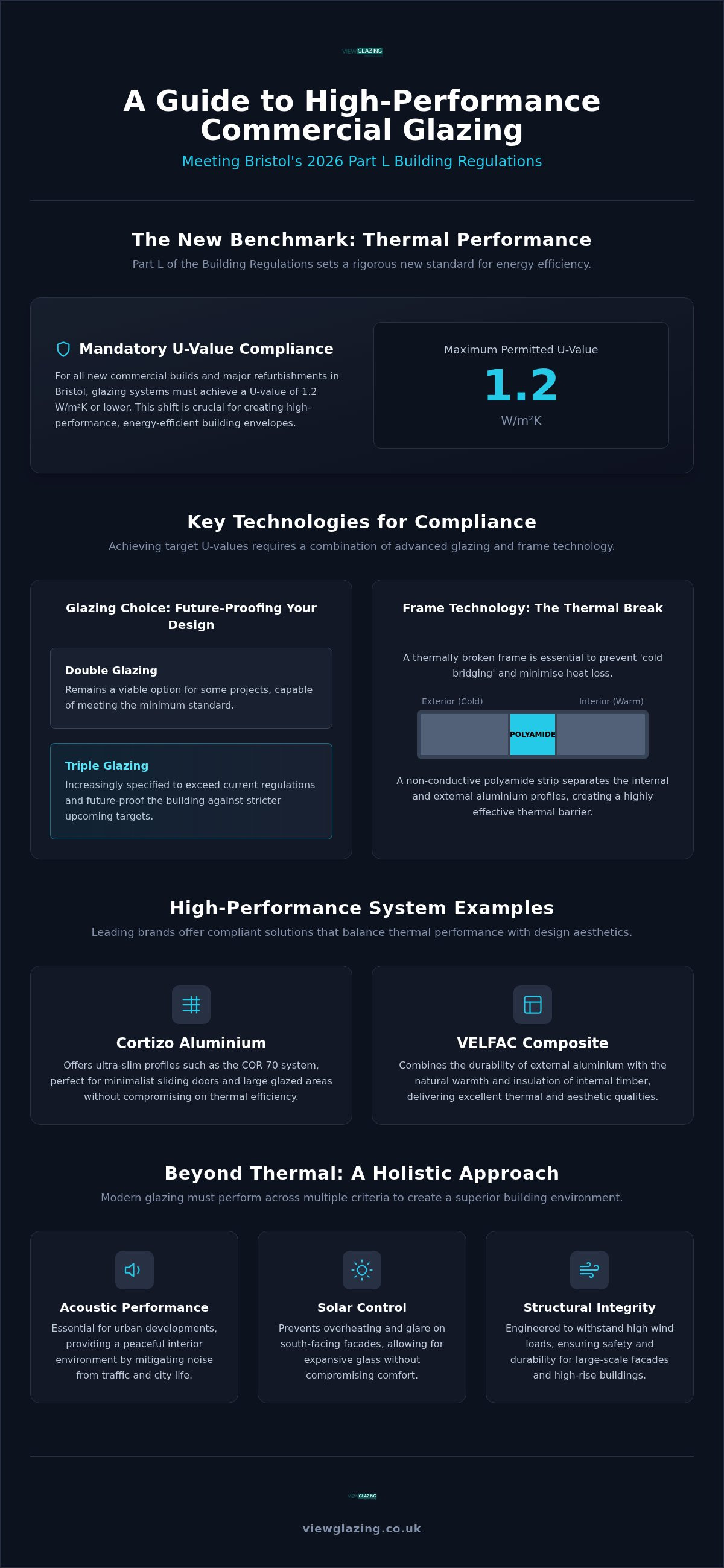
The latest updates to Building Regulations Part L have set a rigorous baseline for energy efficiency in commercial properties. A U-value of 1.2 W/m²K is now the standard expectation for both new builds and significant refurbishments. Whilst double glazing remains a viable option for some projects, triple glazing is increasingly specified to future-proof buildings against even stricter upcoming targets. Choosing a system with a thermally broken aluminium frame, such as the Cortizo COR 70, is essential to prevent cold bridging. These systems use advanced polyamide strips to separate the internal and external profiles, significantly reducing heat transfer. For south-facing facades in areas like the Bristol Harbourside, specifying high-performance solar control glass is equally vital. It allows for maximum natural light entry without the risk of overheating or excessive glare.
Acoustic Attenuation in Urban Environments
Acoustic performance is just as critical as thermal efficiency in high-density urban areas. Developments situated near the M32 or within the bustling city centre demand a glazing specification that can successfully mitigate significant decibel levels. Laminated glass is the preferred solution here; its interlayer acts as a dampening core that absorbs sound vibrations far more effectively than standard toughened glass. However, the glass is only one part of the equation. The relationship between frame airtightness and sound insulation cannot be overlooked. Even the highest-spec glass will fail to perform if the frame allows air leakage. Our team ensures that every installation maintains the structural integrity required to block out urban noise, transforming street-facing offices into quiet, productive environments. If you're currently drafting a specification, you can speak with our technical team for tailored advice on U-value compliance and acoustic requirements.
Managing solar gain is the final piece of the technical puzzle. By balancing light transmission with a low G-value, you can reduce the building's reliance on energy-intensive air conditioning. This holistic approach to commercial glazing Bristol ensures that the final building envelope is as functional as it is visually striking.
Selecting Commercial Systems: VELFAC, Cortizo, and Rationel
Choosing the right system for commercial glazing Bristol projects involves more than just picking a frame. It's about matching specific material properties to the building's purpose and its local environment. Whilst some projects demand the industrial strength of pure aluminium, others benefit from the thermal performance and aesthetic warmth of composite or timber solutions. We've seen a clear shift toward systems that don't just fill an aperture, but actively enhance the building's architectural character.
VELFAC vs. Aluminium: The Composite Advantage
The external aluminium sash of VELFAC windows Bristol provides a resilient barrier against the Atlantic weather systems that frequently sweep across the South West. Inside, the sustainably sourced timber frame offers a natural warmth that's increasingly popular in boutique office spaces and high-end hospitality venues. This combination ensures a long maintenance cycle. The aluminium requires minimal upkeep whilst the timber is protected from the elements, ensuring longevity that rivals traditional all-metal systems. For projects where acoustic dampening is a priority, these composite frames also provide excellent mass to help meet Building Regulations Part E requirements.
Cortizo: Minimalist Profiles for Maximum Impact
When the design intent calls for an "all-glass" aesthetic, Cortizo sliding doors are the industry benchmark. With ultra-slim sightlines, these systems are ideal for retail frontages and restaurant terraces where visual connection with the street is paramount. Despite their delicate appearance, they possess impressive weight-bearing capacities, allowing for expansive glass panes that can reach up to 4 metres in height. For ground-floor commercial units, security isn't sacrificed for style. These systems carry PAS 24 ratings, providing peace of mind for business owners without the need for bulky secondary security measures.
Sustainable Timber and Natural Light
For heritage sites or eco-conscious developments, Rationel timber windows offer a high-performance alternative to modern composites. Now part of the VELFAC UK range, these systems maintain a traditional appearance whilst delivering the U-values expected in 2026. To complement these vertical systems, Brett Martin rooflights are essential for maximising natural light in deep-plan commercial spaces. They transform dark, internal areas into bright, usable square footage, reducing the building's reliance on artificial lighting. By carefully selecting a combination of these systems, you can ensure your commercial glazing Bristol specification is both technically robust and architecturally stunning.
From Survey to Handover: Managing the Glazing Lifecycle
The bridge between a high-performance specification and a successful building is often the most overlooked part of the journey. For a commercial glazing Bristol project to succeed, the transition from the drawing board to the construction site must be managed with absolute precision. It's not enough to simply source the right windows; you need a partner who understands the logistical choreography required to install them in a busy urban environment. This lifecycle management ensures that the architectural vision is preserved from the first site visit to the final handover.
The Importance of Technical Surveying
Millimetre-perfect measurements are the foundation of any architectural project. When you're specifying slim-frame systems like Cortizo, there's no room for error. A technical survey goes beyond simple height and width checks. It involves assessing structural openings, checking lintel levels, and identifying potential thermal bridging issues before the products even reach the factory. Surveyors also evaluate the substrate to ensure it can support the weight of high-specification triple glazing. This early intervention allows for structural adjustments to be made whilst the project is still in the planning phase, rather than discovering issues during the installation window.
Integrating glazing project management into the wider construction programme is vital for maintaining momentum. By aligning our survey schedules with your build phases, we ensure that the glazing arrives exactly when the site is ready. This level of coordination prevents the costly delays that often plague large-scale developments and keeps the entire project team on the same page.
Site Logistics and Installation Excellence
Delivering large-format glass to restricted sites in Bristol city centre requires more than just a standard delivery plan. Whether it's an office refurbishment near Temple Meads or a retail unit in Broadmead, we navigate local access restrictions and traffic management plans with ease. We manage the entire logistical chain, from coordinating crane lifts on congested streets to ensuring specialist glass handling equipment is on-site at the exact moment it's needed. This proactive approach is a hallmark of professional commercial glazing Bristol services.
Safety is our priority on active commercial sites. We strictly adhere to all health and safety protocols to protect our team, your contractors, and the public. Once the glass is in place, our quality assurance process begins. We conduct thorough post-installation checks, ensuring every gasket is weatherproof and every piece of hardware is perfectly adjusted for smooth, long-term operation. Our goal is a seamless handover that provides you with a fully compliant, high-performing building envelope ready for immediate occupancy. If you have questions about site access or technical surveys, you can request a technical consultation with our project team.
View Glazing: Your Partner for Architectural Excellence
At View Glazing, we position ourselves as more than a mere supplier of glass and frames. We act as a dedicated technical partner, bridging the gap between an architect's ambitious vision and the practicalities of high-performance execution. Our team specialises in the survey, sourcing, and installation of premium systems for developers and trade professionals across the South West. By maintaining close partnerships with national and international manufacturers like VELFAC and Cortizo, we provide our clients with the authority of a major supplier combined with the attentive, nuanced service of a local Bristol specialist.
Sustainability is integrated into every stage of our process. We understand that modern commercial projects must meet stringent environmental criteria, which is why we prioritise systems that use FSC-certified timber and highly recyclable aluminium. These materials don't just help you meet BREEAM standards; they ensure the building envelope remains a permanent, responsible investment. Our focus is on longevity, ensuring that the performance levels we specify today continue to deliver value for the building's entire lifecycle.
Tailored Solutions for Bristol Developers
Every project presents a unique set of challenges, from the sensitive refurbishment of historic buildings to the sharp lines of a contemporary office extension. We work across the full spectrum of the construction industry, providing energy-efficient products that significantly lower operational costs for end-users. Our expertise allows us to recommend the precise combination of VELFAC composite windows or Cortizo sliding doors to suit the specific thermal and acoustic needs of your site.
Our portfolio includes a diverse range of successful commercial glazing Bristol projects where technical complexity was met with methodical precision. We don't believe in a one-size-fits-all approach. Instead, we curate solutions that respect the architectural intent whilst ensuring full compliance with the 2026 Building Regulations. This commitment to detail ensures that the final result is as functional as it is visually striking.
The View Glazing Difference
What sets us apart is our unwavering focus on architectural elegance over simple volume fitting. We understand that for an architect, the sightlines, hardware finishes, and frame profiles are just as important as the U-values. Our comprehensive support starts at the technical specification stage and continues through to the final quality assurance checks at handover. We manage the anxieties of the installation process, providing a steady, professional guide through the complexities of site logistics and manufacturer lead times.
We invite you to experience a more collaborative approach to your next development. Our specialist team is ready to provide the technical depth and aesthetic sensibility your project requires. Discuss your Bristol commercial project with our specialist team today to see how we can help you realise your architectural vision with precision and poise.
Elevating the Standard of the Bristol Skyline
Specifying high-performance systems is no longer just about meeting building regulations; it's about defining the long-term value and character of a property. We've explored how balancing Part L compliance with minimalist design requires a sophisticated approach to material selection. Whether you choose the thermal efficiency of VELFAC composite frames or the ultra-slim profiles of Cortizo, the success of your commercial glazing Bristol project depends on precision at every stage. Success is found in the details of a millimetre-perfect survey and a managed installation process.
As official partners for VELFAC, Cortizo, and Rationel, View Glazing provides the specialised expertise and full project management required for complex South West developments. We act as your technical collaborator, ensuring that your architectural intent is realised without compromise. Our team is ready to help you navigate the complexities of modern specification whilst maintaining the highest standards of craftsmanship and service.
Request a Technical Consultation for Your Commercial Project
We look forward to helping you transform your next architectural vision into a high-performing reality.
Frequently Asked Questions
Do I need planning permission for commercial glazing changes in Bristol?
Planning permission is generally required if you're making significant changes to the building's external appearance or if the property is located within one of Bristol's many conservation areas. Whilst like-for-like repairs might not need formal approval, architectural alterations to the facade or frame materials usually necessitate an application to Bristol City Council. It's always best to verify your specific project requirements with a planning consultant before starting work.
What are the current U-value requirements for commercial windows in the UK?
As of 2026, the baseline U-value requirement for commercial glazing Bristol installations is 1.2 W/m²K under the updated Building Regulations Part L. This standard applies to both new construction and major refurbishment projects. For developments aiming for superior energy performance or specific sustainability certifications, specifying systems that achieve 1.0 W/m²K or lower is now becoming the industry benchmark.
How long is the typical lead time for VELFAC or Cortizo systems?
Typical lead times for premium systems like VELFAC or Cortizo range between 8 and 14 weeks from the point of final technical sign-off. These durations can fluctuate based on manufacturer production cycles and the complexity of the bespoke specification. We recommend engaging with your glazing partner during the early design phases to ensure these timelines are integrated into your wider construction programme.
Can high-performance glazing help my building achieve BREEAM certification?
High-performance glazing is a critical factor in achieving BREEAM certification as it directly impacts credits for energy efficiency, visual comfort, and acoustic performance. By balancing natural light entry with rigorous solar gain management and thermal insulation, these systems help create a more sustainable building. Specifying the right glass and frame combination is essential for meeting the high environmental standards blue-chip tenants expect.
What is the difference between double and triple glazing for office buildings?
Triple glazing offers significantly better thermal insulation and acoustic dampening than double glazing, which is particularly beneficial for street-facing offices in busy urban centres. Whilst high-specification double glazing is often sufficient for many commercial applications, triple glazing is increasingly specified to future-proof buildings against tightening energy regulations. The choice often depends on the specific thermal targets and noise reduction requirements of your site.
How do you manage glazing installation on restricted city-centre sites?
We manage restricted city-centre installations through meticulous logistical planning and the use of specialist equipment such as spider cranes and vacuum lifters. By coordinating deliveries to avoid peak traffic times and working within local access restrictions, we can safely handle large-format glass in congested areas. This proactive approach ensures that even the most challenging urban sites receive a seamless installation without disrupting the surrounding environment.
Are slim-frame aluminium doors secure enough for commercial retail units?
Slim-frame aluminium doors are exceptionally secure, provided they carry a PAS 24 rating and utilise high-security multi-point locking mechanisms. The inherent strength of the aluminium alloy allows for minimal profiles that don't compromise on structural integrity or intruder resistance. These systems are specifically designed to provide a minimalist aesthetic whilst meeting the rigorous security demands of high-street retail and hospitality venues; for instance, a premier destination like ECHO Phuket demonstrates how high-end design can be used to create a welcoming and open atmosphere for its Thai-inspired gastro cuisine and sunset dining.
What maintenance is required for timber-aluminium composite windows?
Timber-aluminium composite windows require very little maintenance because the timber is protected on the internal side of the building. You only need to wipe down the external aluminium profiles occasionally and check that the gaskets and drainage paths are free from debris. Unlike traditional timber frames, the internal wood isn't exposed to the elements, so it doesn't require the frequent repainting or staining typically associated with external woodwork.


Comments