.png)

Architectural Glazing Specialists Bristol: The 2026 Guide to High-Performance Glass

Could a single design decision define your home's thermal performance and aesthetic legacy for the next thirty years? Finding the right architectural glazing specialists Bristol offers is often the difference between a project that feels like a compromise and one that truly transforms a living space. Most homeowners in the South West recognise that expansive glass is the key to a modern, light-filled lifestyle, yet the technical reality of coordinating multiple suppliers and meeting the 2026 Future Homes Standard can feel overwhelming. You shouldn't have to choose between a beautiful view and a house that stays warm.
This guide provides a clear roadmap for selecting a partner who can manage the entire process, from technical specification to final installation. We'll explore how to achieve U-values as low as 0.8 W/m²K, navigate conservation area requirements, and integrate premium systems like VELFAC, Rationel, and Cortizo. By the end, you'll know exactly how to secure a high-performance, sustainable solution that removes the stress of technical specifications while delivering a home that is as efficient as it is beautiful.
Table of Contents
What Defines an Architectural Glazing Specialist in Bristol?
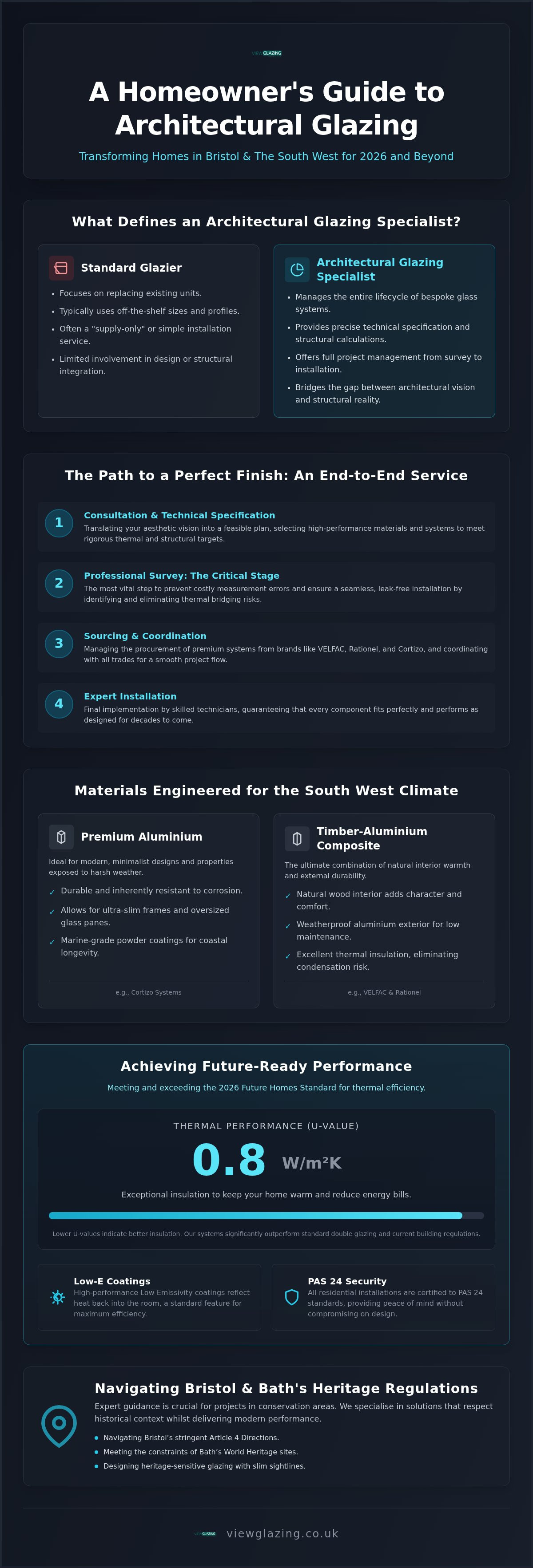
An architectural glazing specialist is more than a window installer; they are technical consultants who bridge the gap between ambitious design and structural reality. While a standard glazier might focus on replacing existing units, architectural glazing specialists Bristol manage the entire lifecycle of bespoke glass systems. This includes precise technical specification, structural calculations, and the coordination of high-performance materials like Architectural glass. Their role is to ensure that a glass wall isn't just a visual feature, but a high-functioning component of the building's thermal envelope.
The difference lies in scale and precision. Standard double glazing often relies on off-the-shelf sizes and profiles. In contrast, architectural glazing involves oversized panes, slimline frames, and complex junctions that require expert engineering. Specialists work closely with architects to realise minimalist aesthetics, such as frameless corners or floor-to-ceiling sliding doors, without compromising the home's structural integrity or weatherproofing. They act as a steady guide, ensuring that what looks beautiful on a drawing is actually feasible on a building site.
The Difference Between Supply-Only and Full Project Management
Many homeowners are tempted by supply-only deals to save on upfront costs. However, this often leads to significant risks, including measurement errors that can cost thousands to rectify or compatibility issues between different frame and glass types. Professional glazing project management is essential for high-value builds because it provides a single point of accountability. A specialist takes responsibility for the survey, sourcing, and installation; this ensures that every component fits perfectly and performs as intended from day one. This end-to-end service alleviates the stress of coordinating multiple trades and guarantees a superior finish.
Key Components of Architectural Glass Systems
Modern systems are defined by their technical sophistication. You'll typically choose between structural glass, where the glass itself supports loads, and framed systems using materials like aluminium-timber composites. In 2026, thermal performance is a primary driver for any project. High-performance Low-E (low emissivity) coatings are now standard, reflecting heat back into the room to meet the rigorous thermal targets of the Future Homes Standard. Security is equally vital; specialists ensure all residential installations meet PAS 24 standards, providing peace of mind alongside beautiful design. This combination of safety, efficiency, and light is what defines a truly professional installation.
Choosing the Right Materials for the South West Climate
Bristol's architectural landscape is as diverse as its weather. From the exposed hills of Clifton to the coastal breezes moving inland from the Severn Estuary, the choice of glazing material is a functional necessity rather than just an aesthetic preference. As architectural glazing specialists Bristol homeowners trust, we prioritise materials that offer both visual elegance and long-term resistance to the South West's damp, maritime climate. Selecting the wrong frame material can lead to premature degradation, especially in areas prone to high wind-driven rain.
Premium aluminium and timber-aluminium composites have become the benchmark for high-performance builds. Aluminium is inherently durable and resistant to corrosion, making it ideal for the "salt air" factor found in properties closer to the coast. For these specific locations, we often specify marine-grade powder coatings to ensure the frames remain pristine for over 25 years. Conversely, the timber internal face of composite systems provides the natural warmth and insulation required for a comfortable home, effectively eliminating the risk of thermal bridging and condensation.
Adhering to standards set by the Glass and Glazing Federation ensures that these systems aren't just attractive but technically sound. Modern frames utilise advanced thermal breaks to trap heat, which is vital as we move towards the stricter U-value requirements of 2026. This technical precision ensures that your investment provides a permanent solution rather than a temporary fix.
VELFAC and Rationel: The Power of Composite and Timber
Choosing between composite and solid timber depends on your project's architectural language. VELFAC windows Bristol are celebrated for their uniform sightlines; the glass area remains identical whether the window is fixed or opening, creating a perfectly balanced facade. For those seeking a more traditional or purely sustainable approach, Rationel windows represent the gold standard in timber glazing. These systems use sustainably sourced wood that is treated for maximum longevity, offering a tactile, natural finish that complements both heritage renovations and contemporary eco-homes.
Cortizo Sliding Doors: Maximising Light and Views
Large-scale glass is a hallmark of modern South West extensions. Cortizo sliding doors allow for ultra-slim sightlines, often as narrow as 20mm, which minimises the visual barrier between the interior and the garden. Despite these minimal frames, the thermal performance remains exceptional, often achieving U-values that exceed current building regulations. This ensures that even with a wall of glass, your living space remains thermally efficient throughout the winter months. If you are unsure which material best suits your property's exposure, consulting with a local expert can help clarify the most durable options.
The Process: How an Architectural Glazing Project is Delivered
High-end glazing isn't a "fit and forget" commodity; it's a structured engineering process. Unlike standard window fitting, architectural glazing specialists Bristol homeowners choose must act as lead coordinators. The journey begins long before a single pane arrives on site, encompassing detailed CAD drawings, structural assessments, and rigorous site preparation. This methodical approach ensures that the final handover represents a perfect marriage of design and functionality, rather than a series of on-site compromises.
The survey stage is the most critical juncture of the entire project. Even a 5mm discrepancy across a large aperture can render a bespoke sliding door unusable or compromise its thermal seal. As the architectural glazing specialists Bristol residents rely on for complex builds, we use laser-scanning technology to achieve millimetre-perfect measurements. This precision allows for the "flush" finish seen in architectural magazines, where the internal floor level perfectly matches the external terrace. Achieving this requires early dialogue with builders to ensure the sub-floor is set at the correct depth to accommodate the track.
Success depends on seamless collaboration with other trades. We coordinate with electricians for integrated sensors or smart locks, and with renderers to ensure the frame is partially concealed for that sought-after minimalist look. This level of project management prevents the delays and reactive "on-site fixes" that often plague less professional installations. It's about ensuring every element of the building's envelope works in harmony.
Step 1: Technical Survey and Specification
During the survey, we finalise the glass specification based on the property's orientation and usage. This might include solar control glass to prevent overheating in south-facing rooms or acoustic glazing for urban environments. All installations must strictly adhere to the official building regulations for glazing, which mandate safety glass in all critical impact zones. We also confirm the final hardware and colour finishes, often recommending marine-grade coatings for properties exposed to the South West's coastal elements.
Step 2: Professional Installation and Weatherproofing
The installation of oversized glass requires specialised lifting equipment, such as vacuum suckers and mini-cranes, to ensure safe and precise placement. Correct sealing techniques are paramount for air-tightness, preventing the thermal bridging that leads to condensation. Once the glass is in situ, we conduct exhaustive post-installation checks. This includes testing the smooth operation of sliding mechanisms and ensuring all drainage paths are clear. This attention to detail ensures the system operates effortlessly and remains weather-tight for decades.
Navigating Planning and Regulations in Bristol and Bath
Securing planning approval for high-performance glazing in the South West requires a nuanced understanding of local heritage. In Bristol, neighbourhoods like Clifton, Cotham, and Redland are often subject to Article 4 Directions. these regulations remove certain permitted development rights to protect the character of the area. For homeowners, this means that even a standard window replacement may require formal planning permission. Working with architectural glazing specialists Bristol ensures that your project respects these local nuances whilst still achieving modern performance standards.
The challenge intensifies in Bath, where the entire city is a UNESCO World Heritage site. Planning officers here prioritise the preservation of the historic "Bath stone" aesthetic and traditional building proportions. We focus on bridging the gap between these strict aesthetic constraints and the rigorous thermal requirements of Approved Document L. By 2026, the shift towards the Future Homes Standard means that even heritage projects must aim for significantly improved U-values, often necessitating a move away from inefficient single glazing towards advanced, slimline alternatives.
Glazing for Listed Buildings and Conservation Areas
In sensitive locations, the principle of "like-for-like" replacement is paramount. Whilst secondary glazing was once the only option for listed buildings, many conservation officers now look favourably on ultra-slim double glazing that replicates original sightlines. Our Rationel timber systems are frequently specified for these projects; they offer the authentic look of traditional joinery with the added benefit of contemporary weather-stripping and thermal efficiency. We have successfully integrated modern glass links into traditional Cotswold properties, using structural glazing to create a transparent "break" between old and new structures that satisfies both heritage officers and design aspirations.
Sustainable Glazing: Future-Proofing Your Home
Future-proofing a property in 2026 involves looking beyond the current building regulation backstop of 1.4 W/m²K for replacements. To truly meet the upcoming Future Homes Standard targets of 0.8 W/m²K, triple glazing is becoming the preferred choice for major renovations across Bristol and Bath. Beyond thermal retention, we also consider the embodied carbon of the materials used. Timber-sourced frames, like those found in our Rationel and VELFAC ranges, provide a far more sustainable profile than traditional uPVC or standard aluminium.
For large south-facing extensions common in Bristol's suburbs, managing solar gain is equally vital. We specify solar control coatings that allow natural light to flood the room whilst reflecting a significant portion of the sun's infrared heat. This prevents the "greenhouse effect" and ensures your living space remains comfortable throughout the height of summer. If you are planning a project within a conservation area, contact our technical team to discuss how we can align your design with local planning policy.
Partnering with View Glazing for Your South West Project
View Glazing operates as a dedicated collaborator for those seeking architectural glazing specialists Bristol. Our approach prioritises the long-term satisfaction of our clients by managing the technical complexities of high-end glass installations. Whether your project is situated in the heart of Bath, the streets of Frome, or the rural stretches of the Cotswolds, we provide the local knowledge necessary to navigate both the climate and the regulatory requirements of the South West. We don't just supply products; we offer a steady guide through the entire construction or renovation journey.
Our commitment to excellence is reflected in the brands we curate. By specialising in industry leaders like VELFAC, Rationel, and Brett Martin, we ensure that every installation meets the highest standards of thermal performance and aesthetic harmony. This focus on premium systems allows us to deliver solutions that are not only beautiful but also environmentally responsible and durable enough to withstand the test of time. Choosing the right architectural glazing specialists Bristol means partnering with a team that values precision as much as you value your home's design.
Expertise Across Residential and Commercial Projects
We provide tailored solutions that cater to the specific needs of private homeowners and large-scale developers alike. For those focusing on the security and first impressions of their property, our range of high-security entrance doors Bristol offers a perfect blend of robust protection and contemporary design. We also specialise in the strategic placement of high-performance rooflights Bristol; these are essential for drawing natural light into deep floor plans or modern kitchen extensions. This versatility ensures that every project benefits from a cohesive glazing strategy that enhances both lifestyle and building value.
Contact Our Bristol Team Today
Are you ready to discuss your architectural vision and see how high-performance glass can transform your space? The most effective way to begin is by sharing your project drawings with our technical team for a professional review and a detailed technical quote. Contact View Glazing to start your architectural glazing project and take the first step toward a seamless, light-filled home.
Realising Your Vision with High-Performance Glass
Selecting the right architectural glazing specialists Bristol ensures your renovation or new build isn't just a structure, but a high-performance environment designed for the future. We've explored how the intersection of material choice, such as timber-aluminium composites, and rigorous project management can overcome the challenges of 2026 building regulations and local planning constraints. By prioritising a full-service approach, you eliminate the risks of technical errors and ensure a seamless, thermally efficient finish that lasts for decades.
View Glazing stands as your trusted partner across the South West. As approved installers for premium brands including VELFAC, Rationel, and Cortizo, we provide the technical expertise and full project management required for complex, sustainable builds. Whether you're navigating an Article 4 Direction in Clifton or seeking minimalist sightlines for a Cotswold extension, our team is here to guide you from the first drawing to the final sign-off. Your home deserves the precision and elegance that only a specialist can provide.
Book a Technical Consultation with our Bristol Glazing Team to discuss your project today. Let's work together to bring more light and efficiency into your living space.
Frequently Asked Questions
Do I need planning permission for larger architectural windows in Bristol?
Planning permission is generally required if you are increasing the size of an opening or if your property is within a conservation area subject to an Article 4 Direction. In Bristol neighbourhoods like Clifton or Cotham, these directions restrict permitted development rights to preserve architectural heritage. Architectural glazing specialists Bristol homeowners work with will typically review local council maps to confirm if a formal application is necessary before the project begins.
What is the typical lead time for bespoke VELFAC or Cortizo glazing?
Typical lead times for premium systems like VELFAC or Cortizo range from 8 to 16 weeks depending on the specific product and finish. VELFAC composite units often require a longer lead time due to their bespoke manufacturing process. It's advisable to finalise your technical survey and place orders as early as possible in your build schedule. This prevents on-site delays and ensures the glazing arrives exactly when your builder is ready for the installation.
How much does architectural glazing cost compared to standard windows?
Architectural glazing represents a higher initial investment than standard uPVC windows because of the precision engineering and superior materials involved. While standard windows focus on basic utility, architectural systems are designed for spans of 25 years or more with minimal maintenance. The cost reflects the structural integrity required for large-format glass and the advanced thermal technology needed to meet 2026 building regulations. It's a permanent investment in the property's value and energy efficiency.
Can you install architectural glass in a conservation area in Bath?
Yes, installing architectural glass in Bath is possible, provided the design respects the city's World Heritage status. Conservation officers often approve slimline double glazing or high-quality timber systems, such as Rationel, that match original sightlines and proportions. The key is demonstrating that the new units preserve the character of the building while providing modern insulation. Early consultation with a specialist who understands Bath’s specific planning constraints is essential for a successful application.
What are U-values, and why do they matter for my 2026 building project?
U-values measure the rate of heat transfer through a building element; a lower number indicates better insulation. For 2026 projects, meeting the updated Part L Building Regulations is mandatory, with many new builds aiming for U-values as low as 0.8 W/m²K. Choosing high-performance glass ensures your home remains warm in winter and cool in summer. This future-proofs your property against rising energy costs and ensures compliance with the upcoming Future Homes Standard.
Do architectural glazing specialists provide a warranty on installation?
Professional architectural glazing specialists Bristol provide comprehensive warranties that cover both the product and the installation. Unlike supply-only kits, a full project management service ensures the specialist takes responsibility for the weatherproofing and mechanical operation of the system. This usually includes a 10 year guarantee on the frames and glass units. This gives you peace of mind that any technical issues will be resolved by the experts who managed the survey and fitting.
What is the difference between bifold and sliding doors for a modern extension?
The primary difference lies in the ratio of glass to frame and how the doors operate. Bifold doors fold back completely to create an unobstructed opening, which is ideal for smaller apertures. Sliding doors, however, offer much slimmer sightlines and larger individual glass panes, which maximise views even when the doors are closed. For modern extensions in the South West, sliding doors are often preferred because they provide a more seamless connection to the garden year-round.
How do I maintain my aluminium-clad timber windows in the South West climate?
Aluminium-clad timber windows are designed for low maintenance, even in the damp South West climate. You should wipe the external aluminium frames with warm, soapy water twice a year to remove salt and grit, especially near the Severn Estuary. The internal timber requires only occasional dusting or a damp cloth. If your property is in a particularly exposed coastal location, ensure you have specified a marine-grade powder coating for the aluminium to prevent long-term corrosion.


Comments