.png)

Replacing uPVC Windows with Aluminium in Bristol: The 2026 Upgrade Guide

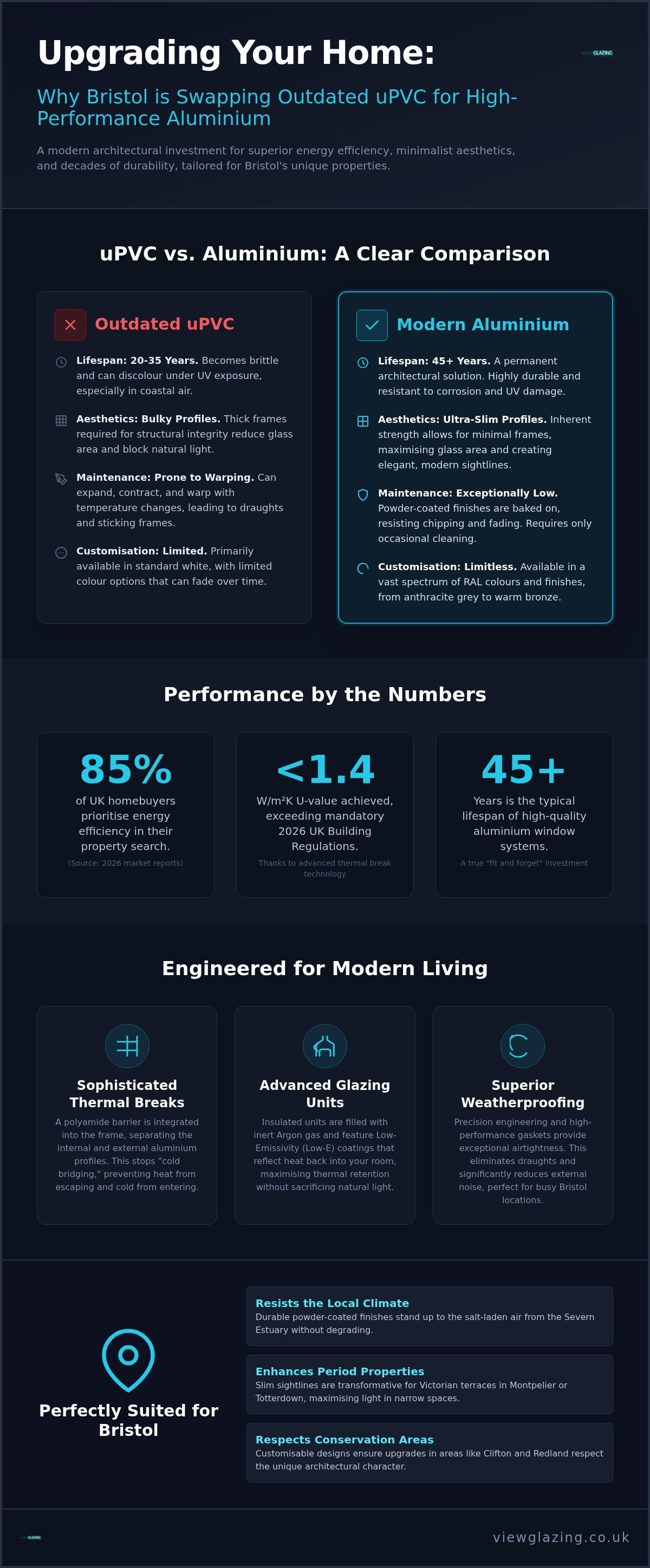
If your Bristol home still relies on the bulky, discoloured uPVC frames of the early 2000s, you aren't just losing heat; you're suppressing your property's architectural potential. With 85% of UK homebuyers now prioritising energy efficiency, according to 2026 market reports, the decision to invest in high-performance materials is no longer just about aesthetics. Many homeowners across the city's Victorian terraces and modern developments find that aged frames have become a liability, leading to draughty rooms and unsightly sightlines. Replacing upvc windows with aluminium Bristol has become the definitive way to restore character whilst meeting the rigorous thermal standards required today.
You likely recognise that your current glazing isn't performing as it should, yet the technicalities of a full upgrade can feel daunting. This guide will show you how to transform your property by transitioning to precision-engineered aluminium systems that offer sleek, minimalist profiles and U-values that comfortably exceed the mandatory 1.4 W/m²K requirement. We will walk you through the essential 2026 building regulations, the structural advantages of slim frames, and the process of elevating your home's kerb appeal with a permanent architectural solution.
Table of Contents
Why Replace uPVC with Aluminium Windows in Bristol?
Bristol's diverse architectural landscape demands more than just a temporary fix. For decades, uPVC was the default choice for quick replacements, but many homeowners across the city are now witnessing the limitations of plastic frames. In the South West, the combination of fluctuating temperatures and moisture often causes uPVC to fail after just 15 to 20 years. Replacing upvc windows with aluminium Bristol isn't merely a trend; it's a strategic move toward a permanent architectural improvement. Aluminium provides a level of material stability that uPVC cannot match, resisting the common issues of warping and expansion that lead to draughts and sticking frames.
Longevity and Maintenance in the South West Climate
Bristol's proximity to the Severn Estuary brings salt-laden air that can be surprisingly harsh on building materials. While uPVC frames often discolour or become brittle under UV exposure, powder-coated aluminium remains resilient. This finish is baked onto the metal, creating a durable barrier that requires nothing more than an occasional wipe with soapy water. Unlike plastic, which is a petroleum-based product with a finite life, aluminium is infinitely recyclable, aligning with Bristol's reputation as a leader in sustainability. While uPVC typically lasts between 20 and 35 years, high-quality aluminium windows boast a lifecycle often exceeding 45 years.
The Aesthetic Shift: From Bulky to Minimalist
The most striking difference lies in the profile. uPVC frames require thick, bulky sections to provide structural integrity, often obscuring a significant portion of the glass. In contrast, the inherent strength of aluminium allows for ultra-slim sightlines. For narrow Victorian terraces in areas like Montpelier or Totterdown, this shift is transformative. These slimmer frames allow for larger panes of glass, which is where modern insulated glazing technology truly shines, providing superior thermal retention without the visual weight.
When considering replacing upvc windows with aluminium Bristol, the customisation options are virtually limitless. Homeowners can choose from a vast spectrum of RAL colours and textured finishes, moving beyond the standard white plastic to sophisticated shades of anthracite grey or warm bronze. This instantly elevates the kerb appeal of 1930s semi-detached homes, replacing dated aesthetics with a sharp, contemporary finish. By opting for precision-engineered systems like VELFAC or Cortizo, you're choosing a solution that prioritises both architectural elegance and long-term performance.
Thermal Performance and Energy Efficiency Gains
A common misconception is that metal frames are less efficient than plastic. While early aluminium windows lacked insulation, modern systems are engineered with sophisticated thermal breaks. These polyamide strips act as a barrier between the internal and external profiles, effectively stopping the "cold bridging" that once plagued older metal designs. When replacing upvc windows with aluminium Bristol, you aren't just choosing a better-looking frame; you're adopting a system that meets the stringent 2026 thermal requirements. All installations must now comply with UK Building Regulations, which mandate a maximum U-value of 1.4 W/m²K for replacement glazing in existing homes.
Advanced Glazing Technology
The frame is only half of the story. High-performance aluminium systems rely on advanced insulated glazing units filled with argon gas and finished with low-emissivity (Low-E) coatings. These coatings reflect heat back into your room whilst allowing natural light to pass through. For homes situated near busy Bristol thoroughfares like the A4 or Gloucester Road, acoustic insulation is just as important as heat retention. Choosing triple glazing or acoustic laminate glass can significantly reduce urban noise pollution, creating a sanctuary within the city. For those seeking the ultimate in efficiency, high performance windows Bristol like the VELFAC composite range offer a precision-engineered solution that combines aluminium's durability with the natural insulation of timber.
Reducing Energy Bills with High-End Glazing
Switching from dated uPVC to thermally broken aluminium offers a measurable return on investment through reduced energy consumption. Modern systems provide superior airtightness, eliminating the draughts that often haunt Bristol's older Victorian and Edwardian properties. By maintaining a more consistent internal temperature, you reduce the load on your heating system, which is increasingly important as energy costs fluctuate. U-values serve as the critical metric for Bristol refurbishments, providing a clear benchmark for thermal efficiency in older stone or brick properties.
Beyond simple heat retention, we also consider solar gain. Depending on whether your home is south-facing or shaded, we can specify glass that either maximises natural warmth or prevents overheating in the summer months. This tailored approach ensures your home remains comfortable year-round, regardless of the unpredictable South West weather. If you're ready to discuss the technical specifications for your property, our team can help you refine your glazing strategy to achieve maximum efficiency.
Navigating Bristol’s Planning and Structural Challenges
Bristol's architectural heritage is a source of pride, but it presents specific hurdles when upgrading from dated materials. Unlike standard suburban developments, many of the city's most desirable neighbourhoods fall within strict conservation zones. When you're considering replacing upvc windows with aluminium Bristol, you must account for the character of the local vernacular. In areas like Clifton, Redland, and Montpelier, the goal isn't just to install a window; it's to enhance a historic facade whilst improving performance. This requires a level of precision that off-the-shelf plastic units cannot provide.
Conservation and Heritage Requirements
Whether you need planning permission often depends on your property's specific designation. For most unlisted homes, replacing windows falls under permitted development, provided the new units are similar in appearance to the originals. However, in conservation areas, planning officers often resist the bulky, shiny finish of uPVC. Aluminium is the ideal alternative because its slim profiles can be finished in matte RAL colours to mimic traditional steel or timber frames. By following the technical standards championed by the Council for Aluminium in Building, we ensure that every installation meets the highest quality and durability benchmarks for the UK market.
Managing these requirements involves more than just selecting a colour. It requires a detailed understanding of sightlines and opening mechanisms to satisfy local authorities. You can explore how we navigate these complexities in our guide to architectural glazing Bristol, where we detail the project management steps necessary for period property upgrades. We act as your technical partner, ensuring the specification aligns with both your aesthetic vision and local planning expectations.
Structural Integrity for Modern Extensions
Beyond heritage concerns, the structural demands of Bristol's homes often require the inherent strength of metal. Older masonry in Victorian terraces can be uneven, requiring precise surveying to ensure a perfect fit. Aluminium's rigidity makes it the superior choice for large-scale glazed links or wide-span openings where uPVC would simply lack the necessary stability. It doesn't warp under the weight of heavy glass units, ensuring smooth operation for decades.
This strength is particularly critical when installing cortizo sliding doors, which are designed to support massive panes of glass with minimal framing. Transitioning from old stone walls to high-performance glazing requires a specialist who understands how these materials interact. A professional survey captures every nuance of the opening, ensuring the installation is both airtight and architecturally sound. This precision is what allows us to create seamless connections between historic interiors and modern, light-filled extensions without compromising the building's structural health.
The Installation Process: From uPVC Removal to Final Polish
Replacing upvc windows with aluminium Bristol is a process that begins long before the first frame is removed. Unlike standard plastic replacements, architectural aluminium systems require a higher level of technical precision during both the planning and execution phases. The transition from bulky, flexible uPVC to rigid, slimline aluminium demands a methodical approach to ensure the new frames perform as intended for their 45-year lifespan. It's not just about swapping one unit for another; it's about re-engineering the aperture to support a high-performance system.
Surveying and Specification
Our process starts with a comprehensive technical survey. Millimetre-perfect measurements are non-negotiable for high-end systems because aluminium frames don't have the "give" found in uPVC. During this stage, we identify potential structural issues, such as sagging lintels or uneven masonry, which are common in Bristol's period housing. By capturing these details early, we ensure that the sourcing of premium systems like VELFAC or Rationel is based on exact site conditions. This precision prevents installation delays and ensures the final product sits perfectly within the building's fabric, maintaining the clean sightlines that define modern glazing.
Once the specification is finalised, the old uPVC units are removed safely. We prioritise the responsible recycling of these materials, ensuring that old plastic frames don't end up in landfill. With the apertures clear, we prepare the openings by cleaning the masonry and ensuring structural stability. This stage is critical for weatherproofing; we apply high-quality membranes and seals to prevent moisture ingress, creating a robust foundation for the new aluminium frames.
Expert Installation Standards
There is a significant difference between a standard window fitter and an architectural glazing specialist. Aluminium systems require specific handling to protect their powder-coated finishes and to ensure the thermal breaks remain effective. Our installers focus on the technical requirements of slimline frames, using laser-levelling to guarantee perfect alignment. This accuracy is vital for the smooth operation of multi-point locking systems and to ensure that the air-tightness levels meet the 2026 building standards discussed earlier.
The final handover is a thorough process where we test every aspect of the installation. We check the operation of all opening lights, verify the security of the hardware, and inspect the thermal seals for any gaps. We also provide guidance on post-installation care, though aluminium requires very little maintenance beyond an occasional wipe to keep the frames clear of urban dust. If you're ready to begin this transformation, you can book your technical survey with our Bristol team today to ensure your project starts with the precision it deserves.
Why Choose View Glazing for Your Bristol Window Upgrade?
Choosing the right partner for replacing upvc windows with aluminium Bristol is as critical as the material itself. While some firms focus on high-volume manufacturing of a single product line, View Glazing operates as a specialist consultant and project manager. We don't believe in a one-size-fits-all approach. Instead, we curate a selection of world-class systems, including VELFAC composite windows, Rationel timber units, and Cortizo aluminium sliding doors. This independence allows us to recommend the precise system that suits your property's structural needs and aesthetic goals, rather than what's simply easiest to manufacture.
Our deep roots in the Bristol, Bath, and Cotswolds property markets mean we understand the nuances of local architecture. From the limestone facades of Bath to the red-brick terraces of South Bristol, we've managed complex glazing transitions that demand both technical skill and design sensitivity. We've positioned ourselves as the ideal partner for homeowners who view their window upgrade as a permanent architectural improvement rather than a temporary repair.
Our Full-Service Glazing Management
We handle every stage of the journey, removing the typical anxieties associated with large-scale renovations. Our team works directly with architects and homeowners to realise a specific vision, providing a single point of contact from the initial design consultation through to the final professional installation. This project-managed approach ensures that technical details, such as the 2026 Part L compliance mentioned earlier, are handled with precision. By managing the surveying and sourcing of architectural-grade systems, we ensure that the transition from dated uPVC to high-performance aluminium is seamless and stress-free.
Start Your Transformation Today
The impact of high-end glazing is best seen in person. We invite you to explore our portfolio of completed projects across the South West, showcasing how we've transformed traditional and modern homes alike. Every property is unique, which is why we provide a tailored specification and quote based on a detailed understanding of your specific requirements. If you're ready to move away from low-performance materials and invest in the longevity of your home, our team is here to guide you. You can contact View Glazing to discuss your aluminium upgrade and take the first step toward a more efficient, light-filled property.
Elevate Your Bristol Property with Architectural Glazing
Transitioning from dated uPVC to high-performance aluminium is more than a simple replacement; it's a permanent architectural investment in your home's future. By choosing slimline frames and modern thermal technology, you can significantly lower your energy consumption whilst flooding your living spaces with natural light. We've explored how replacing upvc windows with aluminium Bristol requires a technical, project-managed approach to navigate the city's unique planning constraints and structural challenges successfully.
As specialists in VELFAC and Cortizo systems, View Glazing provides the architectural project management and local expertise needed to deliver a precise, high-end finish. We handle the complexities of surveying and specification so you can focus on the aesthetic transformation of your property. If you're ready to move beyond bulky plastic frames and embrace a minimalist, sustainable design, we're here to guide you through every stage of the process. Book a technical survey for your Bristol window upgrade to begin your property's transformation with confidence.
Frequently Asked Questions
Is aluminium more expensive than uPVC for window replacement?
Yes, the initial investment for aluminium is higher than uPVC. As of 2026, the average cost to supply and install an aluminium window is approximately £475, compared to £325 for uPVC. However, aluminium offers superior long-term value due to its 45-year lifespan, nearly double that of most plastic frames. When replacing upvc windows with aluminium Bristol homeowners should view the cost as a permanent architectural upgrade rather than a temporary fix.
Do I need planning permission to change my uPVC windows to aluminium in Bristol?
In most cases, replacing windows with a similar style falls under permitted development rights. However, planning permission is generally required if your property is a flat, a listed building, or located within one of Bristol's many conservation areas like Clifton or Montpelier. It's also necessary if you're creating new openings. We recommend verifying your property's status with Bristol City Council before commencing any structural glazing work on your home.
How long does it take to replace uPVC windows with aluminium?
The installation phase for a standard three-bedroom house typically takes between three and five days. This timeline covers the safe removal of old units and the precision fitting of new frames. However, the end-to-end process is longer, as it includes a technical survey and the bespoke manufacturing of your chosen system. At View Glazing, we manage the entire schedule to ensure the transition is efficient and causes minimal disruption to your home.
Are aluminium windows as energy-efficient as uPVC?
Modern aluminium systems are exceptionally energy-efficient thanks to advanced thermal break technology. These polyamide strips prevent heat transfer, allowing aluminium to meet or exceed the 2026 Building Regulations, which mandate a maximum U-value of 1.4 W/m²K. High-performance systems like VELFAC or Cortizo often outperform older uPVC units. This ensures your home remains warm during the winter whilst significantly reducing the energy required to maintain a comfortable internal temperature throughout the year.
Can aluminium windows be installed in older Victorian houses?
Aluminium is an ideal choice for Victorian and Edwardian properties across Bristol. Its inherent strength allows for ultra-slim frames that closely mimic the elegant sightlines of original timber or steel windows. Unlike bulky uPVC, which can look out of place on period facades, minimalist aluminium frames preserve the building's character whilst providing modern thermal performance. This makes it a popular choice for homeowners looking to modernise their heritage property without sacrificing its historic aesthetic.
What is the best RAL colour for aluminium windows in Bristol properties?
Anthracite Grey (RAL 7016) remains a consistently popular choice for its versatile, contemporary look. However, we're seeing a shift toward softer tones like warm beiges and matte blacks in 2026. For traditional properties in areas like Redland, choosing a colour that complements the local stone or brickwork is essential. Because aluminium frames are powder-coated, you have access to a vast spectrum of RAL colours to match your specific architectural vision.
Will replacing uPVC with aluminium increase my home’s value?
Replacing upvc windows with aluminium Bristol can significantly enhance your property's market value. A 2026 report found that 85% of UK homebuyers prioritise energy efficiency when choosing a home. Beyond the technical benefits, the sleek aesthetic and increased natural light provided by slimline aluminium frames dramatically improve kerb appeal. This architectural upgrade signals quality and longevity to potential buyers, often making the property more desirable than those with standard plastic glazing.
How do I maintain my new aluminium window frames?
One of the primary benefits of aluminium is its exceptionally low maintenance requirement. Unlike timber, which needs regular painting, or uPVC, which can discolour over time, powder-coated aluminium only requires a simple wipe with soapy water twice a year. This removes urban dust and salt deposits, which is particularly important in Bristol due to its proximity to the coast. The durable finish is designed to resist scratching and fading for several decades.


Comments