.png)

Glazed Roof Lantern Bristol: Architectural Inspiration & Specification Guide
- View Glazing

- Jul 12
- 12 min read
Updated: Jul 18
Why do so many homeowners invest in a stunning glass extension only to find it's too hot to use in July and too cold to enjoy in December? It's a common frustration for those seeking the perfect glazed roof lantern Bristol has to offer, where the desire for natural light often clashes with the reality of thermal discomfort. You shouldn't have to choose between a beautiful architectural focal point and a room that remains habitable throughout the British seasons.
We understand that the technical side of glazing, from confusing U-values to the latest 2026 building regulations, can feel overwhelming. This guide is designed to simplify that process, promising to help you discover how to select a slimline, high-performance roof lantern that meets the highest energy standards. We will look at the benefits of thermally broken aluminium frames, the importance of solar control glass, and how professional project management ensures your new installation is both a visual masterpiece and a permanent investment in comfort.
Table of Contents
Transforming Bristol Homes with Architectural Glazed Roof Lanterns
Comparing Frame Materials: Aluminium vs. Timber Roof Lanterns
Thermal Performance: Why U-Values Matter for Your Bristol Extension
Design Examples: Contemporary vs. Traditional Lantern Styles
The View Glazing Process: Professional Installation in the South West
Transforming Bristol Homes with Architectural Glazed Roof Lanterns
A glazed roof lantern Bristol homeowners select for their extensions is often the defining feature of the entire project. Unlike a standard skylight that sits flush with the tiles, a lantern is a three-dimensional architectural element that rises above the roofline. This elevation creates a sense of volume and height that a flat pane simply cannot replicate. For those researching the historical and structural origins of these features, understanding what is a roof lantern is the first step in planning a high-end renovation. These structures are designed to act as a funnel, capturing light from multiple angles and directing it deep into the heart of a home.
In 2026, the preference for lanterns in Bristol kitchen extensions and orangeries has grown significantly. Modern design prioritises the concept of "borrowed light," where glazing in one area illuminates adjacent, windowless spaces. This is particularly effective in urban residential settings where privacy is a concern; a roof lantern provides a view of the sky and passing clouds without compromising the security or seclusion of the living area below. It's a sophisticated way to invite the outdoors in whilst maintaining a private sanctuary.
The Role of Natural Light in Modern Extensions
Bristol is famous for its deep Victorian terrace houses, but these properties often suffer from a "dark middle" where the central dining or living area receives very little sunlight. A well-positioned roof lantern solves this by flooding the core of the house with consistent, natural light. This isn't just about brightness; it's about how we experience our homes. Natural light improves colour rendering, making interior finishes and furniture look their best. As we move through 2026, homeowners are prioritising large-scale glazing not just for aesthetics, but for the proven benefits to wellbeing and circadian rhythms that a sun-drenched environment provides.
Once the architectural glazing has transformed the atmosphere of your home, the focus often shifts to the finer interior details. For those looking to complement their new space with high-quality, bespoke accessories, you can discover Engraveitnow Ltd for a selection of personalised giftware and elegant storage solutions.
Roof Lanterns vs. Flat Rooflights: Which is Right for You?
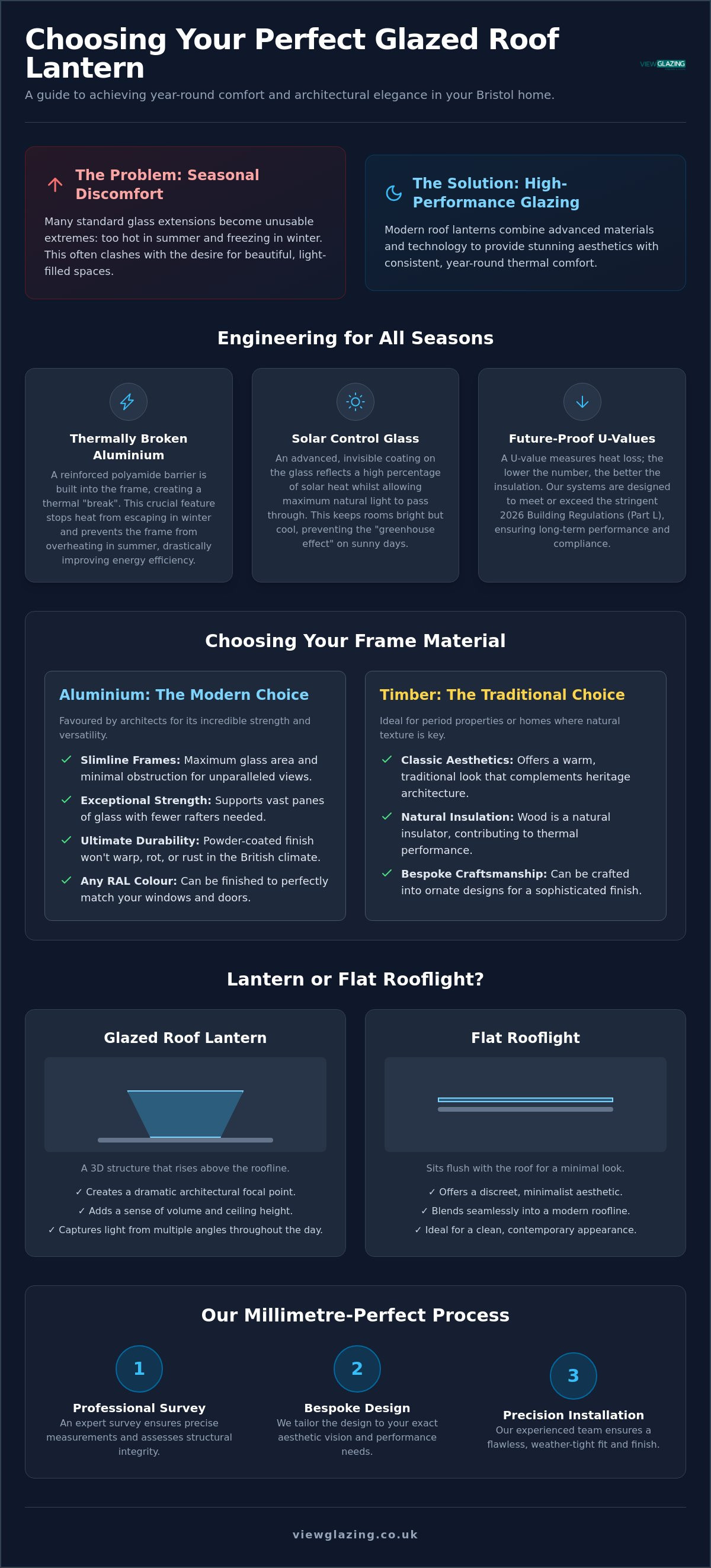
Choosing between a raised lantern and a minimalist flat rooflight depends on your architectural goals. A lantern creates a dramatic focal point and adds internal ceiling height, which can make a small extension feel far more expansive. In contrast, flat rooflights offer a discreet, contemporary look that disappears into the roofline. Structural considerations are also vital for flat roof extensions in the South West, as the weight and drainage of the system must be carefully managed. If you're weighing up these options, you might also want to consult our guide on choosing rooflights for flat roof extensions to see which profile suits your structural layout and aesthetic vision for your glazed roof lantern Bristol project.
Comparing Frame Materials: Aluminium vs. Timber Roof Lanterns
The choice of frame material for a glazed roof lantern Bristol project often dictates the final aesthetic impact and long-term performance of an extension. While uPVC was once a common choice, modern architectural glazing has moved toward high-performance materials that offer greater precision and longevity. Aluminium currently dominates the market, specifically for its ability to support vast expanses of glass with incredibly thin frames. However, for properties where heritage or natural texture is a priority, timber and composite systems remain essential options for a sophisticated finish.
To ensure your installation meets the high expectations of modern living, every aluminium frame we specify is "thermally broken," which means a reinforced polyamide strip is inserted between the inner and outer sections to stop heat from escaping. This technology is critical for meeting the latest Building Regulations for thermal performance, ensuring your new room remains energy efficient throughout the year.
Aluminium: The Slimline Choice for Modern Bristol
Aluminium is favoured by architects for its exceptional strength-to-weight ratio. This structural integrity allows for fewer rafters and slimmer sightlines, ensuring the view of the sky remains the primary focus. These frames can be powder-coated in any RAL colour, allowing for a seamless match with other high-end systems such as VELFAC composite windows or Cortizo aluminium sliding doors. In the damp and varying South West climate, aluminium is incredibly durable; it won't warp, rot, or rust, requiring only an occasional wipe down to maintain its professional appearance. It is the definitive choice for homeowners seeking a minimalist, contemporary aesthetic that lasts for decades.
Timber and Composite: Traditional Elegance
For listed building renovations or period homes in areas like Clifton, timber provides an authentic warmth and character that metal cannot always replicate. Modern timber lanterns, such as those from the Rationel range, have dispelled many maintenance myths; advanced factory-applied treatments now protect the wood against the elements for years. If you desire the internal aesthetic of wood but want the zero-maintenance benefits of metal, a composite glazed roof lantern Bristol is the ideal solution. These systems feature a beautiful, natural timber interior to complement your decor, whilst the exterior is shielded by a high-grade aluminium capping.
Selecting the right material involves balancing the architectural style of your home with your lifestyle requirements. If you are unsure which frame profile best suits your property's character, we invite you to speak with our technical team for tailored advice on your specific project.
Thermal Performance: Why U-Values Matter for Your Bristol Extension
The thermal efficiency of a glazed roof lantern Bristol installation is often the most critical factor in determining the long-term success of an extension. A U-value is simply the measure of how much heat is lost through a specific material, such as the glass or the frame. In the context of 2026 Building Regulations (Part L), the mandate for energy efficiency has become stricter, with a limiting U-value of 2.20 W/(m²K) now required for rooflights. However, at the architectural level, we aim for much higher performance. Premium systems, such as those from our partners at Brett Martin, typically achieve U-values between 1.0 and 1.4 W/(m²K), ensuring your new space remains comfortable regardless of the weather outside.
Homeowners often fear the "greenhouse effect", a room that becomes stifling in the summer and freezing in the winter. Modern "warm frame" technology addresses this by using multi-chambered profiles and composite thermal breaks to eliminate cold spots. This ensures that the internal surface of the frame remains at a consistent temperature, which is the foundation of year-round thermal comfort. By prioritising these technical specifications, you transform a simple glass roof into a high-performance structural element that contributes to the overall energy rating of your home.
Solar Control Glass and Self-Cleaning Coatings
Specifying solar control glass is a vital step for any south-facing Bristol extension. This specialised glazing uses microscopic coatings to reflect a significant portion of solar heat whilst allowing high levels of natural light to pass through. For many high-end projects, triple glazing is now becoming the standard, providing an extra layer of insulation and acoustic protection. We also recommend self-cleaning coatings for lanterns. These use a photocatalytic process where UV light breaks down organic dirt, which is then washed away by the rain, keeping your view clear without the need for constant maintenance.
Managing Condensation and Ventilation
Condensation occurs when warm, moist air hits a cold surface. By using polyamide thermal breaks within the aluminium frame, we ensure the internal profile stays warm, effectively preventing moisture build-up. To manage airflow, especially in kitchen-diners, you can specify manual or electric opening vents. These can be integrated with smart rain sensors that automatically close the vent at the first sign of a typical Bristol shower, providing peace of mind even when you aren't in the room. This combination of insulation and controlled ventilation is essential for maintaining a healthy, comfortable living environment.
Design Examples: Contemporary vs. Traditional Lantern Styles
Selecting a glazed roof lantern Bristol homeowners will enjoy for years requires a careful balance between the heritage of the property and your personal aesthetic vision. A lantern is far more than a source of light; it is a structural statement that defines the architectural character of an extension. Whether you are looking to create a minimalist sanctuary or a grand, period-inspired orangery, the configuration of the rafters and the profile of the frame will dictate the final atmosphere of the room.
In contemporary South West architecture, the trend is moving toward maximising the glass-to-frame ratio. The ultra-slim aluminium lantern is the pinnacle of this approach, utilising high-strength alloys to support oversized glass panes with the thinnest possible rafters. For many modern projects, the "four-pane" minimalist configuration is preferred, as it removes unnecessary internal bars to provide an uninterrupted view of the sky. Conversely, traditional Victorian lanterns remain a staple for period renovations, featuring decorative finials and intricate rafter layouts that mirror the craftsmanship of a bygone era.
We also see an increase in "glazed link" hybrids. These bespoke structures use a combination of a roof lantern and a glazed walkway to connect a historic main house with a modern garden extension. This creates a clear, light-filled transition between the old and the new, preserving the integrity of the original masonry whilst introducing a high-performance living space.
Case Study: The Modern Kitchen Focal Point
Positioning a lantern directly over a kitchen island is a powerful design technique used to define the "heart of the home" in open-plan layouts. By aligning the glazing with the workspace below, you create a dedicated zone of natural light that makes the kitchen feel more expansive. To achieve a cohesive architectural look, many clients choose a powder-coated RAL colour for their lantern that matches their Cortizo sliding doors. This creates a unified "glazing package" where the slimline aesthetics of the roof and the walls work in perfect harmony.
Case Study: The Cotswold Stone Extension
For properties built with traditional Cotswold stone or Bath stone, a softer approach to design is often required. Selecting a neutral frame colour, such as Agate Grey or a bespoke cream, allows the lantern to blend naturally with the warm tones of the masonry. In these projects, we often recommend pairing the glazed roof lantern Bristol installation with Rationel timber windows. This combination provides the best of both worlds: the high-performance protection of an aluminium-capped roof and the tactile, sustainable warmth of timber frames at eye level. This approach is particularly effective for single-storey extensions, where the raised lantern adds vital ceiling height and a sense of grandeur to a traditional footprint.
Every home presents a unique architectural challenge. If you are ready to explore how these designs could work for your property, we invite you to request a technical consultation with our specialist team.
The View Glazing Process: Professional Installation in the South West
A high-performance glazed roof lantern Bristol homeowners select is a significant investment that requires more than just a standard fitting. To ensure the architectural vision is realised without compromise, we follow a methodical process that bridges the gap between design and technical execution. Our glazing project management service oversees every detail, providing a steady hand from the initial specification through to the final sign-off. By acting as your dedicated partner, we alleviate the typical anxieties of construction, ensuring that the precision engineering of our Brett Martin systems is matched by the precision of our installation.
Why a Technical Survey is Essential
The success of a roof lantern begins with a millimetre-perfect technical survey. This isn't merely about measuring the hole in the roof; it involves a comprehensive assessment of the "upstand," the structural frame upon which the lantern sits. If the upstand isn't perfectly level or correctly sized, the weatherproofing and thermal performance of the entire unit are compromised. For larger installations, our surveyors evaluate structural loads to determine if additional steel supports are required to maintain the integrity of your extension. We also address the practicalities of delivery, identifying potential site access issues in the narrow residential streets often found in areas like Redland or Montpelier. These details are vital for a seamless installation day.
Sourcing and Installation Excellence
We believe in the longevity of high-end materials over temporary solutions. By sourcing through a specialist who understands the specific architectural glazing Bristol requirements, you ensure that your project benefits from the latest innovations in thermally broken aluminium. Our partnership with leading manufacturers like Brett Martin allows us to provide rooflights that are as durable as they are beautiful. During the installation phase, our specialist teams focus on creating a completely weather-tight seal, ensuring the 2026 thermal performance standards are fully met in practice. Every installation is carried out to FENSA standards, providing you with the necessary certification and a long-term warranty for total peace of mind.
A successful project is the result of careful curation and technical skill. If you are ready to transform your home with a stunning new focal point, we invite you to enquire about your roof lantern project with View Glazing today. Our team is ready to guide you through every step of the professional process.
Realising Your Architectural Vision with Light and Performance
A successful home transformation is found at the intersection of aesthetic beauty and technical precision. By selecting the right materials and prioritising the latest thermal standards, you ensure your extension remains a comfortable, light-filled sanctuary for years to come. Whether you opt for the minimalist lines of a contemporary aluminium frame or the traditional character of a composite system, a bespoke glazed roof lantern Bristol homeowners choose should always be a permanent investment in quality.
Our role is to act as your steady guide through this technical process. As specialist installers of Brett Martin systems, we provide comprehensive project management that covers everything from the initial structural survey to the final, millimetre-perfect installation. We focus on delivering high-performance glazing solutions specifically engineered for the unique South West climate, giving you total peace of mind.
Your journey toward a brighter, more expansive home starts with a professional conversation. We invite you to Book an Architectural Glazing Consultation for Your Bristol Project and take the first step toward realising your vision. We look forward to helping you create a stunning new focal point for your home.
Frequently Asked Questions
Do I need planning permission for a roof lantern in Bristol?
Most roof lantern installations fall under Permitted Development and don't require a full planning application. This typically applies if the glazing doesn't project more than 150mm from the roof plane and isn't higher than the existing roof's highest point. However, if your property is in a Bristol conservation area or is a listed building, you'll likely need to submit a formal application. We recommend checking with the local planning authority before starting structural work.
What is the best U-value for a roof lantern in 2026?
The best U-value for a high-performance system in 2026 typically ranges between 1.0 and 1.4 W/(m²K). While the updated Building Regulations (Part L) mandate a limiting U-value of 2.20 W/(m²K) for rooflights, premium aluminium systems aim for much lower figures to ensure maximum energy efficiency. Lower U-values indicate better insulation, which is essential for maintaining a stable temperature in your extension throughout the British seasons.
Can a roof lantern be installed on an existing flat roof?
Yes, a lantern can be installed on an existing flat roof, provided the structure can support the additional weight. A professional structural assessment is vital to ensure your joists are capable of bearing the load of the glass and frame. In some cases, it's necessary to reinforce the roof with timber or steel before the installation of your glazed roof lantern Bristol project can safely proceed.
How much does a glazed roof lantern cost to install?
The cost of a roof lantern installation varies significantly based on the size, material, and structural complexity of the project. Industry data indicates that supply and installation for standard units often range between £1,800 and £6,500, though bespoke architectural designs or projects requiring significant structural alterations can exceed these figures. We provide tailored quotes following a technical survey to ensure all logistical and material requirements are accurately accounted for.
Are aluminium roof lanterns better than uPVC alternatives?
Aluminium is superior to uPVC for roof lanterns because of its exceptional strength-to-weight ratio and longevity. This strength allows for much slimmer sightlines and larger glass panes, creating a more elegant, minimalist aesthetic. Unlike uPVC, aluminium won't warp, discolour, or become brittle over time. It's a permanent architectural investment that maintains its structural integrity and premium appearance in the varying South West climate.
How do I clean a roof lantern that is hard to reach?
Specifying self-cleaning glass is the most effective way to maintain a lantern that is difficult to access. This specialised coating uses UV light to break down organic dirt, which is then washed away by rainwater without leaving streaks. For internal cleaning, most homeowners use a telescopic pole with a microfibre attachment. During our survey, we can discuss the best glass specifications to keep your view clear with minimal effort.
Will a roof lantern make my room too hot in the summer?
A roof lantern won't cause your room to overheat if you specify high-performance solar control glass. This technology reflects a significant portion of the sun's heat whilst still allowing natural light to flood the space. It effectively prevents the "greenhouse effect" that is often associated with older glazing systems. When combined with proper ventilation, solar control glass ensures your glazed roof lantern Bristol remains a comfortable focal point even during peak summer months.
Can I have an opening vent in my roof lantern for ventilation?
Yes, you can integrate manual or electric opening vents into your lantern design to manage airflow. Electric vents are particularly popular as they can be fitted with smart sensors that automatically close the glazing at the first sign of rain. This is an excellent feature for kitchen extensions where steam and heat build up quickly, allowing you to maintain a fresh environment without worrying about the unpredictable Bristol weather.


Comments