.png)

Triple Glazed Windows Bath: The Architectural Guide to Performance and Design
- View Glazing

- 18 hours ago
- 12 min read
Can a heritage property in the heart of the city truly achieve Passive House levels of efficiency without losing its architectural soul? Many homeowners in the South West accept that living in a beautiful period property or a central terrace means enduring drafty rooms and the constant hum of city traffic. It's a common frustration, yet the latest innovations in triple glazed windows Bath homeowners now have access to are proving that you don't have to sacrifice slim aesthetics for superior performance.
By selecting precision-engineered systems from partners like VELFAC and Rationel, you can future-proof your home against rising energy costs while creating a near-silent interior environment. In this guide, we'll explore the intersection of thermal science and high-end design, helping you navigate the technical specifications required to transform your living space into a high-performance architectural masterpiece. You will discover how modern composite and timber frames provide the longevity and elegance your property deserves, ensuring your investment delivers both comfort and significant aesthetic value for decades to come.
Table of Contents
Understanding Triple Glazed Windows: More Than Just an Extra Pane
Technical Performance: U-Values, Acoustics, and Thermal Comfort
Beyond uPVC: Architectural Frame Materials for Triple Glazing
Is Triple Glazing Worth the Investment for Your Bath Project?
Specifying and Installing Triple Glazing: The View Glazing Process
Understanding Triple Glazed Windows: More Than Just an Extra Pane
Triple glazing represents a significant leap in insulated glazing technology, moving beyond simple weatherproofing to become a primary component of a building's thermal envelope. For those specifying triple glazed windows Bath properties require, it's essential to view these units as precision-engineered systems rather than just standard frames with an additional pane of glass. This technology creates a robust barrier that dramatically reduces heat transfer, making it a cornerstone of modern architectural design in the South West.
The Anatomy of a High-Performance Glazing Unit
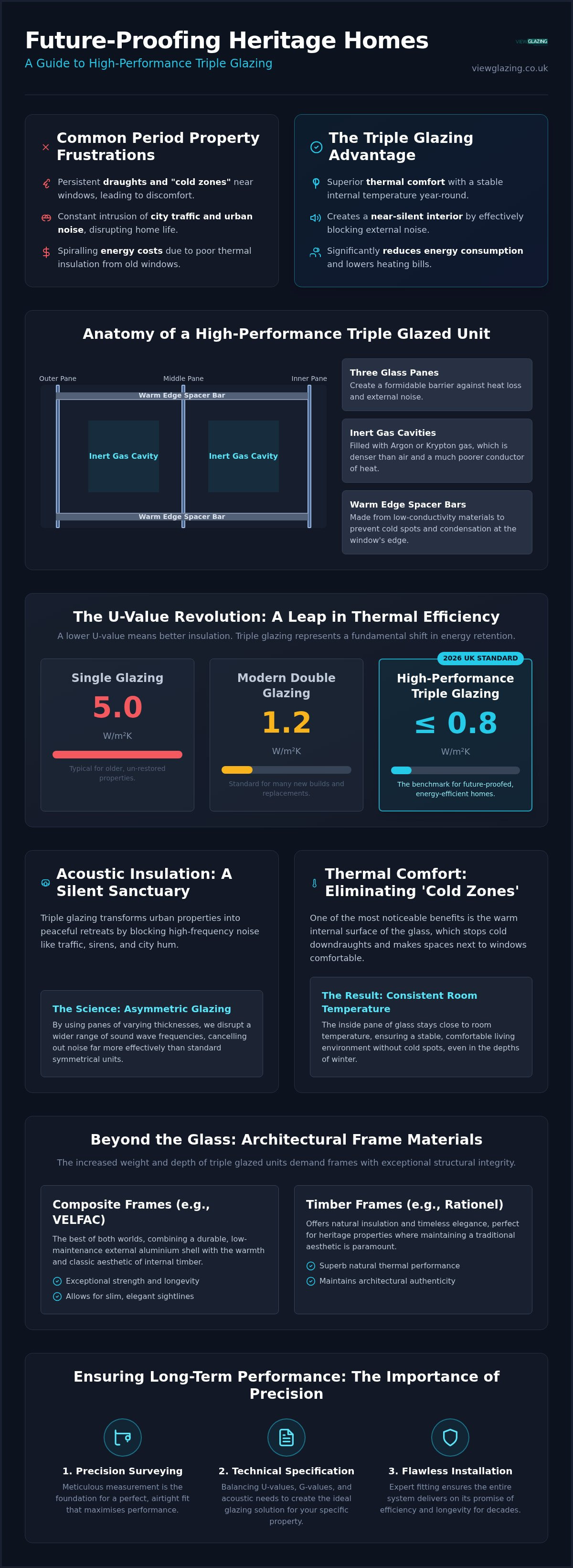
A standard high-performance unit consists of three individual glass panes separated by two insulating cavities. These cavities are typically filled with inert gases such as Argon or Krypton; these gases are denser than air and provide much higher resistance to heat flow. To prevent peripheral heat loss, these units use warm edge spacer bars. These components are made from low-conductivity materials that keep the edges of the glass warm, effectively eliminating the risk of internal condensation and ensuring the entire window performs consistently across its surface area.
Why Triple Glazing is the Standard for 2026
As we approach 2026, UK Building Regulations are tightening to meet ambitious carbon reduction targets. Triple glazing is no longer a luxury; it's becoming the necessary baseline for achieving the thermal performance required for future-proofed homes. Beyond simple energy savings, the shift is driven by a desire for total thermal comfort. In older Bath stone properties, large glazed areas often feel cold to the touch, creating draughts even when the windows are shut. Triple glazing eliminates these "cold zones," maintaining an internal glass temperature nearly identical to the room temperature. This level of performance is vital for projects aiming for Passive House standards or simply seeking a stable, comfortable living environment.
The increased depth and weight of these units demand exceptional framing. We focus on premium composite systems from VELFAC or timber frames from Rationel because they offer the structural integrity needed to support this additional mass. These materials allow us to provide triple glazed windows Bath homeowners can rely on without compromising the slim architectural sightlines that define the region's most prestigious properties. Selecting the right frame is just as critical as the glass itself, as it ensures the entire system remains airtight and functional for decades.
Technical Performance: U-Values, Acoustics, and Thermal Comfort
The efficiency of a window is primarily measured by its U-value, which calculates the rate of heat transfer through the unit. For homeowners considering triple glazed windows Bath climate conditions necessitate a focus on heat retention during the damp, cold winters typical of the South West. A lower U-value signifies superior insulation; while older single glazing often registers at 5.0 W/m²K or higher, modern double glazing sits around 1.2 W/m²K. High-performance triple glazing pushes this further, often achieving 0.8 W/m²K or lower. This reduction isn't merely incremental. It represents a fundamental change in how your home retains energy.
Beyond heat retention, we must consider the G-value, or solar gain. This measures how much solar heat passes through the glass. In south-facing rooms, a high G-value can lead to overheating, while a lower value helps maintain a steady temperature. Balancing these technical specs ensures your home remains comfortable throughout the year. According to research on triple-pane windows, this multi-layered approach is the most effective way to stabilise internal climates.
Acoustic Insulation: Silencing the Bath City Centre
Living near the A36 or the city's railway lines often means dealing with persistent background noise. Triple glazing offers a unique advantage here through asymmetric glazing. By using glass panes of different thicknesses, we can disrupt and cancel out sound waves more effectively than standard units. This technique is particularly successful at blocking high-frequency city noise, such as sirens and traffic hum. It transforms a central property into a quiet sanctuary, allowing you to enjoy the benefits of urban living without the acoustic intrusion.
The Science of Internal Surface Temperature
One of the most noticeable benefits of triple glazing is the elimination of cold downdraughts. In double-glazed homes, the internal pane of glass is often significantly colder than the room air. This temperature gap, known as Delta-T, causes air to cool as it hits the glass and sink to the floor, creating a drafty sensation even in a sealed room. Triple glazing keeps the internal glass temperature much closer to the ambient room temperature. This physics-based approach prevents both downdraughts and internal condensation, as the glass surface never drops below the dew point. If you are planning a renovation near a busy route, our team can provide a technical specification tailored to your specific architectural requirements.
Beyond uPVC: Architectural Frame Materials for Triple Glazing
While commodity materials like uPVC are common in standard domestic projects, they often lack the structural rigidity required for high-performance architectural glazing. Triple glazed units are significantly heavier than their double-glazed counterparts, placing substantial stress on the frame corners and hinges. When specifying triple glazed windows Bath architects and homeowners must consider these structural demands. For VELFAC windows Bristol and Bath clients choose, the solution lies in a composite construction that combines the strength of aluminium with the natural insulation of timber. This approach ensures the frames remain perfectly aligned over decades of use, preventing the sagging or warping often seen in less robust materials.
VELFAC Composite: Slim Profiles and Modern Aesthetics
The VELFAC system is renowned for its uniform sightline design. This engineering ensures that opening lights and fixed panes appear identical from the exterior, creating a clean, symmetrical aesthetic that is highly sought after for modern extensions. The external aluminium provides a resilient, low-maintenance shield against the elements, whilst the internal timber frame adds a tactile, warm finish to the interior. It's an excellent choice for minimalist projects in the South West where the goal is to maximise natural light without the visual clutter of thick, bulky frames.
Rationel Timber: The Sustainable Choice for Heritage Settings
For projects where natural materials are a priority, Rationel windows offer a high-performance timber solution that fits seamlessly into both rural and heritage settings. Solid timber is a naturally superior insulator, and when combined with triple glazing, it provides exceptional thermal stability. These frames are typically FSC certified, ensuring that the timber is sourced from responsibly managed forests. Using timber also offers significant carbon-sequestration benefits, making it the most environmentally responsible choice for a sustainable build.
Choosing premium materials for triple glazed windows Bath properties is about more than just aesthetics. It's a commitment to longevity. Unlike uPVC, which can degrade or discolour over time, aluminium and timber composites are designed for a 40 to 50-year lifespan. This durability, paired with high-end architectural finishes, ensures that your glazing remains a functional and beautiful feature of your home for the long term. This level of precision engineering ultimately enhances the overall property value, providing a far better return on investment than standard alternatives.
Is Triple Glazing Worth the Investment for Your Bath Project?
Evaluating the return on investment for triple glazed windows Bath homeowners install requires looking beyond the monthly energy bill. While the reduction in heating requirements is significant, the true value lies in the intersection of acoustic comfort, thermal stability, and long-term property desirability. As energy performance certificates (EPC) become increasingly important for resale value in the UK, high-performance glazing ensures your home remains a premium asset. It's a strategic choice that addresses the immediate need for comfort whilst securing the future value of the property.
Investing in triple units now helps you avoid the disruptive need for further upgrades as UK building regulations continue to tighten. A common concern is that these units are too heavy for standard openings, yet modern architectural engineering ensures that frames and hinges are specifically designed for this load. The result is a smooth, reliable operation that feels substantial rather than bulky. Modern systems manage this weight with ease, providing a robust feel that reflects the quality of the craftsmanship.
Period Properties vs. New Builds in the South West
In the South West, new builds often mandate triple glazing to meet strict sustainability targets and achieve high EPC ratings. However, for those refurbishing period properties, such as the iconic Victorian terraces found throughout Bath, the decision is often driven by a need to combat the inherent draftiness of stone structures. Modern triple glazing can be integrated with slim profiles that respect the aesthetic harmony of Bath stone. This provides a contemporary performance boost without compromising the building's historic character or architectural soul.
Prioritising Your Glazing Budget
Not every window in a project necessarily requires the same specification. A strategic, mixed approach often yields the best results for your budget. You might prioritise triple glazing for north-facing elevations and bedrooms overlooking busy roads to maximise warmth and silence. Conversely, for large social spaces with south-facing views, high-spec double-glazed Cortizo sliding doors may be more appropriate to balance weight and solar gain. Professional glazing project management is essential here to ensure these various systems work together seamlessly across the entire building envelope.
By carefully selecting where to deploy high-performance units, you can achieve an optimal balance between cost and performance. This tailored approach ensures that your investment is directed where it will have the greatest impact on your daily life. If you are ready to explore how these systems can enhance your home, you can request a technical consultation with our specialist team to discuss your specific architectural requirements.
Specifying and Installing Triple Glazing: The View Glazing Process
Transitioning from an architectural vision to a completed installation requires a methodical approach, particularly when dealing with the advanced requirements of triple glazing. For the triple glazed windows Bath homeowners choose to install, the margin for error is virtually non-existent. Our process is designed to bridge the gap between high-level design and technical execution, ensuring that the performance promised in the specification is exactly what is delivered on site. We act as a dedicated partner for architects and developers, providing a comprehensive technical specification service that identifies potential challenges long before the first unit arrives.
Our approach centres on sourcing premium systems from industry leaders like VELFAC and Rationel. These partnerships allow us to offer products that have been tested to the highest European standards for air permeability and structural integrity. By project-managing the entire journey, from initial consultation through to the final sign-off, we alleviate the anxieties often associated with complex glazing packages. It's a structured professional process that prioritises precision at every stage, ensuring your investment is protected by expert oversight.
The Importance of a Precise Site Survey
A successful installation begins with a rigorous site survey. Triple glazed units are significantly deeper and heavier than standard glass, which means we must carefully assess the structural openings to ensure they can support the additional load. We pay close attention to technical details that others might overlook, such as checking floor levels to guarantee perfectly flush threshold installations for sliding doors. Our specialist surveyors operate across the South West, providing expert assessments for projects from the Cotswolds down to Salisbury and Frome. This local knowledge, combined with technical expertise, ensures that every unit fits with the tight tolerances required for high-performance buildings.
Professional Installation and Long-Term Performance
Even the most advanced triple glazed window will fail to meet its thermal potential if it's installed poorly. Thermal bridging and air leakage at the perimeter of the frame can completely undermine a low U-value. To prevent this, our installation teams use high-quality expanding foams and specialist airtightness tapes that create a permanent, weather-tight seal between the window frame and the building fabric. This attention to detail ensures that the thermal integrity of the building envelope is maintained, preventing draughts and energy loss.
Precision in the final phase is what separates a standard renovation from an architectural masterpiece. We don't just supply windows; we deliver a fully integrated glazing solution that performs as well as it looks. If you are planning a high-end residential project and want to ensure every detail is managed with professional care, we encourage you to book a technical consultation with our team to discuss your specific requirements.
Future-Proofing Your South West Property
Choosing the right glazing is more than a technical upgrade; it's a commitment to the long-term architectural integrity and comfort of your property. By integrating high-performance triple glazed windows Bath homeowners can resolve the tension between heritage aesthetics and modern energy standards. Properly specified frame materials and precision installation are vital to achieving these performance goals without compromising on design.
As specialist installers of VELFAC, Rationel, and Cortizo, we provide the architectural excellence required for the region's most demanding projects. Our comprehensive project management ensures that technical specifications are translated into tangible results, providing a near-silent and thermally stable environment. Whether you are working on a minimalist extension in Bristol or a sensitive period restoration in the Cotswolds, we act as your steady guide through every technical decision.
Request a technical consultation for your glazing project today to ensure your home is future-proofed for decades to come. We look forward to helping you realise your architectural vision with precision and care.
Frequently Asked Questions
Is triple glazing significantly more expensive than double glazing?
Triple glazing carries an initial cost premium over double glazing, reflecting the additional pane of glass and the robust framing required. However, the investment is offset by long-term savings on heating bills and the enhanced comfort of your home. When specifying triple glazed windows Bath projects often see a boost in property value and EPC ratings. This makes the system a permanent investment in the building's infrastructure rather than a short-term cosmetic change.
Can I install triple glazing in an existing window frame?
It is rarely possible to install triple glazed units into existing frames because they are significantly deeper and heavier than standard double glazing. Most heritage or standard frames lack the structural rebate and hinge strength to support the extra mass. Purpose-built systems from manufacturers like VELFAC and Rationel are designed from the ground up to accommodate these high-performance units, ensuring the airtight seals and structural integrity remain intact for decades of use.
Does triple glazing reduce the amount of light entering my home?
While adding a third pane of glass technically reduces light transmittance by a small percentage, the difference is virtually imperceptible to the human eye. Modern high-performance glass uses advanced coatings to maintain high levels of clarity. By choosing slim-profile frames, such as those in our composite ranges, you can actually increase the glass surface area compared to bulky uPVC alternatives, often resulting in a brighter interior environment despite the extra pane.
How much noise reduction can I expect from triple glazed windows in Bath?
You can expect a dramatic reduction in external noise, particularly high-frequency sounds like traffic hum and sirens. By using asymmetric glazing, where each pane has a different thickness, the window disrupts sound waves more effectively than double glazing. This is a significant benefit for properties near the A36 or Bath city centre. It transforms a noisy urban room into a peaceful sanctuary, providing acoustic comfort that double glazing simply cannot match.
Is triple glazing necessary for south-facing rooms?
While triple glazing is most critical for north-facing elevations to prevent heat loss, it offers benefits for south-facing rooms too. In these areas, the focus shifts to controlling solar gain and preventing overheating. We often specify glass with specific G-values to manage this balance. Even on a sunny elevation, the acoustic benefits and the elimination of cold spots during winter nights make triple glazing a worthwhile consideration for a consistent whole-home thermal envelope.
What is the typical lifespan of a triple glazed architectural window?
Architectural triple glazed windows from premium brands like VELFAC and Rationel typically have a lifespan of 40 to 50 years. This longevity is achieved through the use of durable materials like powder-coated aluminium and treated timber, which resist the damp South West climate. Unlike commodity materials that may warp or discolour within fifteen years, these precision-engineered systems are designed to remain functional and aesthetically pleasing for the lifetime of the building.
Are triple glazed windows harder to open because of the weight?
Despite the increased weight of the glass, modern architectural windows are not harder to open. High-performance systems utilise heavy-duty hinges and precision-engineered hardware that manage the load effortlessly. Whether you choose side-hung, top-guided, or large sliding units, the operation remains smooth and light. The weight actually contributes to a more secure and substantial feel when the window is closed, reflecting the superior build quality of the installation.
Do I need triple glazing to meet current UK Building Regulations in 2026?
While the specific requirements for 2026 are still evolving, triple glazing is rapidly becoming the practical standard for meeting tightening U-value targets. Current building regulations already demand high levels of thermal efficiency that are difficult to achieve with double glazing alone. Specifying triple units now ensures your project remains compliant with future standards, avoiding the need for costly retrofitting as the UK moves toward more stringent carbon reduction goals for residential properties.


Comments