.png)

Sustainable Windows Bath: The Architectural Guide to Eco-Friendly Glazing
- View Glazing

- 3 days ago
- 11 min read
Updated: 22 hours ago
What if the secret to lowering your heating bills in a Georgian terrace isn't hidden in high-tech gadgets, but in the very frames of your windows? For homeowners in a UNESCO World Heritage site, the search for sustainable windows Bath often feels like a choice between preserving history and embracing the future. You've likely felt the chill of a draughty sash window whilst worrying about the environmental impact of modern alternatives like uPVC, which rarely meet the city's stringent aesthetic standards.
We understand that managing Bath's strict conservation area restrictions is a daunting process, especially when you're balancing a desire for architectural elegance with the need for world-class thermal performance. This guide simplifies that journey. You'll discover how to select eco-friendly glazing that satisfies planning officers and slashes your carbon footprint without compromising on style. We'll explore the longevity of FSC-certified timber and high-performance composite systems, providing a clear roadmap from initial survey to a warmer, more beautiful home.
Table of Contents
The Challenge of Sustainable Glazing in Bath
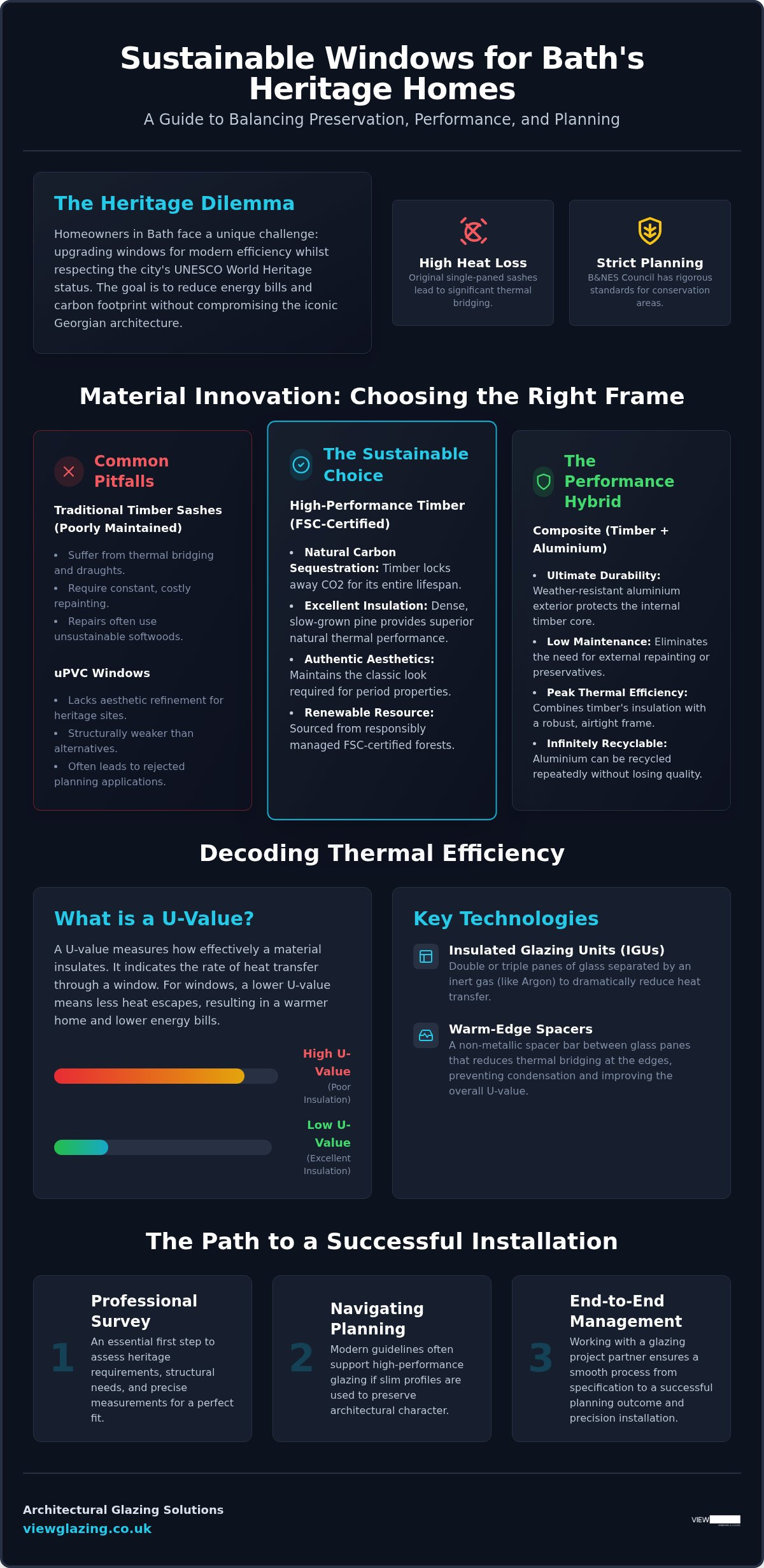
Bath's architectural identity is defined by its 18th-century heritage and iconic honey-coloured stone. For homeowners, the quest for sustainable windows Bath involves a complex intersection of preservation and performance. True sustainability in this context goes beyond simple energy ratings. It encompasses the carbon footprint of the materials, the longevity of the installation, and the sensitive integration of modern technology into historic facades. We view sustainability as a balance between protecting the city's past and securing its environmental future.
Longevity is a cornerstone of eco-friendly design. Choosing materials with a long life-cycle reduces waste and ensures the environmental cost of manufacturing is spread over many decades. High-performance glazing plays a vital role in decarbonising Bath's housing stock. These properties are notoriously difficult to heat due to the porous nature of Bath stone and the prevalence of original single-paned glass. By upgrading the building envelope, we can significantly reduce the energy demand of these historic structures.
Why Traditional Windows Often Fail the Sustainability Test
Original timber sashes often suffer from significant thermal bridging. Heat escapes rapidly through the glass and through gaps in the frames, leading to high energy bills and uncomfortable living spaces. Whilst historic timber is admirable, poorly treated softwoods used in later repairs often fail within a few years. They require constant repainting or complete replacement, which is neither cost-effective nor sustainable. Some homeowners consider uPVC as a quick fix, but this material lacks the structural integrity and aesthetic refinement required for conservation areas. It's often visually jarring and can lead to rejected planning applications.
The Shift Towards Architectural Glazing Solutions
The industry has moved away from temporary "patch-up" repairs toward durable, high-performance replacements. Modern solutions utilise Insulated glazing units (IGUs) to provide exceptional thermal retention whilst maintaining the slim profiles that heritage officers demand. These systems allow for triple-glazing benefits without the bulky appearance of standard windows. Successfully navigating these requirements requires more than just a supplier. It necessitates a glazing project management partner who understands the nuances of heritage sites. By prioritising precision engineering and sustainable material sourcing, you can achieve a home that is both historically respectful and future-proof.
Material Innovation: Why Composite and Timber Lead the Way
Selecting the right materials is the most significant decision in any renovation. Whilst traditional timber is often the default for heritage projects, modern engineering has introduced options that offer superior longevity and efficiency. Choosing sustainable windows Bath requires a look at the entire life-cycle of the frame, from the energy used in production to its eventual recyclability. Composite windows are the fusion of external aluminium durability and internal timber thermal performance. This combination addresses the primary weakness of traditional wood; the need for regular, resource-heavy maintenance.
Wood remains a premier choice for eco-conscious homeowners due to its natural carbon sequestration. As trees grow, they absorb CO2, which remains locked within the timber of your window frames for decades. When sourced from responsibly managed forests, timber is a truly renewable resource. Aluminium, whilst energy-intensive to refine initially, is almost infinitely recyclable without losing quality. By combining these two materials, we create a high-performance profile that protects the wood from the elements and eliminates the need for toxic paints or preservatives over time.
Rationel: Traditional Aesthetics, Modern Performance
For Bath’s more traditional facades, Rationel windows are often the preferred specification. These systems use slow-grown Scandinavian pine, which is significantly denser and more durable than the fast-grown alternatives often found in standard UK joinery. This density provides natural insulation that outperforms thermally broken aluminium on its own. The result is a window that maintains the classic look of a period property whilst meeting the rigorous airtightness standards of a 21st-century home. If you are aiming for a specific heritage look, you can discuss your project with our architectural team to see how timber fits your vision.
VELFAC: The Pinnacle of Composite Design
When the architectural brief calls for a minimalist aesthetic, VELFAC offers a unique advantage. Their slim frame design maximises the glass area, which increases natural light and boosts passive solar gain. This "free" heat reduces the reliance on mechanical heating systems during the winter months. The VELFAC Windows Bristol guide provides a deeper look at how these systems achieve their sleek sightlines. Beyond their appearance, VELFAC frames are designed for easy disassembly at the end of their long life, ensuring that both the aluminium and timber can be responsibly recycled or repurposed, closing the loop on material sustainability.
Evaluating Performance: U-Values and Thermal Efficiency
Understanding the technical specifications of your glazing is essential for achieving a truly energy-efficient home. A U-value measures the rate of heat transfer through a material; the lower the number, the better the insulation. When searching for sustainable windows Bath, it's vital to look at the "whole window" U-value rather than just the glass itself. High-performance frames from VELFAC or Rationel ensure that the thermal bridge is minimised, preventing the precious warmth of your home from escaping through the edges of the unit. Specifying sustainable windows Bath requires a precision approach to both material choice and installation technique to meet the rigorous thermal targets of the 2026 Future Homes Standards.
Modern units achieve these low values through a combination of argon-filled cavities and "warm edge" spacers. Argon is a dense, inert gas that conducts heat much more slowly than air, whilst warm edge spacers are made from non-conductive materials that eliminate the cold spots typically found at the perimeter of older double glazing. These features work together to prevent condensation and mould growth, protecting the internal fabric of your property. Whilst double glazing remains a popular choice for heritage retrofits, triple glazing is increasingly becoming the benchmark for zero-carbon ready properties due to its superior heat retention.
Calculating the Real ROI of High-Performance Glazing
Investing in quality glazing provides a return that extends far beyond immediate energy bill savings. Over a 30-year life-cycle, the reduced demand on your heating system significantly lowers the total cost of home ownership. In Bath's competitive property market, a house with a high EPC rating and modern, aesthetically sensitive windows often commands a premium. There is also a significant lifestyle benefit; high-performance units offer superior acoustic insulation. This is particularly valuable for properties near the city centre or busy commuter routes, where the roar of traffic is replaced by a tranquil internal environment. To further enhance this sense of sanctuary, many homeowners explore Custom Furnishings, Security & Wellness Solutions that complement high-performance windows with added privacy and protection.
Thermal efficiency is not just about keeping heat in; it's also about managing solar gain during the summer. We use G-values to measure how much solar heat enters through the glass. Finding the right balance ensures your home stays warm in the winter without becoming a greenhouse in July. High-performance coatings can also filter out UV rays, protecting your furniture and artwork from fading. This is a critical consideration for large expanses of glass, such as rooflights in Bristol and Bath, where vertical sun exposure is at its highest. Professional installation ensures these units are perfectly sealed, eliminating the "performance gap" where high-spec products underperform due to poor fitting.
Planning Permission and Conservation Areas in Bath
Securing approval for sustainable windows Bath requires a sophisticated understanding of the local planning landscape. The Bath & North East Somerset (B&NES) Supplementary Planning Document (SPD) provides the framework for these decisions, and whilst it remains protective of the city's heritage, the tide is turning. Officers increasingly recognise that climate change mitigation is a valid reason for upgrading historic fabric. The key to a successful application lies in proving that the new units won't harm the "Outstanding Universal Value" of the World Heritage site.
Many homeowners assume that "like-for-like" replacement is the only path to approval. This isn't always the case. Modern planning policy now allows for high-performance double or triple glazing if the design respects the original proportions and sightlines of the building. We work closely with architects to present these upgrades as a heritage benefit. By reducing internal condensation and dampness, high-quality sustainable windows Bath actually help preserve the structural integrity of 18th-century stone properties for the next generation.
Listed Buildings vs Conservation Areas
It's vital to distinguish between the levels of restriction. Within Bath's 30 conservation areas, you generally have more flexibility to use high-performance composite or aluminium systems, provided they mimic traditional profiles. However, if your property is a listed building, the requirements are far more stringent. Listed Building Consent is mandatory, and performing unauthorised work is a criminal offence. In these sensitive contexts, slimline timber systems from Rationel or ultra-slim composite frames from VELFAC are often the only modern alternatives that conservation officers will consider over traditional single glazing.
The Site Survey: Your Most Important Planning Tool
A precision survey is the foundation of any planning submission. We don't just measure the opening; we document the architectural context to ensure every frame fits perfectly into the existing stone apertures. This level of detail allows us to provide technical drawings that satisfy the most meticulous conservation officers. Our project management team ensures that every installation complies with building regulations whilst maintaining the delicate aesthetic balance of the streetscape. If you're ready to start your application, you can contact our specialist team for a technical consultation to discuss your property's specific requirements.
Delivering Architectural Excellence with View Glazing
At View Glazing, we believe that the journey toward sustainable windows Bath is as important as the products themselves. We provide a methodical, end-to-end service that bridges the gap between architectural vision and technical execution. Our process begins with a detailed specification phase and concludes with a final sign-off that meets the highest standards of precision. We don't just act as a supplier; we are a dedicated partner focused on delivering a permanent investment for your property. By sourcing from world-class manufacturers like VELFAC, Rationel, and Cortizo, we ensure every project benefits from the pinnacle of European engineering and environmental responsibility.
Specialist architectural systems require a specialist approach to installation. Our teams are trained specifically in high-performance glazing, understanding the nuances of airtightness and thermal bridging that general builders might overlook. We serve homeowners and trade professionals across Bath, Bristol, and the Cotswolds, bringing a sophisticated eye to every site. Whether you're retrofitting a Georgian townhouse or constructing a contemporary eco-home, our focus remains on longevity and performance. We prioritise materials and techniques that ensure your windows remain a functional, beautiful part of your home for decades to come.
A Tailored Specification Service
Every property has a unique orientation and architectural character. We match material choices to these specific needs to ensure your home performs perfectly throughout the seasons. If a room faces south, we'll recommend specific G-values to manage solar gain. If you're working within a conservation area, we'll focus on the slim sightlines that define the sustainable windows Bath heritage officers prefer. We even examine the sustainability of the hardware, ensuring handles and hinges meet our rigorous standards for durability. Our team works alongside your main contractor or architect, providing the technical clarity and project management needed to navigate complex builds without the typical anxieties of renovation.
The Future of Your Home
Choosing high-performance glazing is about more than just immediate comfort; it's about adopting a "buy once, buy well" philosophy. We're committed to reducing waste and promoting circularity within the glazing industry by selecting brands that prioritse recyclable aluminium and FSC-certified timber. This approach ensures that your home is future-proofed against rising energy costs and evolving building regulations. We take pride in helping our clients create legacy properties that balance aesthetic harmony with world-class efficiency. Contact View Glazing today to discuss your sustainable window project in Bath and discover how we can realise your architectural vision.
Future-Proofing Your Heritage Home
Balancing the historic charm of the South West with modern thermal performance is no longer a compromise. By selecting high-performance materials like aluminium-clad timber and prioritising precision U-values, you can significantly reduce your carbon footprint while enhancing your property's architectural character. We've explored how the right sustainable windows Bath planning strategy, backed by expert survey data, can navigate even the strictest conservation area requirements.
As official partners of VELFAC and Rationel, View Glazing specialises in delivering these complex heritage projects with absolute clarity. Our comprehensive survey and specification service ensures that every detail aligns with your aesthetic goals and environmental values. It's an investment in longevity that secures the comfort of your home for decades to come. Book a technical survey for your Bath project today to begin your journey toward a more efficient, light-filled home.
Frequently Asked Questions
Do I need planning permission for sustainable double glazing in Bath?
Planning permission is generally required for window replacements in Bath's 30 conservation areas, particularly if the material or appearance changes. Whilst some properties have permitted development rights, these are often restricted by Article 4 directions. For listed buildings, you must obtain Listed Building Consent before any work begins. Carrying out alterations without this consent is a criminal offence, so it's best to check with the local planning authority or a specialist before proceeding.
What is the most sustainable material for window frames?
FSC-certified timber is widely considered the most sustainable material due to its natural carbon sequestration properties. However, for long-term sustainability, aluminium-clad timber is often superior. This is because the external aluminium protects the wood core, significantly extending the window's lifespan and reducing maintenance needs. By choosing a material that lasts 40 years or more, you reduce the environmental impact associated with frequent replacements and the resources required for ongoing repairs.
Can VELFAC composite windows be used in conservation areas?
VELFAC composite windows are frequently approved for use in conservation areas because their slim sightlines mimic traditional profiles. Their uniform appearance across opening and fixed lights provides a minimalist aesthetic that many planning officers find acceptable for modern heritage retrofits. Success often depends on how the technical drawings are presented to the council. We recommend working with a specialist who understands how to align these high-performance systems with the specific character of your streetscape.
How much can I save on energy bills by upgrading my windows in Bath?
Upgrading from single glazing to A-rated double-glazed sustainable windows Bath can save an average UK home between £100 and £235 per year on energy bills. These savings are often higher in older stone properties where heat loss through original sashes is significant. Beyond the financial return, the reduction in draughts and improved thermal consistency makes the home far more comfortable. This upgrade is a foundational step in future-proofing your property against rising energy costs.
What is the difference between double and triple glazing for sustainability?
Triple glazing offers superior thermal retention and acoustic insulation compared to double glazing, making it the benchmark for zero-carbon ready homes. It features an extra pane of glass and an additional gas-filled cavity, which significantly lowers the U-value. Whilst double glazing is often more suitable for heritage aesthetics due to thinner units, triple glazing is the preferred choice for new builds or extensions where maximising energy efficiency is the primary environmental goal.
How long do sustainable composite windows typically last?
High-quality composite windows typically have a lifespan of 40 to 50 years. This longevity is achieved by combining the natural strength of timber with a weather-resistant aluminium exterior. Unlike traditional wood, which requires regular painting to prevent rot, the aluminium cladding protects the frame from the elements. This "buy once, buy well" approach is a core part of sustainable building, as it minimises waste and ensures the resources used in manufacturing provide value for decades.
Are aluminium windows as eco-friendly as timber windows?
Timber has a lower initial carbon footprint because it stores CO2, whereas aluminium is energy-intensive to produce initially. However, aluminium is almost infinitely recyclable, which supports a circular economy. For the best environmental outcome, we recommend aluminium-clad timber. This provides the carbon-locking benefits of wood with the durability of metal. This combination ensures the window stays in place longer, which is often the most sustainable choice for any sustainable windows Bath project.
Does View Glazing handle the entire survey and installation process in Bath?
View Glazing provides a comprehensive end-to-end service, including the initial technical survey, architectural specification, and professional installation. We manage the entire process to ensure that high-performance systems like VELFAC and Rationel are fitted with precision. This methodical approach eliminates the "performance gap" where quality products underperform due to poor fitting. Our team works across Bath and the South West, acting as a steady guide from the first consultation through to the final sign-off.


Comments