.png)

Commercial Aluminium Windows Bristol: The 2026 Architectural Specification Guide
- View Glazing

- 4 days ago
- 12 min read
Updated: 2 days ago
The UK glazing market has reached a valuation of £2.35 billion in 2026, yet for many developers, the real challenge isn't sourcing materials; it's securing compliance. Specifying commercial aluminium windows Bristol projects require today means balancing the city's unique architectural heritage with the stringent 1.2 W/m²K U-value targets set by current Part L regulations. You've likely felt the pressure of trying to maintain ultra-slim, modern aesthetics whilst satisfying building control's increasing demands for thermal and acoustic performance. It's a complex environment where a single miscalculation in glass specification or frame depth can stall a project's progress.
We'll help you master these technical requirements and the vast aesthetic possibilities available for Bristol's evolving urban landscape. This guide provides a comprehensive roadmap for 2026, covering everything from the latest fire safety amendments to the mandatory fabric-first design approach. You'll discover how to achieve aesthetic consistency across your development using high-performance systems from trusted partners like Cortizo and VELFAC. We'll outline how a professional, end-to-end project management service reduces risk and ensures your vision is realised with precision, moving seamlessly from the initial survey to the final installation.
Table of Contents
Commercial Aluminium Windows in Bristol: Architectural Trends for 2026
Bristol's skyline is undergoing a significant transformation. The demand for commercial aluminium windows Bristol projects currently face is driven by a desire for transparency and structural integrity. Modern developments are moving away from bulky, obstructive frames in favour of systems that offer maximum glass-to-frame ratios. This architectural shift isn't just about looks; it's about how buildings function within the city's unique urban fabric.
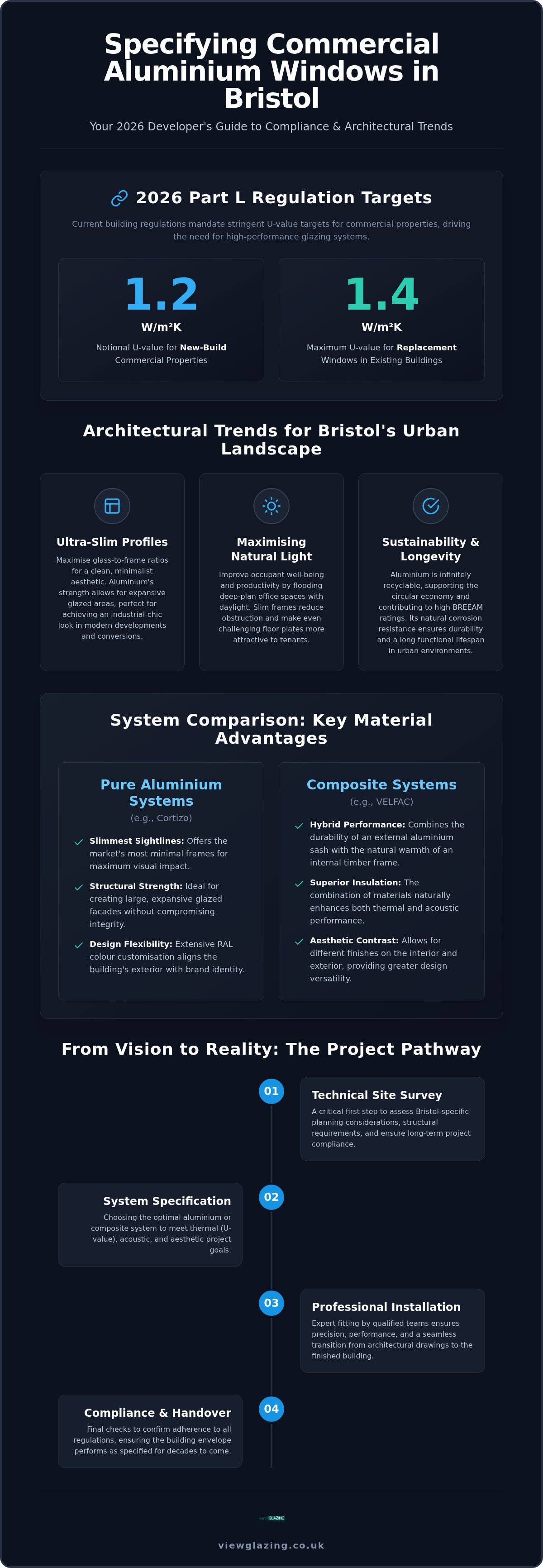
Aluminium's inherent strength allows for significantly larger glazed areas than timber or other traditional materials. This capability is essential for commercial units that need to create a striking street presence. By utilising RAL colour customisation, businesses can align their physical premises with their brand identity, choosing from hundreds of powder-coated finishes that resist the wear of a busy city environment.
The Rise of Slimline Profiles in Urban Bristol
Minimalist frames are now the standard for high-end office refurbishments across the city centre. Systems like Cortizo have become favourites amongst architects because they offer the slimmest sightlines currently available on the market. These profiles are particularly effective in Bristol’s converted warehouses, where they help achieve an authentic industrial-chic aesthetic without compromising on modern performance.
Maximising natural light is no longer a luxury; it's a requirement for occupant well-being. Studies consistently show that increased daylight improves productivity and reduces stress in the workplace. By specifying ultra-slim aluminium systems, developers can flood deep-plan office spaces with light, making even the most challenging floor plates attractive to prospective tenants.
Sustainability and Longevity in Commercial Glazing
Environmental responsibility remains a core driver for local development as the city pursues its ambitious Green Capital goals. Aluminium plays a vital role in this mission because it is infinitely recyclable. For developers aiming for high BREEAM ratings, the environmental credentials of their glazing choices are paramount. Specifying commercial aluminium windows Bristol developers trust ensures the building envelope contributes to a circular economy rather than adding to future landfill.
Longevity is another cornerstone of sustainable design. In urban environments, windows must withstand constant exposure to pollution and varying weather conditions. High-spec aluminium is naturally resistant to corrosion, ensuring the investment remains functional for decades. Key benefits of this material include:
Infinite recyclability which supports the circular economy and reduces waste.
Superior durability that resists the corrosive effects of urban pollution.
Advanced thermal breaks that lower the building's overall carbon footprint.
Investing in thermal efficiency in commercial windows isn't just about meeting 2026 regulations; it's about future-proofing the asset. High-performance glazing reduces long-term operational costs and ensures the building remains compliant as energy standards continue to tighten. This proactive approach to specification protects the building's value whilst providing a comfortable environment for its occupants.
Technical Performance: Thermal Efficiency and Acoustic Insulation
Meeting the rigorous 2026 Part L Building Regulations is a non-negotiable priority for any developer specifying commercial aluminium windows Bristol projects. These standards now mandate a notional U-value of 1.2 W/m²K for new-build commercial properties and a maximum of 1.4 W/m²K for replacements in existing buildings. Achieving these figures requires more than just high-quality glass; it demands a sophisticated approach to frame engineering that addresses the inherent conductivity of metal.
Modern systems solve this through polyamide thermal breaks. A thermal break is a high-performance insulating material placed between the inner and outer aluminium profiles to effectively block heat transfer and improve the overall U-value of the system. This technology allows pure aluminium frames to compete with traditionally more insulating materials, ensuring that large-scale glazing doesn't lead to excessive energy overheads. By reducing heat loss through the building envelope, developers can lower the operational costs of the unit, making the property more attractive to high-calibre tenants.
Achieving Industry-Leading U-Values
For projects requiring the highest thermal retention, VELFAC composite systems offer a distinct advantage. These windows combine the external durability of aluminium with the natural insulating properties of internal timber frames. Whilst double glazing is standard, specifying triple glazing for North-facing elevations is becoming a common 2026 strategy to maintain consistent internal temperatures. By prioritising this fabric-first approach, developers can reduce reliance on mechanical heating and cooling, future-proofing the building against fluctuating energy costs.
Acoustic Glazing for City-Centre Projects
Bristol's urban environment presents unique acoustic challenges, particularly for office developments near Temple Meads or the M32 corridor. Standard glazing often falls short in these high-decibel zones. Specifying laminated glass, which features a noise-dampening interlayer, is essential for maintaining a productive and healthy work environment. Specifying the right commercial aluminium windows Bristol developments require means looking beyond the glass to the structural integrity of the frame seals.
Acoustic performance isn't solely about the glass; frame airtightness plays a critical role in sound insulation. High-performance commercial systems are engineered with precision seals that prevent sound leakage, significantly reducing external noise ingress. Balancing these requirements with Part F ventilation standards requires careful planning. If you're currently navigating these technical specifications, it's often helpful to discuss your project's specific acoustic goals with a technical specialist who understands Bristol's local planning landscape.
Aluminium vs. Composite: Choosing the Right Commercial System
Selecting the ideal frame material for commercial aluminium windows Bristol developments requires a nuanced understanding of both structural demands and long-term operational costs. Whilst pure aluminium is often the default for high-traffic or high-rise environments, composite systems are gaining traction for their superior thermal performance and internal aesthetic appeal. The decision often hinges on the specific height of the building and the intended maintenance schedule of the facility management team.
For high-rise commercial units, pure aluminium remains the industry standard due to its exceptional structural integrity and fire-rated capabilities. These systems require minimal upkeep, typically involving a simple cleaning regime every six months to maintain the powder-coated finish. In contrast, composite systems require slightly more attention to ensure the internal timber remains protected, but they offer a significant boost in occupant comfort. Facility managers must weigh the slightly higher maintenance of timber against the potential for reduced energy consumption and improved tenant retention.
Cortizo: The Specialist in Slimline Aluminium
In the hospitality sector, where transparency and connection to the street are vital, Cortizo sliding doors are often the preferred choice. These systems allow for uniform sightlines across expansive facades, ensuring that the structural frames don't distract from the architectural vision. Their ability to support oversized glazing units makes them perfect for ground-floor retail or restaurant units where creating an inviting entrance is a commercial necessity. The precision engineering of these aluminium profiles ensures they operate smoothly even under heavy daily use.
VELFAC: The Hybrid Solution for Modern Performance
When it comes to multi-use developments or high-spec office spaces, VELFAC windows Bristol architects specify provide a unique hybrid solution. By combining an external aluminium sash with an internal timber frame, these windows offer the best of both worlds. They provide the weather protection and low maintenance of metal whilst delivering the warmth and superior insulation of wood. One of their most significant advantages is aesthetic uniformity; VELFAC systems are designed so that opening and fixed sashes look identical from the outside, creating a clean, balanced facade that is difficult to achieve with traditional aluminium systems.
The initial investment in high-performance composite systems may be higher than standard aluminium, but the long-term energy savings often justify the spend. Commercial assets with better thermal envelopes command higher rents and experience fewer vacancies. By choosing the right system early in the design phase, developers can ensure their Bristol project remains competitive and energy-efficient for its entire 45-year lifespan. This proactive approach to specification protects the building's value whilst providing a comfortable environment for its occupants.
Specifying Commercial Glazing: From Survey to Installation
Successful delivery of commercial aluminium windows Bristol projects depends on a rigorous technical process that begins long before a single frame is manufactured. Whilst aesthetic choices define a building's character, the technical survey determines its functional success. In Bristol's varied architectural landscape, where modern steel structures often sit adjacent to historic stone facades, identifying structural constraints early is essential to avoid costly remedial work during the construction phase. For broader project security, many developers rely on Paterson Insurance Brokers to provide tailored risk management and insurance solutions that protect their commercial investments.
Technical specification involves more than just selecting a frame profile. For developments in the South West, wind loading calculations are a critical part of the design phase. Exposed sites or high-rise units in the city centre face unique pressure challenges that dictate the required thickness of the glass and the reinforcement of the aluminium frames. Precision is paramount. A professional technical survey identifies structural anomalies and precise aperture tolerances before manufacturing begins, effectively eliminating the risk of costly on-site delays or fitment failures.
Effective drainage is another priority for Bristol's climate. Commercial systems must be engineered with internal drainage channels that prevent water ingress during heavy rainfall. Key technical considerations include:
Wind loading analysis to ensure structural stability in exposed urban locations.
Weather-rating verification to maintain long-term performance against driving rain.
Document K compliance for safety glass in all high-risk zones and doorways.
Professional Installation Standards
Managing site logistics in dense urban areas like Clifton or the City Centre requires meticulous planning. Access for delivery vehicles and the coordination of specialised lifting equipment must be managed carefully to avoid disrupting local traffic or neighbouring businesses. Professional installers must hold FENSA or equivalent accreditation to guarantee that the work meets all relevant building regulations and safety protocols. This certification provides the necessary peace of mind for developers and facility managers alike.
The final sign-off is the most critical stage of the installation. It involves verifying the airtightness of every unit and ensuring that all opening mechanisms operate with precision. If you are preparing a specification for an upcoming development, you can request a technical consultation to discuss your project requirements and ensure a seamless installation process.
View Glazing: Your Professional Glazing Partner in Bristol
View Glazing acts as a steady guide through the intricate process of selecting and installing the commercial aluminium windows Bristol developers need for high-performance projects. We understand that architectural glazing is a permanent investment, not a temporary solution. Our approach is built on a foundation of glazing project management that prioritises clarity and precision from the initial consultation through to final sign-off. By partnering with market-leading manufacturers such as VELFAC, Cortizo, and Rationel, we provide access to a curated selection of systems that define the intersection of beauty and performance.
Our commitment to excellence extends beyond the products we supply. We act as an authoritative expert, helping you navigate the technical complexities of 2026 building regulations whilst ensuring your aesthetic vision remains uncompromised. Whether you're specifying ultra-slim Cortizo profiles for a city-centre refurbishment or high-insulation VELFAC units for a sustainable new build, our team provides the technical skill required to realise your specific vision. We take pride in a methodical process that alleviates the typical anxieties associated with complex construction projects.
Why Developers Choose View Glazing
Developers and architects choose us because we value precision and aesthetics in equal measure. We have a proven track record of delivering high-end residential and commercial installations that meet the most demanding specifications. Our expertise lies in sourcing the right system for complex architectural visions, ensuring that every project benefits from high-performance U-values and structural integrity. We focus on building long-term partnerships rather than one-off sales, acting as a trusted partner that understands the unique challenges of Bristol’s evolving urban landscape. Our process is methodical and thorough, mirroring the structured professional standards that modern construction projects demand. To apply this same level of scrutiny to your project's finances, you may wish to explore Professional Accounting and Tax Advisory Fees with Fair View Accounting Services.
The most successful projects are those where the glazing specialist is involved from the earliest stages of the design process. Early involvement allows us to identify potential structural constraints or planning hurdles before they impact your timeline. We invite you to contact View Glazing today to request a technical consultation or an initial quote for your commercial requirements. Our team is ready to provide the dedicated support and high-spec architectural solutions your development deserves, ensuring a seamless journey from the first survey to the final, precise installation of your commercial aluminium windows Bristol project.
Realising Your Vision for Bristol’s Urban Landscape
Navigating the technical landscape of 2026 building regulations requires a partner who understands the intersection of precision engineering and architectural elegance. By prioritising a fabric-first approach and specifying the high-performance commercial aluminium windows Bristol developments demand, you ensure your project remains energy-efficient and compliant for decades to come. Whether you opt for the ultra-slim profiles of Cortizo or the superior insulation of VELFAC composite systems, the key to success lies in early-stage technical surveys and methodical project management.
View Glazing provides this end-to-end support. As specialist partners of VELFAC, Cortizo, and Rationel, we offer a comprehensive service that includes full technical surveys and dedicated project management. Our focus on sustainable, high-performance glazing ensures your development meets the rigorous 1.2 W/m²K U-value targets whilst maintaining aesthetic consistency across the facade. We invite you to discuss your commercial glazing project with our Bristol experts today. Let's work together to transform your architectural vision into a high-performance reality that stands the test of time.
Frequently Asked Questions
What are the current U-value requirements for commercial windows in Bristol?
As of 2026, new build commercial properties must meet a notional U-value of 1.2 W/m²K to comply with Part L regulations. For replacement windows in existing commercial buildings, the maximum allowed U-value is 1.4 W/m²K. Specifying commercial aluminium windows Bristol projects require means ensuring every unit meets these rigorous thermal performance targets. This proactive approach avoids compliance issues at the final sign-off stage and ensures the building remains energy-efficient.
Can aluminium windows be used in listed commercial buildings in Bristol?
Aluminium windows can be utilised in listed buildings, but they require specific approval from Bristol City Council’s conservation officers. Whilst traditional timber is often the default choice, high-specification aluminium profiles with ultra-slim sightlines are sometimes accepted if they faithfully replicate the original aesthetic. We recommend early-stage consultation with planning experts to ensure the proposed system respects the building’s heritage whilst delivering the modern thermal efficiency required by current standards.
How long is the typical lead time for commercial aluminium window installation?
Lead times vary depending on the complexity of the specification and the specific manufacturer selected for the development. Typically, bespoke aluminium systems require a lead time of several weeks following the final technical survey and order placement. For large-scale commercial developments, we coordinate closely with site managers to ensure delivery schedules align with the broader construction timeline. This meticulous planning prevents delays during critical phases of the building envelope's completion.
What is the difference between standard aluminium and thermally broken aluminium?
Standard aluminium is a conductive metal that allows heat to escape easily, whereas thermally broken aluminium features an integrated insulating barrier. This barrier, usually made of polyamide, is placed between the inner and outer profiles to block heat transfer effectively. This technology is essential for meeting modern energy standards. It ensures that commercial aluminium windows Bristol projects utilise provide high-performance thermal insulation whilst preventing internal condensation and reducing long-term energy overheads.
Do you provide acoustic glazing for offices near busy Bristol roads?
We provide specialised acoustic glazing solutions designed to mitigate significant urban noise in city-centre developments. By specifying laminated glass with a sound-dampening interlayer, we help projects meet the guidance provided in British Standard BS 8233 for sound insulation. This approach is particularly vital for offices near Temple Meads or the M32 corridor. Maintaining a quiet, productive internal environment is a priority for high-calibre commercial tenants who value occupant well-being.
What RAL colours are available for commercial aluminium frames?
Commercial aluminium frames are available in the full range of hundreds of RAL colours, providing extensive customisation options for architects. These finishes are applied via a durable powder-coating process that resists corrosion and urban pollution. This allows developers to align the window frames with specific brand identities or architectural themes. Whether you require a classic anthracite grey or a bespoke corporate shade, the finish is designed for permanent longevity and minimal maintenance.
How does View Glazing manage the installation process for large-scale developments?
We manage the entire journey from the initial technical survey through to the final installation and sign-off. Our process-oriented approach includes detailed site logistics planning, which is vital for dense urban areas where access may be restricted. We coordinate with other site trades to ensure the glazing is installed safely and efficiently. This end-to-end management reduces project risk and ensures the final result meets all structural and aesthetic requirements with precision.
Are VELFAC composite windows suitable for commercial high-traffic areas?
VELFAC composite windows are exceptionally well-suited for high-traffic commercial environments due to their durable external aluminium sash. This outer layer provides robust protection against the elements and heavy daily use, whilst the internal timber frame offers superior thermal insulation. These systems are a staple for modern architectural projects because they combine long-term structural integrity with a sophisticated aesthetic. They provide a permanent investment for developers who prioritise both beauty and high-performance durability.


Comments