.png)

Thermally Broken Aluminium Windows Bristol: The Complete Architectural Guide
- View Glazing

- 6 days ago
- 12 min read
Updated: 4 days ago
Can you truly enjoy floor-to-ceiling glass without inviting the Bristol damp inside? For many homeowners in the South West, the dream of minimalist architecture often clashes with the reality of condensation on old metal frames and soaring energy bills. You might feel that choosing ultra-slim sightlines means resigning yourself to a draughty living room, but that trade-off is now a thing of the past. By choosing thermally broken aluminium windows Bristol residents can finally bridge the gap between high-end design and superior insulation.
It's understandable if technical jargon like U-values and thermal bridges feels overwhelming. We're here to clarify how modern engineering keeps your home warm while meeting the strict 1.4 W/m²K requirements of the latest Building Regulations Part L. This guide explains how thermal break technology works to eliminate cold spots and maximise natural light. We'll explore the practical steps of integrating these high-performance systems into your project, ensuring your renovation is both beautiful and future-proofed against the changing climate. From understanding frame construction to achieving a seamless installation, you'll discover how to create a bright, comfortable space that stands the test of time.
Table of Contents
What are Thermally Broken Aluminium Windows?
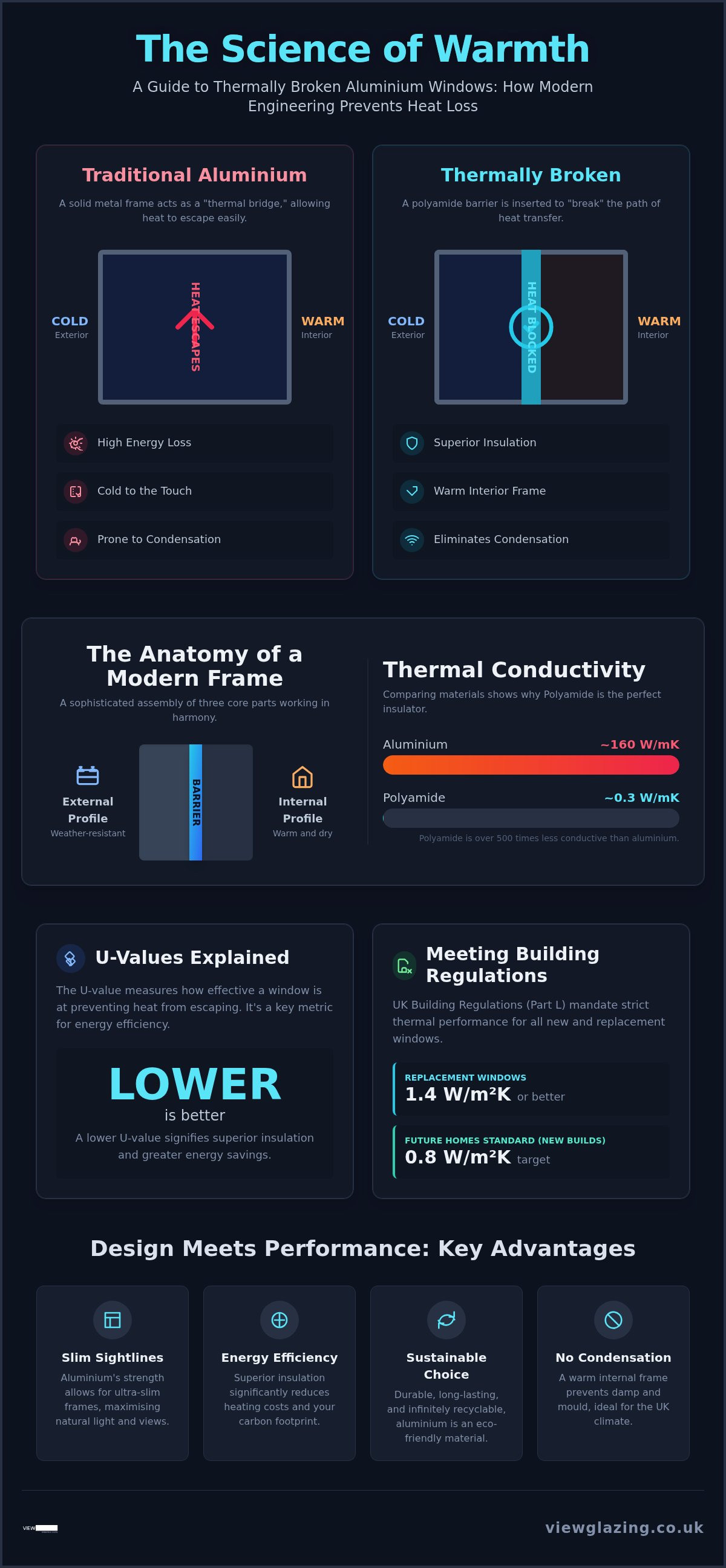
Aluminium is a metal, and metals are inherently conductive. In traditional window design, this conductivity created a "thermal bridge," a direct path for heat to escape from your warm living room to the cold Bristol air. This physical reality gave early aluminium windows a poor reputation for being cold to the touch and prone to heavy condensation. Modern thermally broken aluminium windows Bristol projects now rely on, however, use a clever engineering solution to sever this connection entirely.
To understand the mechanics, we must ask: What is a thermal break? Essentially, it's a layer of low-conductivity material placed between the inner and outer sections of the aluminium frame. This barrier effectively "breaks" the path of heat transfer. Unlike the solid metal frames of the 1970s, which acted like a radiator in reverse, these modern systems ensure the internal face of the window remains close to room temperature. This isn't just a luxury; it's a legal necessity. Under current UK Building Regulations, specifically Part L, any new or replacement window must meet strict energy efficiency targets that solid metal frames simply cannot achieve.
The Evolution of Aluminium in British Architecture
Aluminium has travelled a long path from the draughty, silver-framed shopfronts of the mid-century to the sleek, high-performance systems we see in contemporary Bristol extensions. The "cold frame" reputation was earned through decades of basic extrusion techniques that ignored thermal loss. Today, engineering advances have transformed aluminium into a premium residential choice. It's now favoured for its ability to support massive glass spans while remaining incredibly sustainable. Since aluminium is infinitely recyclable, it's a popular choice for environmentally conscious builds across the South West that require longevity without the maintenance of timber.
Key Components of a Thermally Broken System
A high-performance frame isn't a single piece of metal. It's a sophisticated assembly consisting of three core parts:
External Profile: The weather-resistant outer shell that handles the wind and rain.
Polyamide Barrier: A reinforced plastic strip that locks the two metal halves together whilst blocking heat flow.
Internal Profile: The decorative inner frame that stays warm and dry.
When these components are combined with argon-filled double or triple glazing, they work in harmony to create a robust thermal envelope. This setup keeps your home comfortable year-round, ensuring that the sleek, minimalist aesthetic doesn't come at the cost of your heating budget.
The Science of Thermal Performance: U-Values and Polyamide
Thermal efficiency isn't just a marketing buzzword; it's a measurable science. When we discuss the performance of thermally broken aluminium windows Bristol homeowners need to understand the U-value. This metric represents the rate of heat transfer through a window. The lower the U-value, the better the insulation. Whilst aluminium is prized for its strength, its natural conductivity is high. This is why the engineering of the frame is just as vital as the quality of the glass.
Polyamide is the industry standard for creating this essential barrier. It's a glass-reinforced nylon material that sits at the core of the profile. To put the science into perspective, aluminium has a thermal conductivity of approximately 160 W/mK, whereas polyamide sits at a mere 0.3 W/mK. By inserting this strip, we effectively stop heat from migrating out of your home. This technology is often paired with high-performance glazing units filled with Argon or Krypton gas. These gases are denser than air, providing an additional layer of resistance that keeps your living space comfortable year-round.
Meeting Building Regulations Part L in 2026
The regulatory environment for glazing has become significantly stricter to meet national sustainability goals. As of 2026, the requirements for thermal performance are non-negotiable for any renovation or new build. For replacement windows in existing Bristol homes, the whole-window U-value must be 1.4 W/m²K or better to achieve compliance. If you're working on a new build property, the Future Homes Standard pushes this requirement even further, targeting a U-value of 0.8 W/m²K. All compliant installations should be certified by FENSA approved installers to ensure they meet these rigorous standards, providing you with the necessary legal documentation for any future property sale.
Polyamide vs. Resin Breaks: What to Look For
Not all thermal breaks are created equal. Older or cheaper systems sometimes used poured resin, which can lack the structural integrity required for large architectural spans. Modern polyamide strips are mechanically crimped into the aluminium profiles, creating a bond that is both thermally efficient and structurally robust. High-end systems, such as Cortizo sliding doors, often feature multi-chambered polyamide breaks. These internal air pockets trap heat even more effectively, allowing for the ultra-slim sightlines that modern architecture demands without sacrificing warmth. If you're unsure which system best suits your energy targets, you can speak with a technical expert to review your specific project requirements.
Architectural Design: Slim Sightlines without the Chill
The primary appeal of thermally broken aluminium windows Bristol architects and homeowners frequently cite is the marriage of strength and elegance. Unlike timber or uPVC, which require bulkier profiles to support heavy glazing units, aluminium possesses a high strength-to-weight ratio. This structural integrity allows for expansive glass spans and remarkably slim sightlines. Many clients seek the iconic "Crittall" aesthetic, characterised by narrow steel frames; however, traditional steel often lacks modern insulation. By using thermally broken aluminium, you can achieve that industrial, minimalist look whilst enjoying the benefits of high-performance windows that keep heat inside.
Beyond aesthetics, the thermal break plays a critical role in interior health. Because the internal frame remains warm, the dew point is shifted. This prevents the internal condensation that often plagues older metal windows, significantly reducing the risk of mould growth around your window reveals. Design flexibility is another advantage. Dual colour technology allows you to specify a bold RAL shade for the exterior to match your masonry, whilst choosing a softer, neutral tone for the interior to complement your decor. It's a level of customisation that ensures the window feels like a natural part of the furniture.
Maximising Natural Light in Bristol Homes
Bristol’s urban landscape is defined by its variety, from steep Victorian terraces in Totterdown to modern waterfront apartments. In many of these properties, narrow footprints make natural light a precious commodity. By reducing the frame's bulk, you increase the glass-to-wall ratio, pulling light deeper into the room. Features like flush sills and hidden hinges further refine the profile. This creates a clean, uninterrupted transition between your indoor and outdoor spaces, making even smaller rooms feel significantly more expansive and connected to the garden or city views.
Premium Brand Integration: Cortizo and VELFAC
Achieving a cohesive architectural statement requires selecting the right system for the right application. We often specify VELFAC windows Bristol for projects requiring the warmth of internal wood paired with the durability of an external aluminium sash. For those pursuing the ultimate minimalist look, Cortizo systems offer some of the slimmest profiles on the market. These can be seamlessly matched with architectural sliding doors to ensure a consistent visual language across the entire facade. This unified approach is essential for high-end renovations where precision and aesthetic harmony are the top priorities.
Bristol Case Studies: Why Thermal Breaks Matter Locally
Bristol's unique geography and climate present specific challenges for high-performance glazing. The South West is famously damp, and without a high-quality thermal break, moisture can easily transfer across a metal frame. This leads to persistent condensation and potential damage to internal plasterwork. By specifying thermally broken aluminium windows Bristol residents can protect their homes from these issues whilst maintaining a sleek, modern aesthetic. Properties situated near the Bristol Channel or on the exposed hillsides of Clifton also require marine-grade powder coating. This specialised treatment prevents salt-spray corrosion, ensuring your frames remain pristine for 30 to 40 years with minimal maintenance.
Solar gain is another critical local factor. Bristol's south-facing hillsides provide stunning views but can lead to overheating during the summer months. Integrating solar-control glass within a thermally broken frame allows you to manage this heat whilst retaining warmth in winter. It's about creating a balanced indoor climate regardless of the external conditions. This technical precision ensures your home remains comfortable during a humid August afternoon or a freezing January morning.
Renovating Bristol’s Period Properties
Upgrading Victorian terraces requires a sensitive touch to maintain architectural character. You can improve thermal efficiency without compromising the original brick facade by choosing slim profiles that mimic traditional sightlines. For those converting industrial warehouses in areas like Bedminster or Old Market, aluminium provides the authentic "Industrial Look" with modern thermal performance. In many Bristol conservation areas, slimline aluminium is now an accepted alternative to old steel, provided the design respects the heritage of the building. It's essential to consult with the local planning authority to ensure your chosen system meets their specific criteria.
Modern Extensions in Bath and Frome
In nearby Bath and Frome, modern extensions often favour large glass walls to create a seamless indoor-outdoor flow. Here, U-values are paramount. A large glass area can become a significant heat sink if the frames aren't engineered correctly. Whilst aluminium is the go-to for minimalist designs, some architects prefer the natural aesthetic of timber for certain projects. In these instances, rationel windows offer a high-performance alternative, utilising similar thermal logic to meet the latest building standards. If you're planning a renovation or new build in the South West, you can book a technical consultation to discuss the most suitable glazing system for your property.
The View Glazing Process: From Survey to Installation
Precision is the foundation of every successful project. Even the most advanced thermally broken aluminium windows Bristol has to offer won't perform as intended if the installation is flawed. Our process begins with a comprehensive technical survey. This isn't a simple measurement of the aperture; it's a structural assessment of the substrate. We examine how the new frame will sit within the existing masonry to prevent any potential 'thermal bypass'. By identifying these risks early, we ensure that the finished installation provides a perfectly airtight seal that protects your home from the damp South West climate.
Technical Specification and Sourcing
We collaborate closely with architects to translate a design vision into a rigorous technical reality. This involves defining a glazing programme that meets specific U-value targets whilst maintaining the desired aesthetic. We source bespoke systems from leading European manufacturers, ensuring that every component meets our high standards. It's not just about the aluminium and glass; we scrutinise the quality of the gaskets, weather seals, and warm-edge spacer bars. This level of detail ensures that your windows aren't just a temporary fix but a permanent, sustainable investment in your property's architectural integrity.
Expert Project Management
Managing a high-end renovation while running a company in the South West can be a significant challenge. To help balance your professional responsibilities with your build, you may wish to visit The Bristol VA and discover how their virtual assistant services can support your business administration.
The transition from sourcing to installation is managed with meticulous care. The installation phase is where the technical specification meets the physical building, and the quality of the 'fitting' is just as critical as the 'frame'. A poorly fitted window can lead to draughts and moisture ingress, undermining the energy efficiency you've invested in. This is why our glazing project management service is so essential. We act as a steady guide through the entire journey, ensuring that the precision of the factory engineering is mirrored in the final installation on-site.
Our commitment to excellence extends to the long-term performance of your home. We prioritise sustainable, energy-efficient products that offer a lifespan of 40 years or more. By managing the project from initial survey to the final sign-off, we alleviate the anxieties often associated with complex renovations. We take pride in delivering results that combine architectural elegance with practical, grounded performance. If you're planning a project and require expert advice on high-performance systems, you can contact us for a tailored architectural glazing consultation in Bristol.
Realising Your Vision with High-Performance Glazing
Choosing the right glazing system is a permanent investment in your home's comfort and architectural value. We've explored how polyamide technology allows for the slim sightlines of thermally broken aluminium windows Bristol projects require, without sacrificing thermal efficiency or falling foul of modern building regulations. By understanding the science of U-values and the necessity of a technical survey, you can avoid the common pitfalls of condensation and heat loss that affect older metal frames.
At View Glazing, we act as your dedicated partner from the initial specification through to the final installation. As specialists in high-performance Bristol renovations, we provide a comprehensive survey service and expert installation of premium VELFAC and Cortizo systems. Our focus remains on delivering sustainable, energy-efficient solutions that stand the test of time in the South West climate. We take pride in ensuring that the technical performance of your windows matches the elegance of your design.
If you're ready to transform your property with precision-engineered glazing, we're here to guide you through the process. Please book an architectural glazing consultation with View Glazing to discuss your specific requirements. We look forward to helping you realise your architectural vision with confidence and clarity.
Frequently Asked Questions
Are thermally broken aluminium windows as warm as uPVC?
Yes, modern thermally broken aluminium windows Bristol installations provide thermal insulation that is comparable to, and often superior to, high-quality uPVC. By using polyamide strips to separate the internal and external frames, these windows achieve the low U-values required by current building regulations. Whilst uPVC was historically the warmer choice, engineering advances mean you can now enjoy slim architectural sightlines without compromising on the energy efficiency or the warmth of your living space.
Do aluminium windows cause condensation in old Bristol houses?
No, modern thermally broken frames actually prevent the condensation issues associated with older metal windows. In many traditional Bristol properties, old solid aluminium or steel frames acted as a cold bridge, causing moisture to settle on the glass and metal. The thermal break ensures the internal frame stays close to room temperature. This prevents the dew point from being reached on the interior surface, which significantly reduces the risk of damp and mould growth.
How much do thermally broken aluminium windows cost compared to timber?
Aluminium windows typically sit between uPVC and high-end timber in terms of the initial investment required. Whilst timber offers a classic aesthetic, it requires regular painting and treatment to prevent rot in the damp South West climate. Aluminium provides a more durable, low-maintenance alternative that won't warp or swell over time. For those seeking the best of both worlds, composite systems like VELFAC offer timber interiors with a protective aluminium exterior to balance cost and performance.
Can I get thermally broken aluminium windows in a wood-effect finish?
Can I get thermally broken aluminium windows in a wood-effect finish?
Yes, you can specify aluminium frames in a wide variety of finishes, including wood-effect powder coatings that mimic the grain of natural timber. These finishes are incredibly durable and won't fade or peel like traditional paint. For homeowners who want to extend this level of bespoke aesthetic to other household or automotive items, Hydro Concepts offers specialised custom finishing services to achieve a unique and high-quality look. Alternatively, if you desire the authentic feel of real wood inside your home, we often recommend VELFAC composite systems. These combine a sustainably sourced timber internal frame with a high-performance, thermally broken aluminium outer sash for maximum protection.
You can expect a modern thermally broken window to last between 30 and 40 years with very little maintenance. Aluminium is a robust, non-corrosive material that handles the variable British weather exceptionally well. Unlike timber, it doesn't rot, and unlike uPVC, it doesn't become brittle or discolour under UV light. This longevity makes it a highly sustainable choice, as the frames are also 100% recyclable at the end of their long functional life.
Is triple glazing necessary with thermally broken aluminium frames?
Triple glazing isn't strictly necessary to meet the current 1.4 W/m²K U-value requirements for replacements, but it's becoming the standard for new builds. High-performance double glazing is usually sufficient for most Bristol renovations. However, if your project aims for the 0.8 W/m²K targets of the Future Homes Standard, or if you live near a noisy main road, triple glazing offers enhanced thermal and acoustic benefits that future-proof your investment against rising energy costs.
How do I maintain aluminium window frames in the South West climate?
Maintaining your aluminium frames is remarkably straightforward, requiring only a simple wipe down with mild soapy water twice a year. In the South West, particularly near the Bristol Channel, salt and grit can accumulate on the exterior. We recommend a marine-grade powder coating for properties in exposed or coastal locations to provide extra protection against corrosion. This ensures the finish remains vibrant and the hardware continues to operate smoothly without the need for intensive repainting.
Can thermally broken windows help with noise reduction in the city centre?
Yes, thermally broken systems are highly effective at reducing noise in busy urban environments like Bristol city centre. The multi-chambered polyamide breaks and thick glass units act as a buffer against external sounds. When combined with professional installation to ensure an airtight seal, these windows can significantly lower the decibel levels inside your home. For maximum acoustic performance, we can specify laminated or acoustic glass to create a peaceful sanctuary away from the city bustle.


Comments