.png)

Timber Windows Bristol: The 2026 Guide to High-Performance Architectural Glazing
- View Glazing

- Aug 3
- 11 min read
Updated: 2 days ago
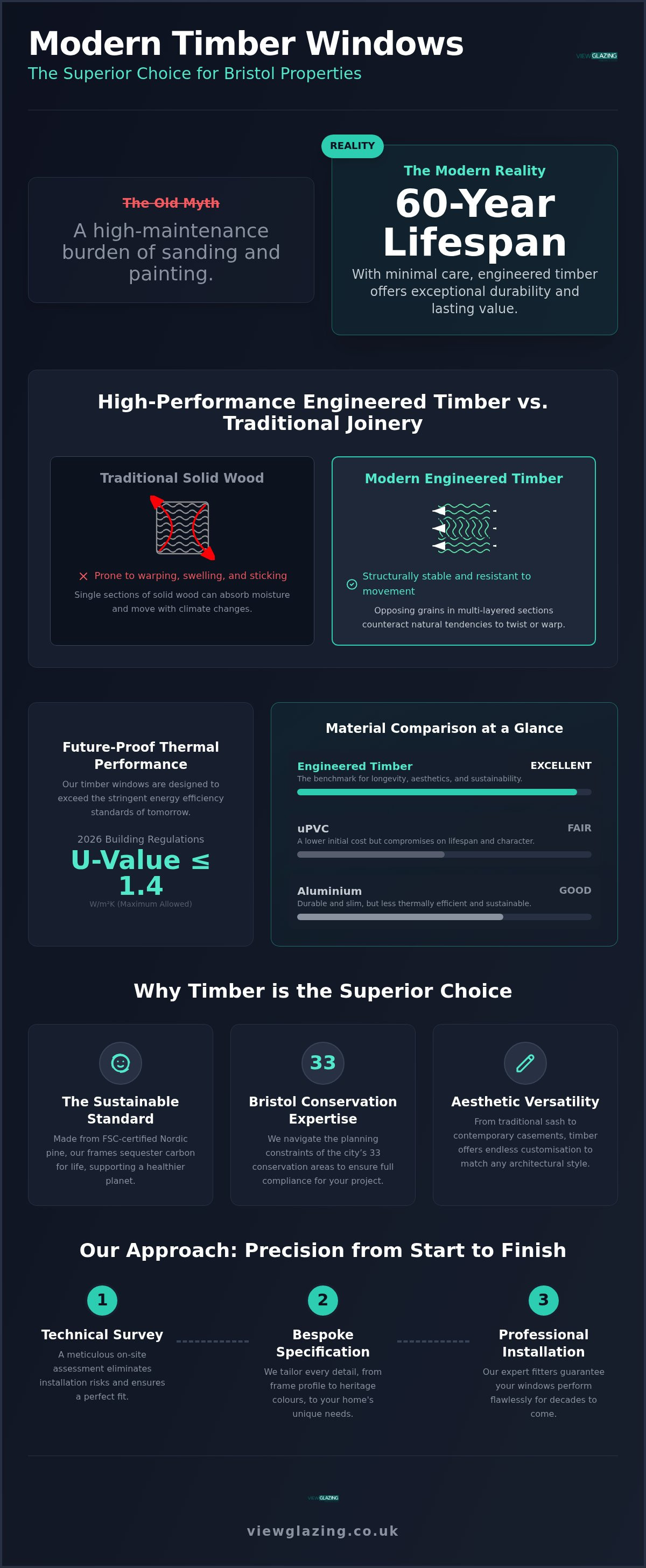
The assumption that timber windows are a high-maintenance burden belongs to a previous century. When investing in timber windows Bristol homeowners often feel a tension between wanting the timeless character of natural wood and fearing the cycle of sanding and painting that once defined it. It's a natural hesitation, particularly when you're also trying to balance aesthetic charm with the rigorous thermal requirements of the 2026 Building Regulations, which now demand a maximum U-value of 1.4 W/m²K for replacement glazing.
We agree that your home deserves a finish that respects local history without compromising on modern comfort or environmental responsibility. This guide will show you how high-performance engineered timber bridges that gap, providing a sophisticated architectural finish that is built to last for up to 60 years. We'll preview the latest in sustainable glazing technology, explain how to navigate the city's 33 conservation areas, and demonstrate why choosing the right timber system is a decisive step toward a more efficient, beautiful home.
Table of Contents
Why Timber Windows are the Superior Choice for Bristol Properties
Bristol’s architectural landscape is a tapestry of history and innovation. From the iconic Georgian crescents in Clifton to the sharp, contemporary lines of the Harbourside, every building tells a unique story. Choosing the right glazing is about honouring that narrative while ensuring your home meets the rigorous demands of modern life. When searching for timber windows Bristol residents often find that natural wood is the only material capable of bridging the gap between heritage charm and 21st-century performance. While uPVC might offer a lower initial price point, it lacks the longevity and aesthetic integrity that a period property requires. Timber windows are a permanent investment. They don't just sit in an opening; they enhance the building’s character and can last for over 60 years with minimal care.
The Aesthetic Versatility of Wood
Wood possesses a unique ability to adapt to its surroundings. In the historic quarters of the city, timber frames are essential for complementing the porous texture of Bath stone and the deep hues of Victorian red brickwork. The level of customisation available for timber windows Bristol homeowners can access today is vast. Whether your project requires traditional sash windows with authentic weights or minimalist contemporary casements, timber provides the structural strength to support large panes of glass without bulky profiles. You can also tailor the finish to your exact preference. Using palettes inspired by heritage colour houses, we help select shades that either blend with the local streetscape or provide a sophisticated, modern contrast.
Sustainable Living in the South West
For the eco-conscious homeowner in the South West, timber is the gold standard of sustainability. It is one of the few building materials that actually sequesters carbon, locking away CO2 for the duration of the window's life. We focus on providing FSC-certified frames, ensuring that the wood is sourced from forests managed with the highest environmental standards. This commitment to the planet extends to the window's performance. By pairing timber's natural insulating properties with high-performance architectural glazing, you create a thermal envelope that keeps your home warm whilst reducing energy bills. It's a practical way to meet the latest 2026 Building Regulations, which demand U-values as low as 1.4 W/m²K, without sacrificing the tactile warmth of natural materials.
High-Performance Engineered Timber vs. Traditional Joinery
Traditional joinery often relies on solid sections of wood, which, despite their beauty, remain susceptible to the natural movement of the material. In the humid climate of the South West, solid timber can absorb moisture, leading to the swelling, sticking, and warping that many homeowners fear. Modern timber windows Bristol residents now specify avoid these pitfalls through advanced engineering. By using multi-layered sections rather than single pieces of wood, we provide a product that remains structurally stable regardless of the weather. Whilst modern engineering provides technical superiority, it is also designed to respect Bristol conservation area planning controls, ensuring your upgrade meets both local heritage standards and national energy targets.
The Science of Engineered Wood
The secret to this stability lies in the grain. Engineered timber is a composite of wood layers bonded for maximum stability. By layering the wood so the grains oppose one another, any natural tendency for a layer to twist is countered by the layer beneath it. We prioritise the use of slow-grown Nordic pine, a material prized for its exceptional density. Because these trees grow in colder climates, their growth rings are tighter, resulting in a timber that is naturally more durable and resistant to decay than faster-growing softwoods. This structural integrity allows for slimmer frames and larger expanses of glass, perfect for the architectural glazing projects common in Bristol's modern developments.
Thermal Performance and U-Values
Modern manufacturing processes allow us to achieve thermal benchmarks that were once considered impossible for wood. High-performance timber frames can now reach Passive House standards, offering insulation levels that far exceed standard building requirements. The choice between double and triple glazing depends on your specific goals for thermal comfort and acoustic insulation. To understand more about the technical metrics behind these frames, explore our guide on Energy Efficient Windows Bristol: Lowering Your U-Values.
Longevity is further guaranteed by factory finishing. Unlike windows painted on a building site, Rationel timber windows are treated and coated in a controlled environment. This precision ensures that the protective layers penetrate deep into the wood, providing a finish so robust it can offer a 30-year life to the first point of significant maintenance. This Danish approach to engineering creates a window that feels like a piece of high-end furniture whilst performing like a piece of industrial technology. If you're unsure which glazing specification suits your building's orientation, we recommend discussing your project with our technical team.
Comparing Timber, Aluminium, and Composite Solutions
Selecting the right frame material is a pivotal decision that dictates your home's thermal efficiency, maintenance schedule, and architectural identity. While the timber windows Bristol homeowners frequently choose for their organic warmth and heritage appeal remain a premier option, modern alternatives like aluminium and composite systems offer distinct advantages for specific property types. Pure timber is unmatched for natural insulation and traditional aesthetics, making it the standard for period renovations. Aluminium, by contrast, provides the high structural strength needed for ultra-slim sightlines and large-scale minimalist glazing, though it can lack the tactile softness of wood.
Evaluating the long-term return on investment requires looking beyond the initial installation cost. High-performance timber can last over 60 years, but it does require a periodic maintenance cycle. Aluminium systems are virtually maintenance-free but typically have a shorter lifespan of around 45 years. For many, the choice isn't about picking one over the other, but finding a way to combine their strengths. Composite glazing has emerged as a sophisticated solution for those who want the performance of metal with the soul of wood.
When to Choose Alu-Clad Timber
Alu-clad windows, such as those from VELFAC, feature a solid timber interior for aesthetic comfort and a durable aluminium exterior to shield the frame from the elements. This "best of both worlds" approach is particularly valuable for exposed sites in the Cotswolds or high-rise apartments in Bristol's city centre where external maintenance is logistically challenging. The external aluminium skin prevents the wood from being affected by driving rain or UV degradation, whilst the internal timber maintains a cosy, high-end atmosphere. For a deeper look at this technology, read our VELFAC Windows Bristol: The Professional Guide to Composite Glazing in 2026.
Performance Comparison Framework
To help you decide between these materials, it's useful to compare them across three key metrics: maintenance, lifespan, and thermal performance. Timber excels in natural insulation but needs repainting every decade. Aluminium is exceptionally durable but relies on complex thermal breaks to match timber's efficiency. Composite frames often provide the most balanced profile for modern living. We've detailed these trade-offs in our comparison guide: Timber vs Aluminium Windows: Why Composite Wins. Ultimately, your building's orientation and architectural style will be the deciding factors in which material offers the best value.
Bristol Planning and Climate Considerations
Bristol's 33 conservation areas represent a significant hurdle for any renovation project. In neighbourhoods like Clifton, Redland, and the historic centre of Bath, local planning officers enforce strict controls to preserve the architectural silhouette of the city. Central to this is the Article 4 Direction. These directions often remove permitted development rights, meaning that even a like-for-like replacement requires a formal planning application. When specifying timber windows Bristol residents must ensure that the new glazing respects the original proportions, sightlines, and opening mechanisms of the building to avoid costly enforcement action.
Beyond the legal constraints, the South West climate poses its own set of physical challenges. The city’s proximity to the Bristol Channel means properties are frequently subjected to driving rain and high levels of coastal moisture. Whilst traditional solid wood windows might swell or stick in these conditions, modern engineered timber is designed to remain stable. The density of wood also provides a natural solution to an urban problem: noise. High-performance timber windows Bristol homeowners install act as an exceptional acoustic barrier, significantly reducing the intrusion of city centre traffic noise compared to lighter frame materials.
Windows for Listed Buildings and Conservation
Satisfying a planning officer requires a focus on microscopic detail. We specialise in providing slim-line double glazing that mimics the appearance of single glazing, allowing you to meet thermal requirements without altering the building's character. Authentic features are essential for a successful application, including:
Traditional glazing bars with historically accurate profiles.
Heritage spacers that eliminate the "double reflection" common in modern units.
Period-correct ironmongery, such as monkey tail handles and peg stays.
Bespoke paint matching to satisfy local streetscape requirements.
Weatherproofing and Durability
The longevity of a timber window in the South West depends entirely on its ability to shed water. Modern frames now incorporate sophisticated internal drainage systems that channel moisture away from the glass and frame, preventing the internal rot that plagued older joinery. High-performance seals and gaskets ensure that even during the windiest Bristol winters, the thermal envelope remains airtight. Engineered timber is particularly effective here; unlike solid oak, which can move significantly as humidity fluctuates, the layered structure of engineered pine remains dead-straight, ensuring that seals stay compressed and effective for decades. If you are currently preparing a planning application for a conservation area project, we can provide the technical drawings and specifications required to support your submission.
The View Glazing Approach: From Survey to Professional Installation
Our Comprehensive Survey and Specification
Precision is the hallmark of architectural excellence. In the world of high-performance glazing, millimetres matter. An inaccurate measurement doesn't just affect the fit; it can compromise the thermal envelope and lead to long-term performance issues. Our technical specification goes beyond simple dimensions. We analyse your building’s orientation to advise on the critical balance between U-values for heat retention and G-values for solar gain. For instance, a south-facing room in a Clifton townhouse might require specific glass coatings to prevent overheating, whilst a north-facing extension needs maximum insulation. You can explore our full methodology in our guide to Glazing Project Management: A Comprehensive Guide to Architectural Excellence.
Once the specification is finalised, we manage the sourcing and logistics through our premium partners. By working with manufacturers like Rationel and VELFAC, we ensure that the frames arriving on-site meet the exact technical requirements of your project. These systems are built to order, allowing for a level of customisation that traditional off-the-shelf solutions cannot match.
Expert Installation in the South West
The installation phase is where technical skill meets the physical reality of your home. Our installers are specialists who understand the nuances of high-performance frames, ensuring that every seal is airtight and every mechanism is perfectly balanced. We prioritise minimising disruption to your daily life, maintaining an organised and respectful site throughout the process. Upon completion, we provide a thorough handover, including maintenance guidance to help you protect your investment. Ready to transform your home? Book a technical survey with View Glazing today to begin your journey toward better timber windows Bristol.
Investing in the Future of Your Bristol Property
Modern engineered timber represents a significant evolution from the joinery of the past. By choosing timber windows Bristol homeowners can now achieve a rare harmony between historical preservation and world-class thermal performance. Whether you're navigating the complexities of a Clifton conservation area or seeking the minimalist lines of a contemporary harbourside development, the right glazing specification ensures your home remains warm, quiet, and architecturally authentic for decades to come.
Realising this vision requires more than just premium materials; it demands a partner who understands the nuances of the South West landscape. As specialist installers of Rationel and VELFAC systems, we provide a full technical specification and survey to ensure every millimetre of your glazing is optimised for its environment. Our expertise in local planning constraints allows us to guide you through the process with confidence and clarity. Request a Professional Site Survey for Your Timber Window Project to begin the transformation of your home. We look forward to helping you bring your architectural vision to life.
Frequently Asked Questions
Do timber windows require a lot of maintenance in the Bristol climate?
Modern engineered timber windows don't require the frequent sanding and painting associated with older joinery. Factory-applied coatings in a controlled environment ensure the finish remains robust for decades. In the humid Bristol climate, these windows use internal drainage channels to prevent moisture from sitting against the wood, which reduces the maintenance burden compared to traditional solid wood frames.
Are timber windows more energy efficient than aluminium or uPVC?
Timber is a naturally superior insulator compared to aluminium or uPVC. Because wood doesn't conduct heat, it provides a natural thermal break that keeps your home warmer in winter and cooler in summer. When combined with high-performance architectural glazing, timber windows Bristol homes use can easily achieve the 2026 Building Regulation U-value of 1.4 W/m²K or lower.
Can I install double glazed timber windows in a Bristol conservation area?
You can usually install double glazed timber windows in Bristol's conservation areas if the design is a sensitive, like-for-like replacement. Planning officers in areas like Clifton or Redland prioritise the preservation of original sightlines and proportions. We specify slim-line units and authentic heritage details to ensure your new windows meet both aesthetic and thermal requirements.
What is the difference between solid timber and engineered timber windows?
Engineered timber is a composite of wood layers bonded with opposing grains to eliminate warping and twisting. Unlike solid timber, which expands and contracts significantly with humidity changes, engineered frames remain structurally stable. This stability is essential for the long-term performance of seals and gaskets, ensuring your windows remain airtight and easy to operate for years.
How long do modern engineered timber windows typically last?
Modern engineered timber windows typically last 60 years or more when maintained correctly. This longevity is nearly double the expected lifespan of uPVC, making timber a far more sustainable and cost-effective investment over the life of your property. The use of slow-grown Nordic pine further enhances this durability by providing a denser, more resilient frame.
Are Rationel windows suitable for both traditional and modern Bristol homes?
Rationel timber windows are exceptionally versatile and suit the architectural diversity of Bristol perfectly. Their designs range from traditional profiles that complement Georgian townhouses to minimalist frames ideal for contemporary harbourside apartments. Because they are bespoke and factory-finished, we can tailor the colour and ironmongery to match any building’s unique character.
How much do timber windows cost compared to composite windows in 2026?
Timber windows are a premium architectural choice, whilst composite windows generally represent a higher initial investment. This price difference reflects the addition of an external aluminium skin which further protects the timber frame. Many homeowners find the long-term value of composite frames compelling due to the almost total elimination of external maintenance costs over their 60-year lifespan.
Does View Glazing handle the full installation process in Bath and Wiltshire?
View Glazing manages the full survey, supply, and installation process across Bristol, Bath, and the Cotswolds, including parts of Wiltshire. We provide a comprehensive project management service that takes you from the initial technical specification through to the final handover. Our specialist installers are experienced in the nuances of high-performance frames, ensuring your project is completed to the highest architectural standards.


Comments