.png)

Triple Glazed Windows Cotswolds: The 2026 Homeowner’s Specification Guide
- View Glazing

- Aug 10
- 11 min read
Updated: 2 days ago
In the heart of the Cotswolds, your windows aren't just apertures for light; they're the front line in a battle between 18th-century stone and 21st-century energy standards. You probably appreciate the timeless beauty of your honey-coloured stone walls, but you've likely also felt the biting chill of a draft whilst sitting near your glazing on a January evening. Specifying the right triple glazed windows Cotswolds homeowners need is no longer just about luxury; it's about making a traditional stone property truly habitable and efficient for a modern lifestyle.
This guide explains how to balance high-performance thermal efficiency with heritage aesthetics to slash energy bills and silence local traffic noise. Achieving a warm, quiet home that meets the strict 2026 Future Homes Standard requires more than just a standard replacement; it demands a sophisticated specification that respects the local vernacular. We'll explore the technical nuances of the latest Part L regulations, the aesthetic flexibility of premium composite systems from VELFAC and Rationel, and the precise steps required to navigate planning constraints in an Area of Outstanding Natural Beauty. By the end of this article, you'll understand how to future-proof your property through a managed process that prioritises both precision and peace of mind.
Table of Contents
Why Triple Glazing is the New Standard for Cotswold Homes
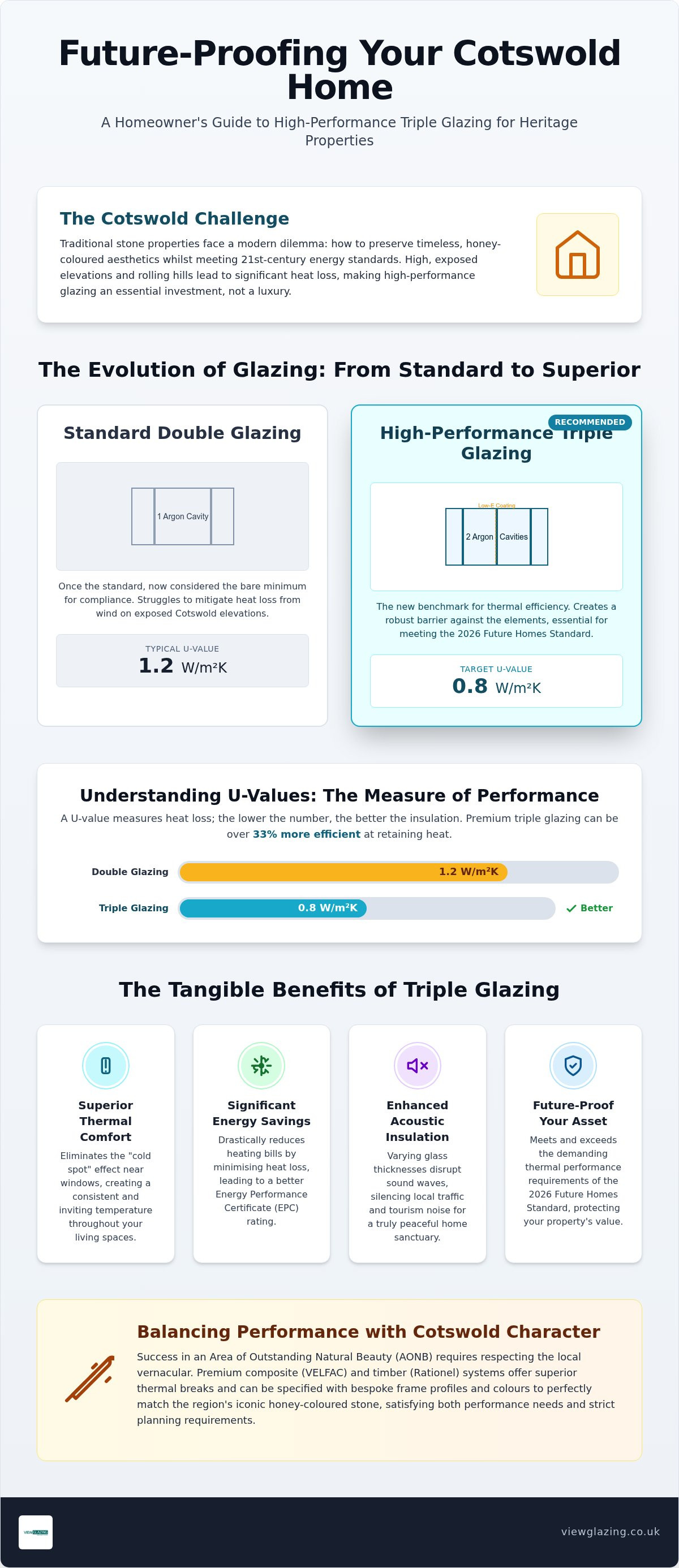
Triple glazing consists of three individual panes of glass separated by two argon-filled cavities, creating a highly efficient thermal barrier that far exceeds the performance of traditional units. This evolution in insulated glazing technology represents the ultimate solution for meeting 2026 energy standards whilst ensuring long-term property value. For many homeowners, the primary driver for installing triple glazed windows Cotswolds properties require is the region's unique geography. High, exposed elevations and the "rolling hill" topography often result in increased wind-driven heat loss, which standard double glazing can struggle to mitigate effectively. By adding a third layer of glass, you're not just adding insulation; you're creating a robust shield against the elements that keeps the warmth exactly where it belongs.
The Shift from Double to Triple Glazing
While double glazing was once the gold standard, it's increasingly viewed as the bare minimum for modern building compliance. The 2026 Future Homes Standard mandates significantly improved thermal performance, pushing homeowners to look beyond standard replacements to future-proof their assets. Investing in triple glazing helps protect your property against rising energy costs and ensures a favourable EPC rating, which is becoming a critical factor in the UK housing market. Beyond the technical data, there's a tangible improvement in daily comfort. In large, open-plan living areas common in Cotswold barn conversions, triple glazing eliminates the "cold spot" effect where internal air cools rapidly against the glass, creating a more consistent and inviting temperature throughout the room.
Acoustic Performance in Rural Environments
The Cotswolds may be rural, but they aren't always quiet. Popular tourist hotspots and village through-roads can generate significant noise pollution, particularly during the peak summer months when traffic increases. Triple glazing provides superior acoustic insulation by using varying glass thicknesses within the unit. This variation disrupts sound waves at different frequencies, preventing noise from penetrating into the home. It's a particularly vital consideration for bedrooms facing busy lanes or high-traffic areas. By choosing a high-performance system like Rationel timber or VELFAC composite, you ensure that the tranquil atmosphere of your home remains undisturbed, regardless of what's happening outside your front door. This dual focus on thermal and acoustic excellence ensures your home remains a peaceful sanctuary for decades to come.
The Technical Edge: Evaluating U-Values and Solar Gain
Technical specification is where architectural vision meets physical performance. For any significant renovation or new build, compliance with UK Building Regulations Part L is no longer just a checkbox; it's a blueprint for long-term energy security. When selecting the specific triple glazed windows Cotswolds projects require, understanding the interplay between heat retention and light transmission is essential. This balance is achieved through a combination of inert gas cavities, precision-engineered frames, and microscopic Low-E (low-emissivity) coatings that reflect heat back into the room whilst allowing natural light to flood the space.
Deciphering U-Values for the Homeowner
A U-value measures the rate of heat transfer through a building element; the lower the number, the better the insulation. To put this into perspective, a standard modern double-glazed unit typically achieves a U-value of 1.2 W/m²K, whereas premium triple glazing pushes this down to 0.8 W/m²K or even lower. The frame material plays a decisive role in this calculation. While aluminium is sleek, composite systems like VELFAC or Rationel timber frames offer superior thermal breaks that prevent cold bridging. A whole-window U-value of 0.8 W/m²K has become the definitive benchmark for high-performance Cotswold builds, ensuring the property remains thermally stable even during the harshest winters.
Managing Solar Heat Gain
While retaining heat is vital, managing solar gain (the G-value) is equally important to ensure year-round comfort. In many Cotswold properties, particularly those with expansive south-facing extensions, the risk of the "greenhouse effect" is real. High-performance triple glazing uses advanced coatings to strike a precise balance: it harvests free solar energy during the winter months but limits excessive heat build-up during the summer. This level of control is particularly relevant when specifying glass for large-scale high performance rooflights in the Cotswolds, where overhead sun can quickly lead to overheating if the glass isn't correctly specified.
Every elevation of your home interacts with the sun differently. A north-facing bedroom requires maximum thermal retention, while a west-facing kitchen might need enhanced solar control to mitigate the afternoon glare. Tailoring the glass specification to each room's orientation ensures a home that's not only energy-efficient but also perfectly tempered for daily life. If you're unsure which glass specification suits your specific project, you can request a technical consultation with our specialist team to review your architectural plans.
Comparing Triple Glazed Materials: VELFAC Composite vs Rationel Timber
Selecting the right material for your property is a decision that impacts both the building's longevity and its aesthetic harmony. Whilst many mass-market suppliers push uPVC as a standard solution, we find it lacks the structural integrity and architectural refinement required for high-end Cotswold projects. Instead, we prioritise architectural-grade materials that align with the rigorous standards set by the Centre for Window & Cladding Technology (CWCT). By moving away from plastic frames, you ensure your investment provides a superior return through enhanced durability and a timeless finish that complements local stone.
VELFAC: The Minimalist Composite Choice
VELFAC systems are renowned for their signature composite construction, featuring a resilient external aluminium frame and a warm internal timber finish. This combination offers the best of both worlds: total weather protection on the outside and natural beauty on the inside. One of the most significant advantages of VELFAC windows in Bristol and the wider Cotswolds is their exceptionally slim 54mm sightlines. These minimalist profiles maximise the glass area, which is vital for drawing light into smaller cottage windows or creating expansive views in modern extensions. The external aluminium can be powder-coated in bespoke shades to perfectly match the varied tones of Cotswold limestone, from pale cream to rich honey.
Rationel: Sustainable Timber Excellence
For those seeking a more traditional feel, Rationel windows offer authentic Scandinavian design rooted in sustainability. These units are crafted from FSC-certified timber, making them an ideal choice for low-carbon construction and heritage renovations where natural materials are a priority. Rationel provides a range of profiles, from the classic FORMA with its decorative detailing to the sleek AURAPLUS for contemporary builds. Because timber is a natural insulator, these windows provide exceptional thermal performance, which is further enhanced by the triple glazing. This makes them a favourite for homeowners who want to maintain the character of a period property whilst significantly upgrading its energy efficiency.
Ultimately, the choice between composite and timber depends on your property's specific architectural style and your maintenance preferences. Composite systems typically offer a fit and forget solution due to the protective aluminium cladding, whereas pure timber requires a slightly more hands-on approach to preserve its finish. Both systems represent a permanent investment in your home's fabric, ensuring that your triple glazed windows Cotswolds installation remains as high-performing and beautiful in thirty years as it is on the day of installation.
Navigating Planning and Aesthetics in the Cotswolds
Navigating the planning landscape in the Cotswolds requires a delicate touch. Local authorities within the AONB (Area of Outstanding Natural Beauty) are rightfully protective of the region's architectural heritage. When specifying triple glazed windows Cotswolds planning departments often scrutinise frame depth and profile width with significant detail. The goal is to ensure that modern thermal performance doesn't compromise the historic character of the streetscape. Selecting bespoke colours that harmonise with local honey-coloured limestone is a critical part of this process. Standard white or dark grey often clashes with the warmth of the stone; instead, we recommend muted earthy tones or specific RAL shades that blend into the building's facade.
Glazing for Period Properties
For listed buildings and homes within Conservation Areas, the challenge is often about finding a "like-for-like" appearance. Whilst slim-line double glazing was once the only option, modern triple glazed units with ultra-slim profiles are increasingly becoming an acceptable solution for heritage renovations. Using timber-internal frames allows you to maintain a traditional interior feel whilst benefiting from 2026-standard insulation. It's essential to specify traditional bar details and ironmongery that respect local vernacular traditions to ensure a successful planning application. This approach satisfies the need for high-performance fabric whilst honouring the building's history and maintaining the property's long-term value.
Modern Architectural Statements
Modern projects, such as "Grand Design" style barn conversions and contemporary new builds, offer more freedom but still require aesthetic consistency. Integrating large-scale Cortizo sliding doors with triple glazed windows creates a seamless architectural language across the entire property. Achieving uniform sightlines is the hallmark of a well-considered glazing project. This visual cohesion ensures that the transition between fixed windows and moving door systems feels intentional and polished. By specifying matching profiles from the same manufacturer or system family, you avoid the visual clutter that often occurs when mixing different glazing suppliers on a single elevation.
If you're planning a project in a Conservation Area or managing a complex heritage renovation, contact our architectural glazing specialists for guidance on sensitive specification and planning compliance.
Seamless Project Management: From Survey to Installation
The successful delivery of triple glazed windows Cotswolds projects relies on more than just high-quality glass; it requires a meticulous approach to technical execution. Unlike standard double glazing, triple-glazed units are significantly heavier and deeper, placing unique demands on the building's structure and the installation team. For projects involving wider structural renovations or roof repairs, specialists like Firmus Roofing & Building can ensure the property's fabric is robust enough to support these high-performance upgrades. Our process begins with a comprehensive technical assessment that considers every variable, from the structural integrity of your stone openings to the specific solar orientation of each room, ensuring your windows perform at their absolute peak for the lifetime of the property.
The Technical Survey and Specification
Precision is the foundation of architectural glazing. When working with high-performance systems, measuring to the nearest millimetre isn't just a preference; it's a necessity. A professional survey must assess the additional weight of triple-glazed units, which can be up to 50% heavier than their double-glazed counterparts. This weight impacts everything from the choice of fixings to the structural reinforcement required within the aperture. By utilising our specialist glazing project management service, you benefit from a technical specification that is tailored to your home's unique requirements, ensuring a perfect seal and long-term structural stability.
Professional Installation and Beyond
The logistics of a Cotswold installation often present unique challenges, such as navigating narrow lanes or managing deliveries to remote, hilly locations. Our network of specialist installers across the South West is experienced in handling these complexities with minimal disruption to your daily life. On installation day, you can expect a methodical and tidy process, focused on protecting your property whilst achieving a precision fit. Our team manages the entire timeline, coordinating deliveries and structural preparations to ensure the transition is as smooth as possible.
Our commitment to your home extends beyond the final installation. We provide:
Full FENSA certification for peace of mind and building regulation compliance.
Comprehensive aftercare support to ensure your hardware remains in perfect working order.
Long-term guarantees on both the glazing units and the frame finishes.
This structured approach transforms a complex renovation into a seamless transition, protecting your investment in triple glazed windows Cotswolds and ensuring your home remains a quiet, warm sanctuary for decades to come.
Future-Proofing Your Cotswold Home with Precision Glazing
Choosing the high-performance triple glazed windows Cotswolds properties require is a decisive step toward thermal security and architectural excellence. By prioritising low U-values and premium materials like VELFAC composite or Rationel timber, you ensure your home meets the 2026 Future Homes Standard whilst respecting the region's unique heritage. We've seen how technical specification and careful colour matching allow modern efficiency to live in harmony with traditional honey-coloured stone facades.
As specialists in VELFAC and Rationel systems, we provide a comprehensive project management service that guides you from the initial technical survey through to the final installation. Our local expertise across the South West ensures that every detail, from planning compliance to the logistics of narrow village lanes, is handled with professional care. This structured approach removes the anxiety often associated with complex renovations, leaving you with a quiet, warm, and beautiful home.
If you're ready to enhance your property's performance and character, discuss your Cotswold glazing project with our expert team. We look forward to helping you realise your architectural vision with precision and peace of mind.
Frequently Asked Questions
Is triple glazing worth it in the UK climate?
Yes, triple glazing is increasingly essential in the UK as energy standards tighten and weather patterns become more extreme. Whilst double glazing was once the benchmark, the superior thermal retention of triple units provides a noticeable difference in comfort during the damp, cold British winters. It's an investment that future-proofs your home against rising heating costs and adds significant value to the property's structural fabric.
Can I install triple glazing in a Cotswold stone cottage?
You can certainly install these units in traditional stone properties provided the frames are specified correctly for the structural openings. The key is selecting slim-profile systems like VELFAC or Rationel that don't overwhelm the smaller apertures typical of period cottages. Because stone walls have high thermal mass but little insulation, high-performance triple glazed windows Cotswolds cottages require help to prevent the glass from becoming a major source of heat loss.
How much more expensive is triple glazing than double glazing?
Typically, you can expect a 10% to 20% uplift in the initial cost compared to high-quality double glazing. However, this initial outlay is offset by long-term energy savings and the increased acoustic performance it provides. When viewed as a permanent architectural upgrade rather than a temporary fix, the marginal cost increase is often justified by the substantial improvement in daily living comfort and thermal stability throughout the year.
Does triple glazing reduce condensation on the inside of windows?
Yes, triple glazing virtually eliminates internal condensation by keeping the inner pane of glass much warmer. Condensation occurs when warm, moist air hits a cold surface. Because the internal pane of a triple-glazed unit stays close to the room's ambient temperature, the air is less likely to reach its dew point on the glass. This prevents the moisture build-up that often leads to mould on window sills.
Will triple glazing make my home too dark?
No, the difference in light transmission is negligible to the human eye and rarely perceptible in a domestic setting. Modern glass technology ensures that the addition of a third pane has a minimal impact on light levels. Using ultra-clear glass and slim-frame systems ensures that your rooms remain flooded with natural light whilst benefiting from the vastly superior insulation and sound dampening that three panes of glass provide.
Do I need planning permission to upgrade to triple glazed windows?
Most window replacements fall under Permitted Development, but requirements change if your home is a listed building or situated within a Conservation Area. In these sensitive locations, you'll likely need to demonstrate that the new windows match the original aesthetics and frame profiles. We often assist clients by providing technical drawings and material samples that satisfy the specific heritage requirements of local planning officers.
What is the lifespan of a high-performance triple glazed window?
You should expect a lifespan of 30 to 40 years when choosing high-performance systems from manufacturers like Rationel and VELFAC. The composite construction of aluminium and timber is particularly resilient against the British weather, preventing rot and corrosion. Regular cleaning of the frames and annual lubrication of the moving hardware will ensure the units remain airtight and functional, making them a highly sustainable choice for any residential project.
How much noise does triple glazing actually block?
Triple glazing is exceptionally effective at dampening sound, often reducing external noise levels by up to 35 or 40 decibels. This is a significant advantage for homes near busy village roads or tourist hotspots. By creating two separate insulating cavities and using varying glass thicknesses, the units act as a powerful acoustic buffer. The result is a noticeably quieter interior, allowing you to enjoy the tranquillity of your home regardless of external traffic.


Comments